OT-2026-000003139
Single and dual end effector, multiple link robot arm systems having triaxial drive motors
- Published
- Permanent URL
- https://opentechnical.org/p/OT-2026-000003139
- Classification
- Robotics & Automation › Robot Architectures
- Assignee
- KENSINGTON LAB INC
- Original source
- US-6105454-A, the United States Patent and Trademark Office, 22 August 2000
- Document SHA-256
- 08d6717347d9c8771eb29460ac33f20ca5aef7b0a4b50cd6ad126a713d8d071d
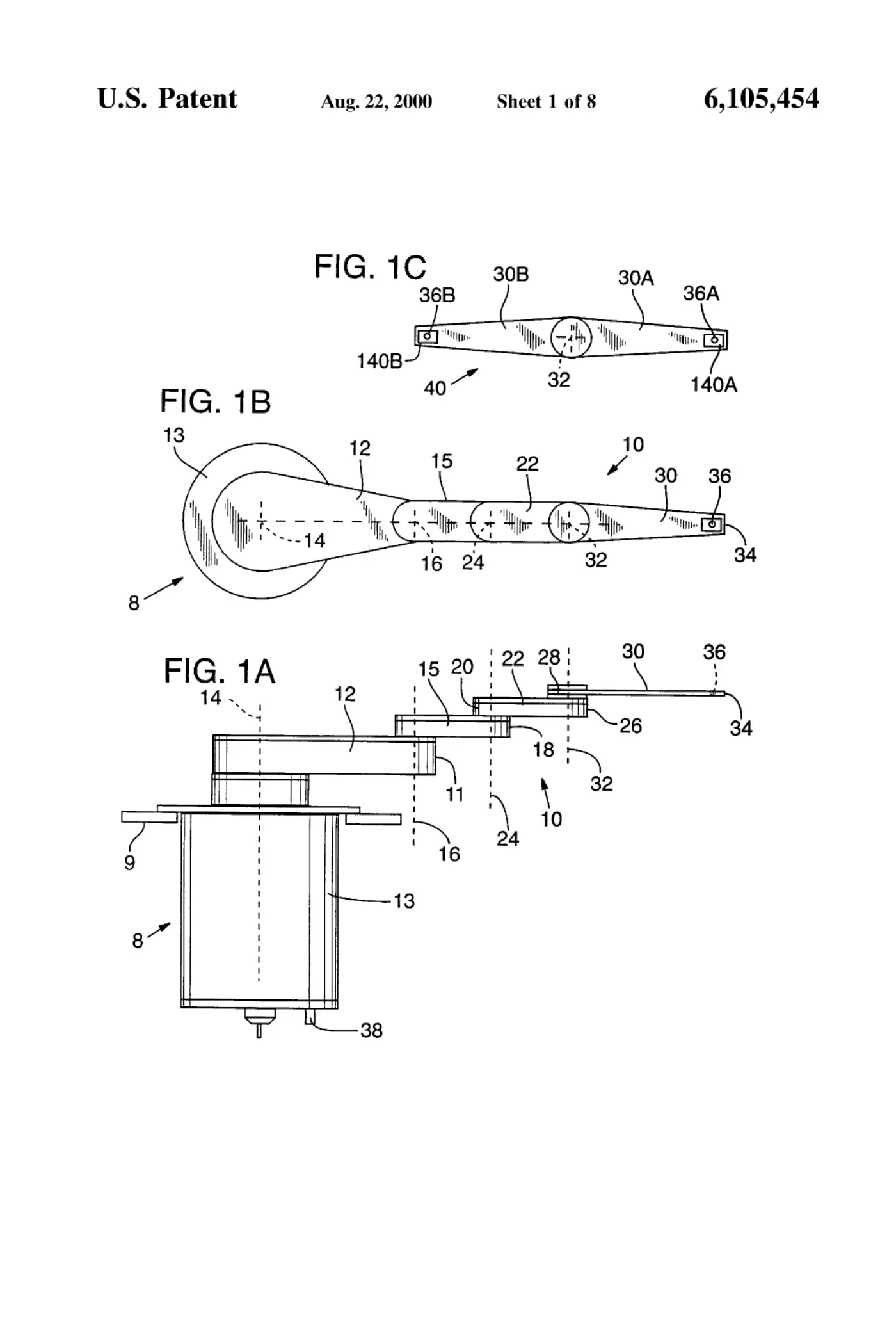
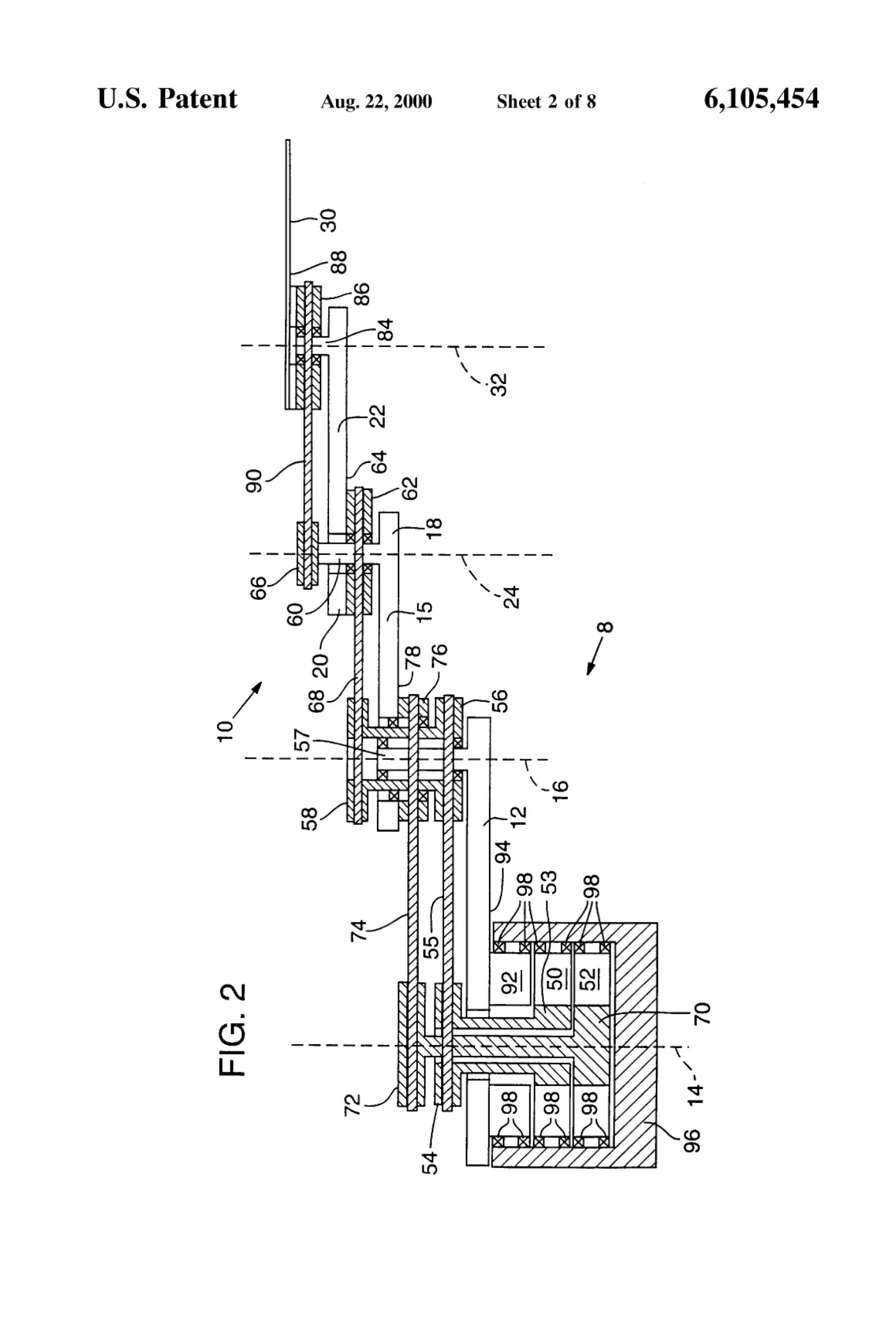
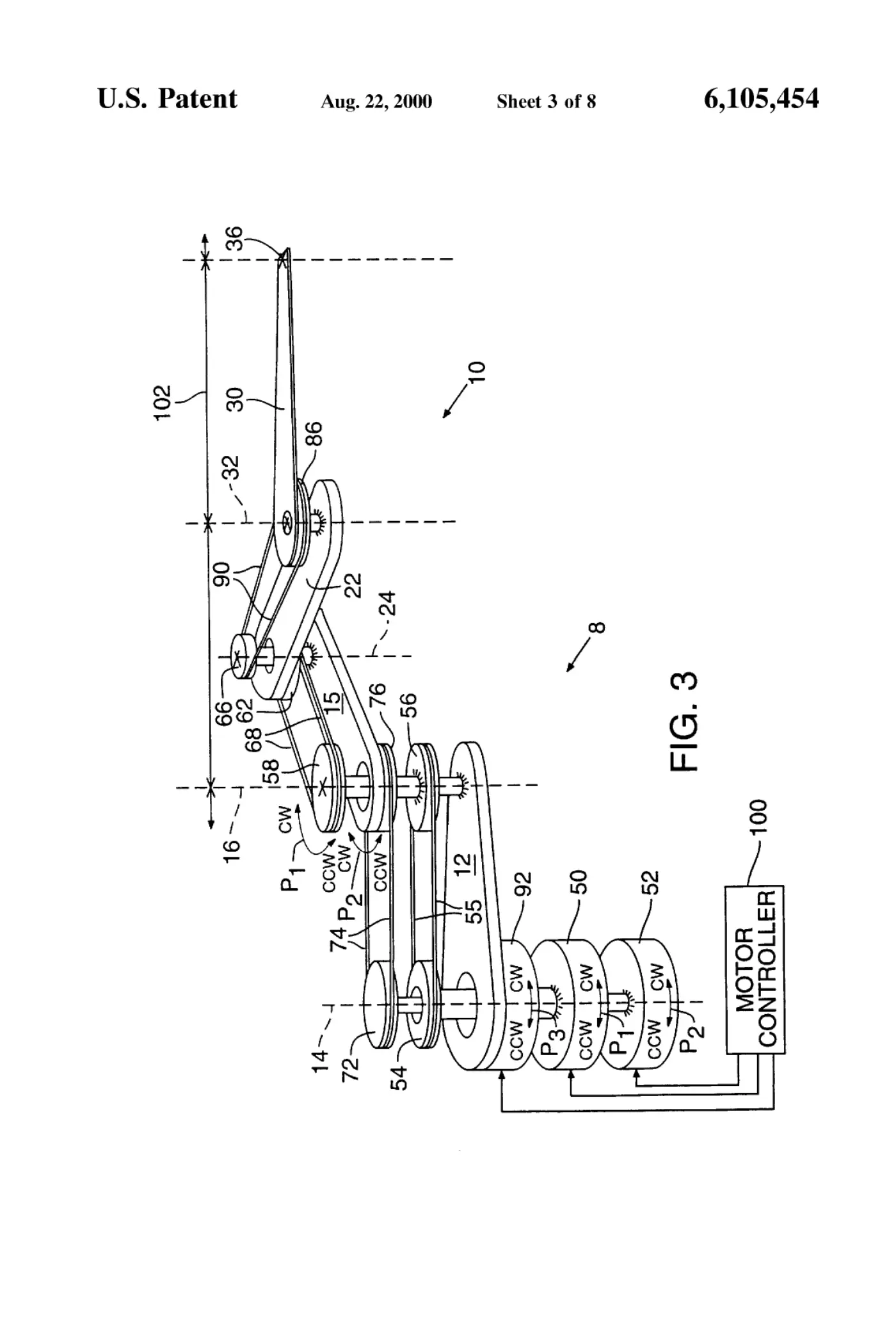
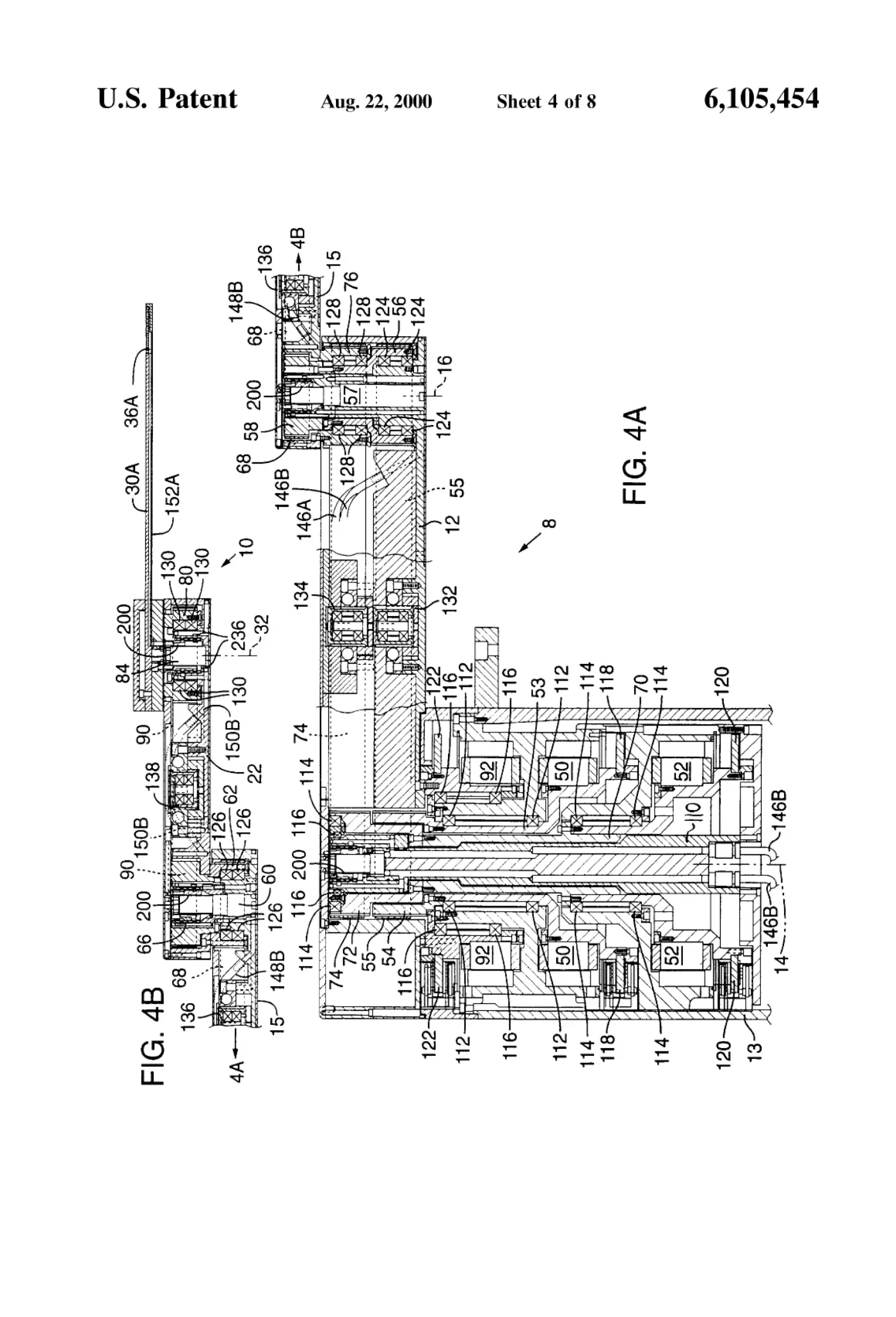
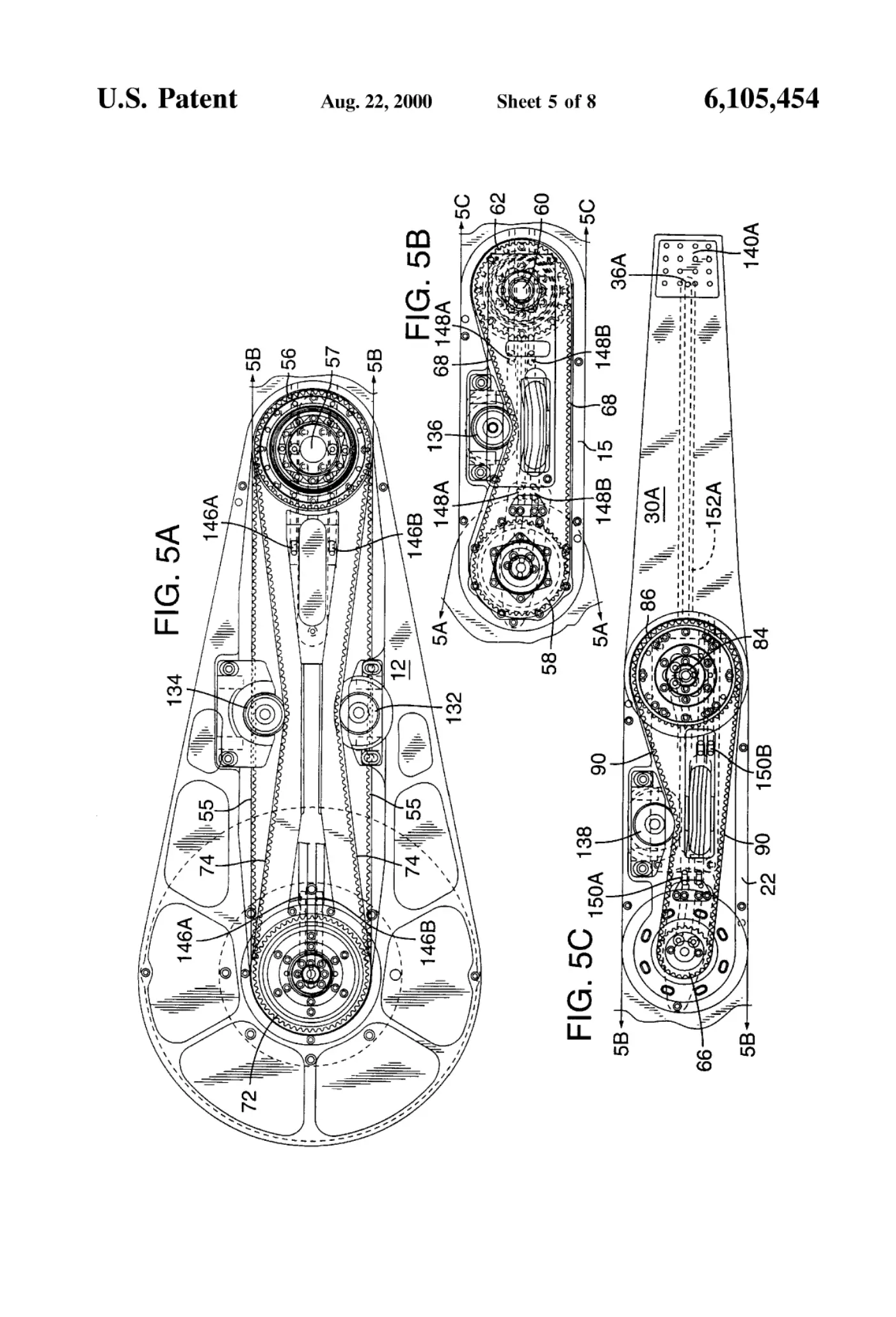
A robot arm system (8) includes a multiple link robot arm mechanism (10) mounted at a shoulder axis (16) to a torso link (12) that is capable of 360-degree rotation about a torso axis (14). The robot arm mechanism couples an upper arm (15) and a forearm (22) to a hand (30) that is capable of linear or radial motion relative to the shoulder axis. The robot arm system minimizes its moment of inertia by arranging first (50), second (52), and third (92) motors triaxially about the torso axis to permit rapid movement of the hand. The first motor is coupled through endless belts (55, 68) to rotate the forearm about an elbow axis (24), the second motor is coupled through an endless belt (74) to rotate the upper arm about the shoulder axis, and the third motor rotates the torso link about the torso axis. A motor controller (100) operates in at least three operational states. The first operational state maintains the position of the third motor and equally counter-rotates the first and second motors to cause linear extension or retraction of the hand. The second operational state equally rotates the first and second motors and maintains the position of the third motor to cause angular displacement of the hand about the shoulder axis. The third operational state equally rotates the first, second, and third motors so that the robot arm mechanism undergoes angular displacement about the torso axis. Coordinating the rotations of the first and second motors enables the robot arm mechanism to describe a compound curvilinear travel path for the hand. The rotatable torso link together with the robot arm motion permits simple, nonradial positioning of specimen processing stations (350) relative to the torso axis, extended hand reach, and corner reacharound capabilities. The consequence is a high-speed, high-throughput robot arm system that operates in a compact work space.
Abstract
A robot arm system (8) includes a multiple link robot arm mechanism (10) mounted at a shoulder axis (16) to a torso link (12) that is capable of 360-degree rotation about a torso axis (14). The robot arm mechanism couples an upper arm (15) and a forearm (22) to a hand (30) that is capable of linear or radial motion relative to the shoulder axis. The robot arm system minimizes its moment of inertia by arranging first (50), second (52), and third (92) motors triaxially about the torso axis to permit rapid movement of the hand. The first motor is coupled through endless belts (55, 68) to rotate the forearm about an elbow axis (24), the second motor is coupled through an endless belt (74) to rotate the upper arm about the shoulder axis, and the third motor rotates the torso link about the torso axis. A motor controller (100) operates in at least three operational states. The first operational state maintains the position of the third motor and equally counter-rotates the first and second motors to cause linear extension or retraction of the hand. The second operational state equally rotates the first and second motors and maintains the position of the third motor to cause angular displacement of the hand about the shoulder axis. The third operational state equally rotates the first, second, and third motors so that the robot arm mechanism undergoes angular displacement about the torso axis. Coordinating the rotations of the first and second motors enables the robot arm mechanism to describe a compound curvilinear travel path for the hand. The rotatable torso link together with the robot arm motion permits simple, nonradial positioning of specimen processing stations (350) relative to the torso axis, extended hand reach, and corner reacharound capabilities. The consequence is a high-speed, high-throughput robot arm system that operates in a compact work space.
1. Drawings
[0001]Sheet 1.
[0002]Sheet 2.
[0003]Sheet 3.
[0004]Sheet 4.
[0005]Sheet 5.
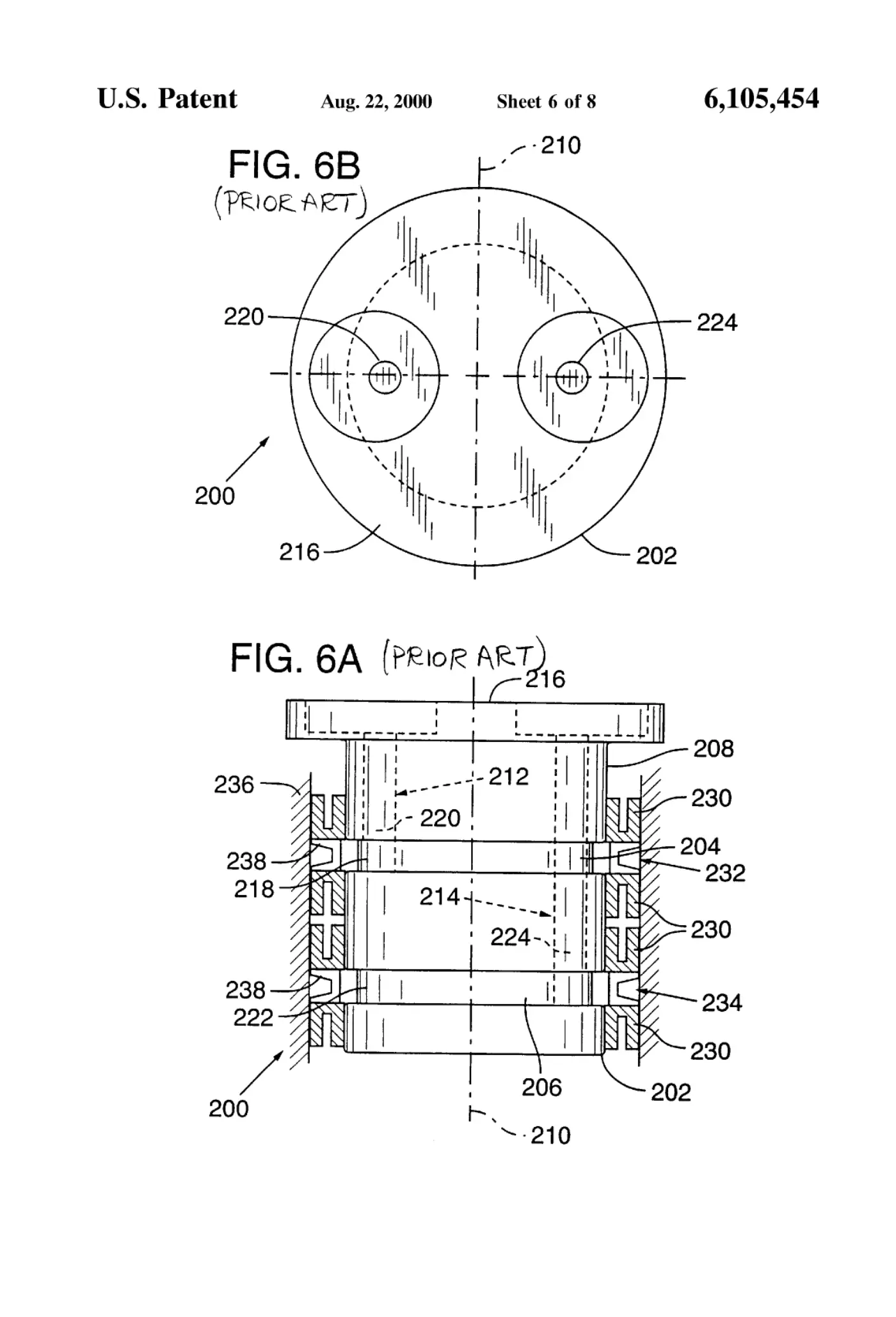
[0006]Sheet 6.
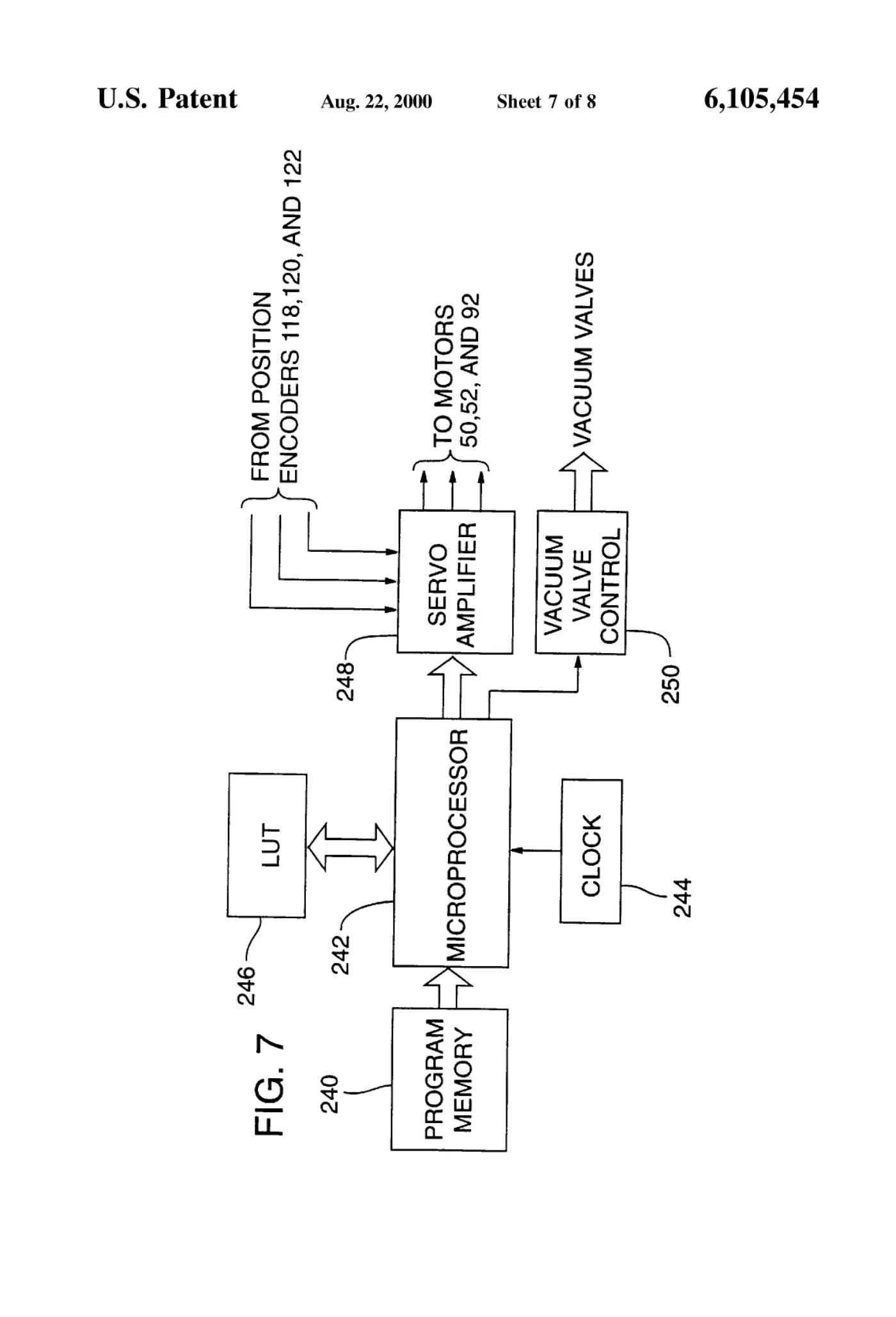
[0007]Sheet 7.
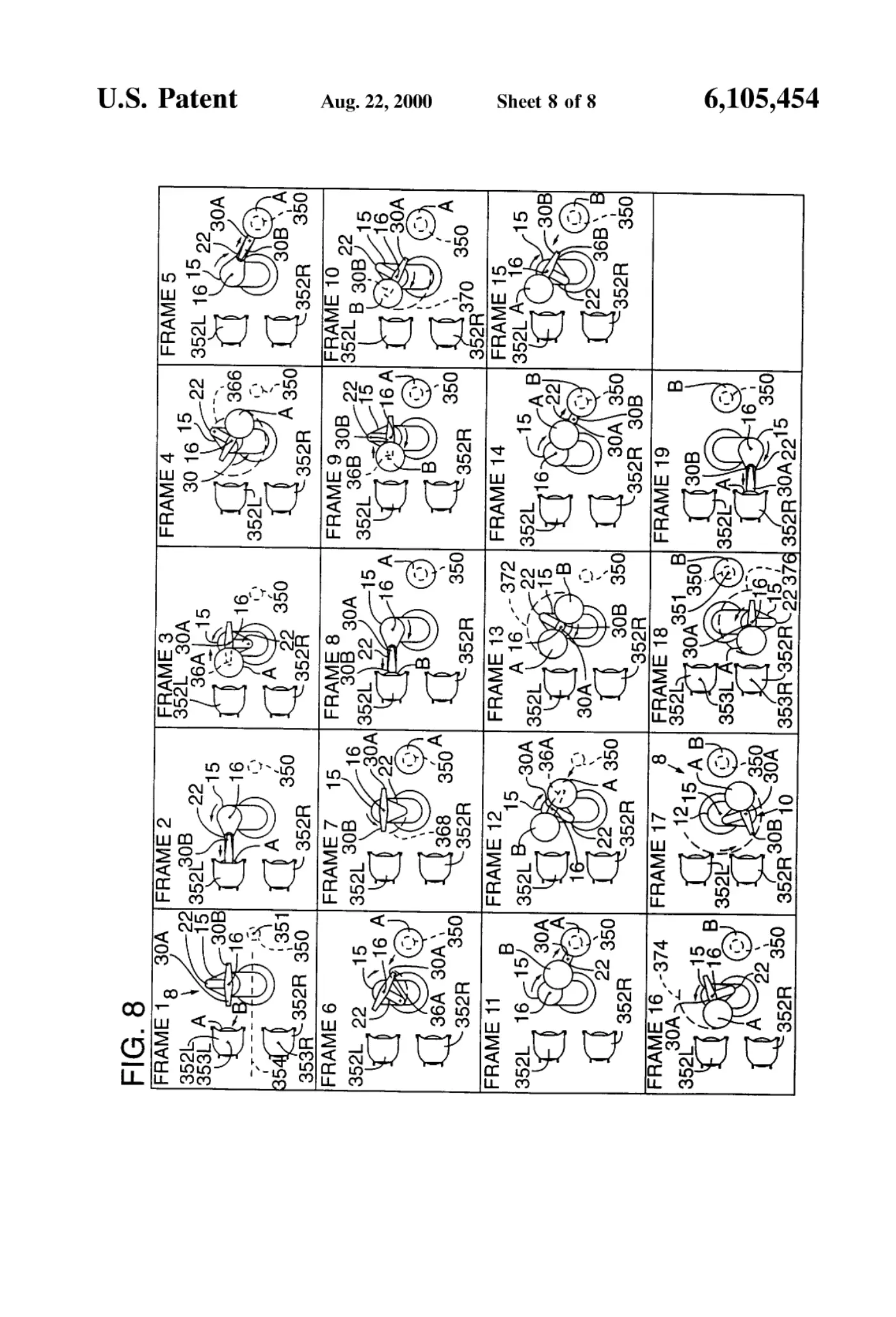
[0008]Sheet 8.
Publication information
Citation
OpenTechnical Publication OT-2026-000003139, “Single and dual end effector, multiple link robot arm systems having triaxial drive motors,” published September 15, 2026 at 19:37:04 UTC, https://opentechnical.org/p/OT-2026-000003139.
To cite specific content, add the paragraph or figure numbers.
Terms
This record reproduces a document published elsewhere and is provided for reference and study. Rights in the original remain with its owner. See the publication policy.