OT-2026-000003143
Load-holding brake valve
- Published
- Permanent URL
- https://opentechnical.org/p/OT-2026-000003143
- Classification
- Industrial Motion & Power Transmission › Fluid Power
- Assignee
- BERINGER HYDRAULIK AG
- Original source
- US-6098647-A, the United States Patent and Trademark Office, 8 August 2000
- Document SHA-256
- 37919246acc3ff86c871a6ad8ced986c14855a09a25d8d2d2ec4b617692178c6
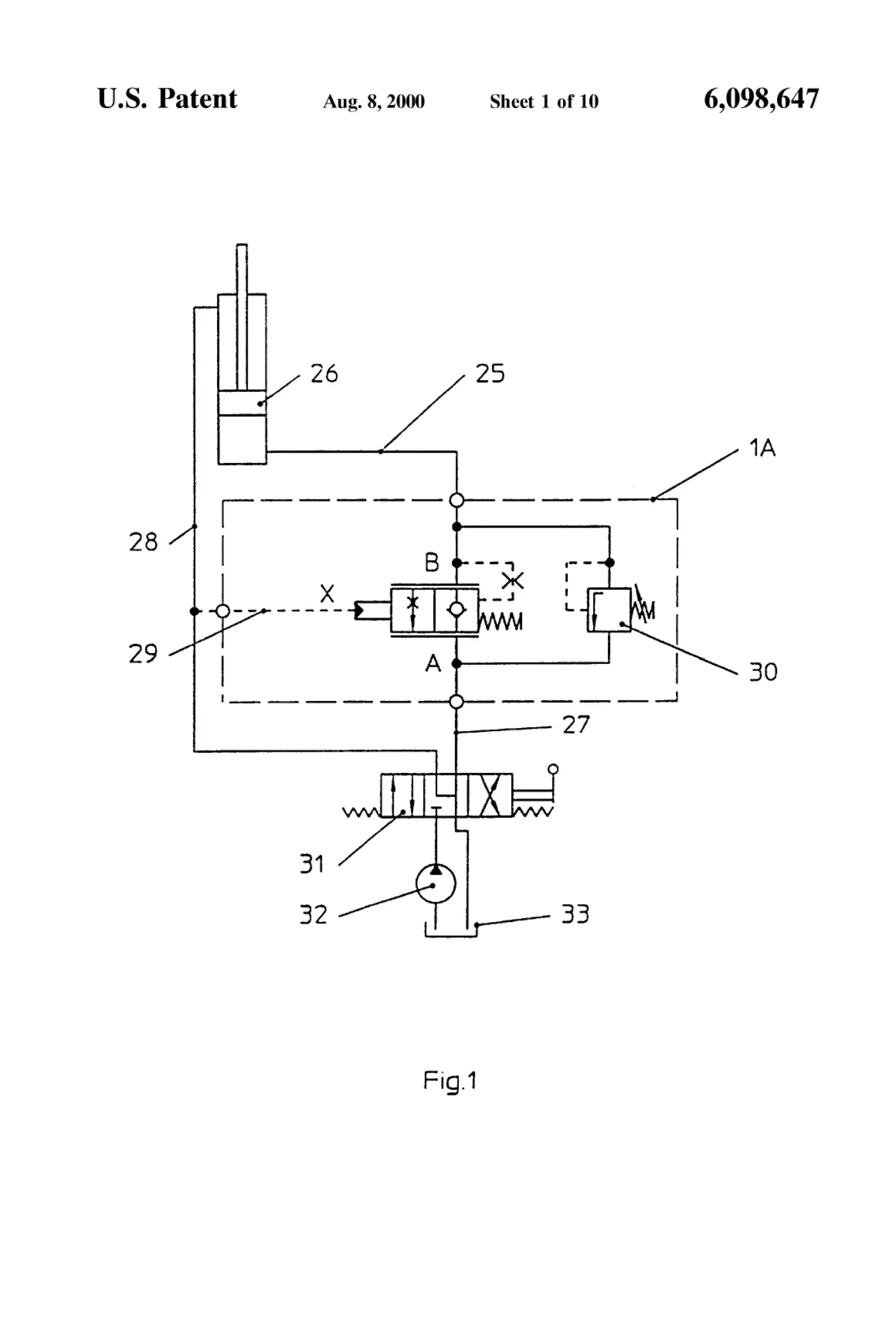
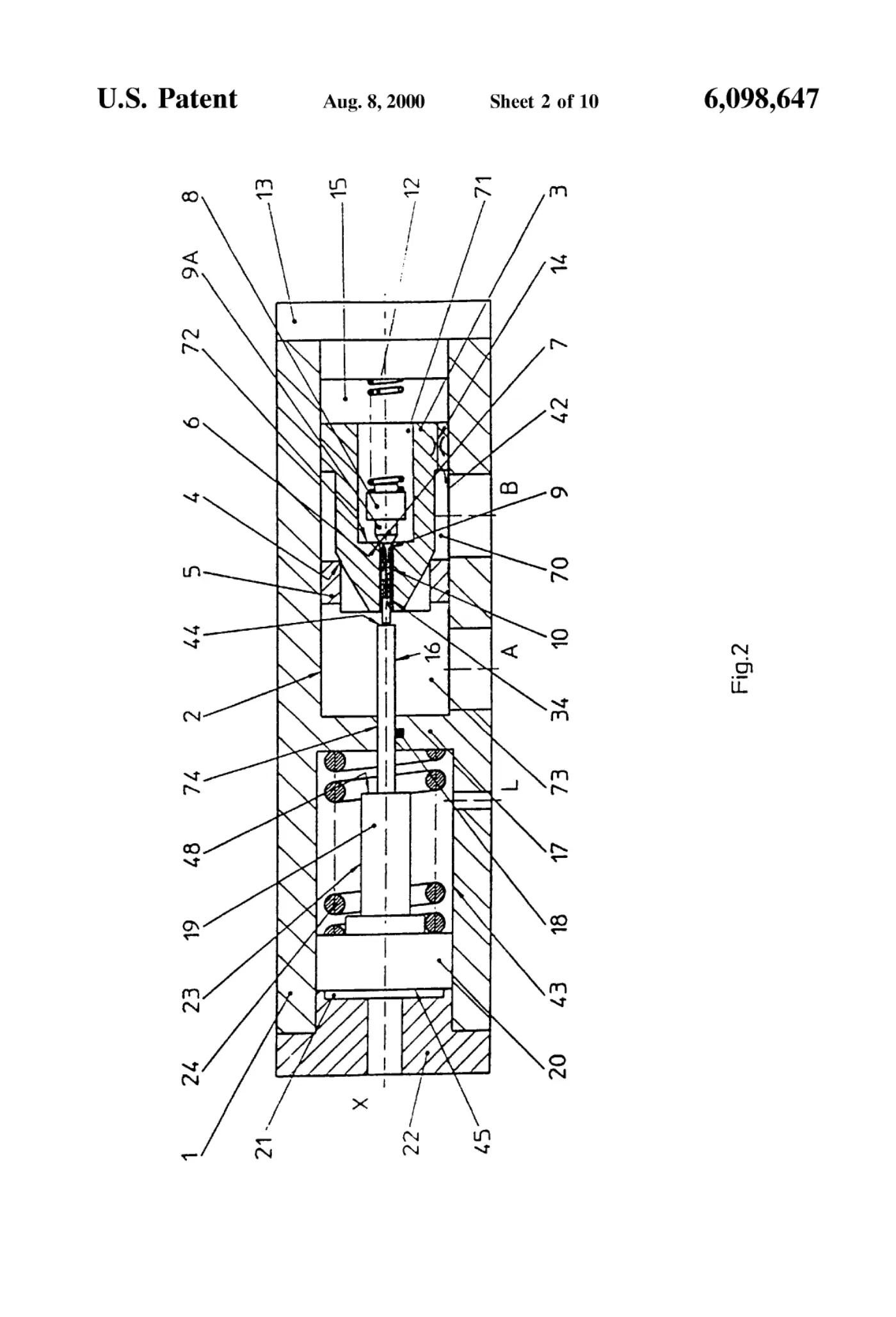
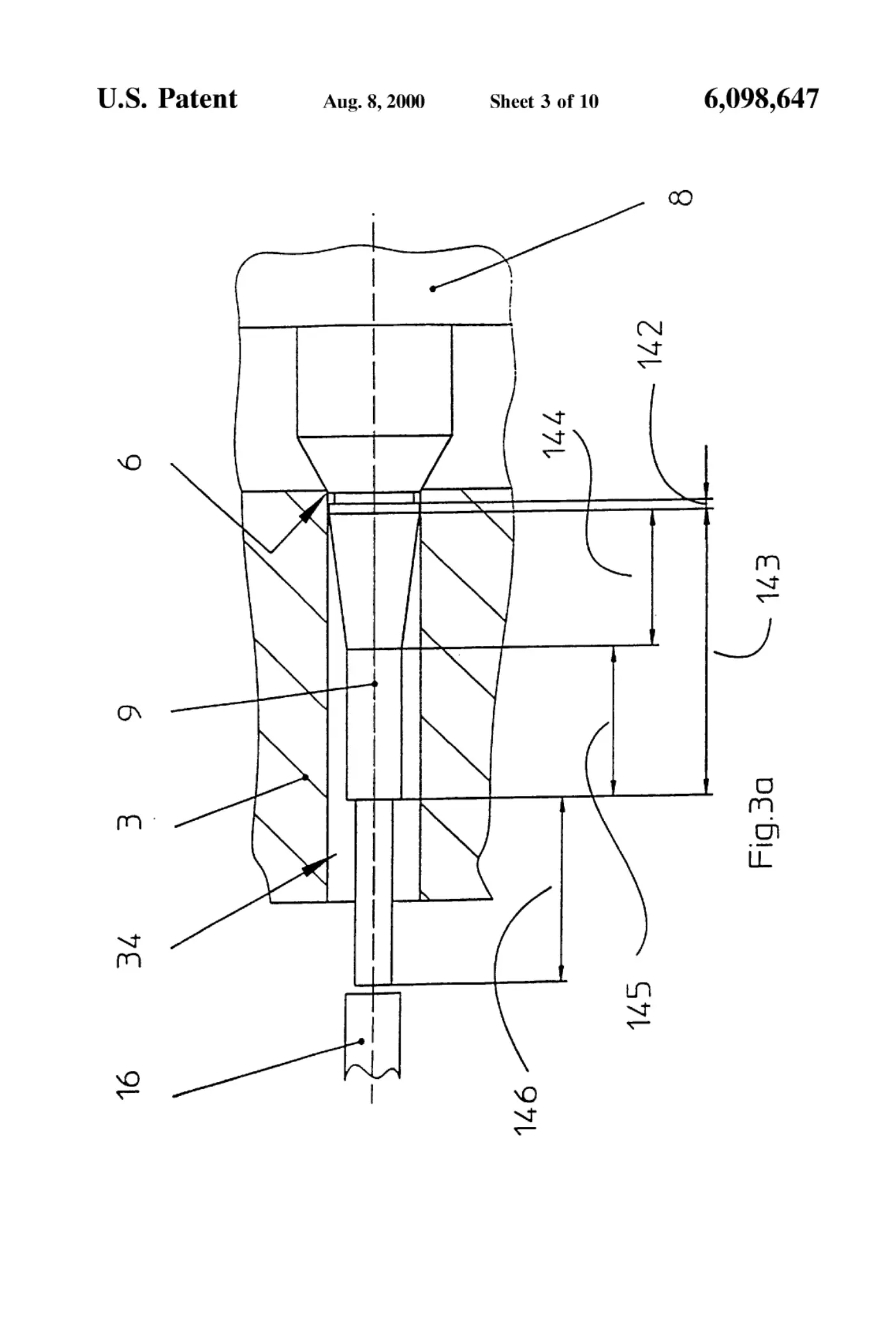
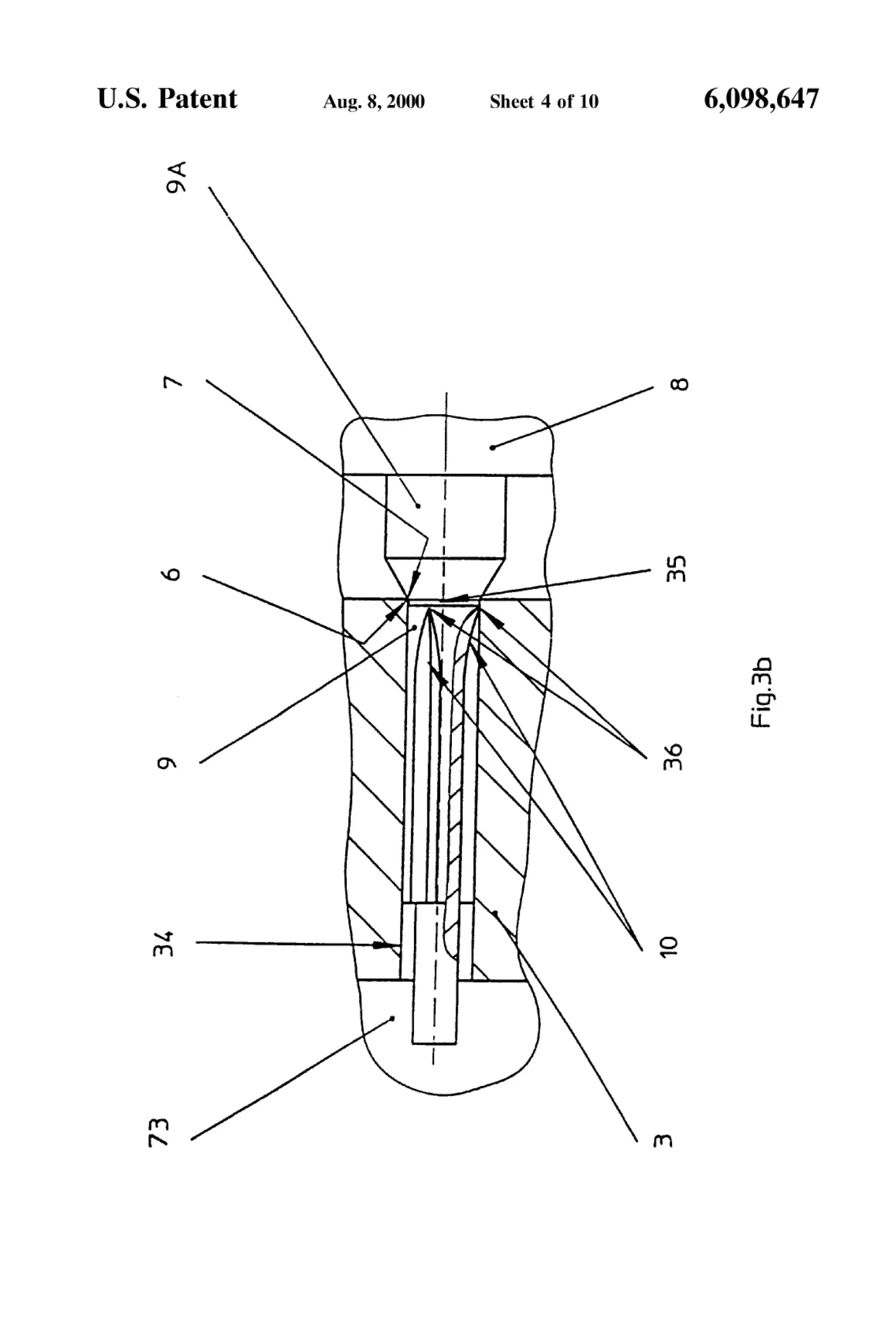
A hydraulically controllable valve for double-acting consumers that in the lowering mode drains off a flow of load volume from connection B to connection A in throttled fashion. To that end, the valve has a valve seat (5), which communicates with a sealing face (4) of a main piston (3). A pilot piston (8) is guided concentrically in the main piston (3) and communicates with a sealing face (7) to a pilot valve seat (6) in the main piston; the main piston (3) and the pilot piston (8) are held on the valve seat (5) and pilot valve seat (6), respectively, by the load pressure and/or by spring force. On the pressure-relieved side, the pilot piston (8) has a piston shank (9), guided in a seat bore, with a continuously decreasing throttling action and in particular throttle grooves (10), which form a throttle restriction. On hydraulic triggering, the pilot piston (8) is axially displaceable by means of an opening piston (20), so that the pilot valve (5, 6) opens, and a load volume flow flows out of a pilot chamber (15), receiving the springs, via the throttle restriction. The resultant load pressure reduction causes an axial displacement of the main piston (3) and the opening of the valve seat. An additional damping valve assembly reduces incident vibration of the load. A pressure limiting valve, independent of the return pressure, is integrated in the load-holding brake valve housing.
Abstract
A hydraulically controllable valve for double-acting consumers that in the lowering mode drains off a flow of load volume from connection B to connection A in throttled fashion. To that end, the valve has a valve seat (5), which communicates with a sealing face (4) of a main piston (3). A pilot piston (8) is guided concentrically in the main piston (3) and communicates with a sealing face (7) to a pilot valve seat (6) in the main piston; the main piston (3) and the pilot piston (8) are held on the valve seat (5) and pilot valve seat (6), respectively, by the load pressure and/or by spring force. On the pressure-relieved side, the pilot piston (8) has a piston shank (9), guided in a seat bore, with a continuously decreasing throttling action and in particular throttle grooves (10), which form a throttle restriction. On hydraulic triggering, the pilot piston (8) is axially displaceable by means of an opening piston (20), so that the pilot valve (5, 6) opens, and a load volume flow flows out of a pilot chamber (15), receiving the springs, via the throttle restriction. The resultant load pressure reduction causes an axial displacement of the main piston (3) and the opening of the valve seat. An additional damping valve assembly reduces incident vibration of the load. A pressure limiting valve, independent of the return pressure, is integrated in the load-holding brake valve housing.
1. Drawings
[0001]Sheet 1.
[0002]Sheet 2.
[0003]Sheet 3.
[0004]Sheet 4.
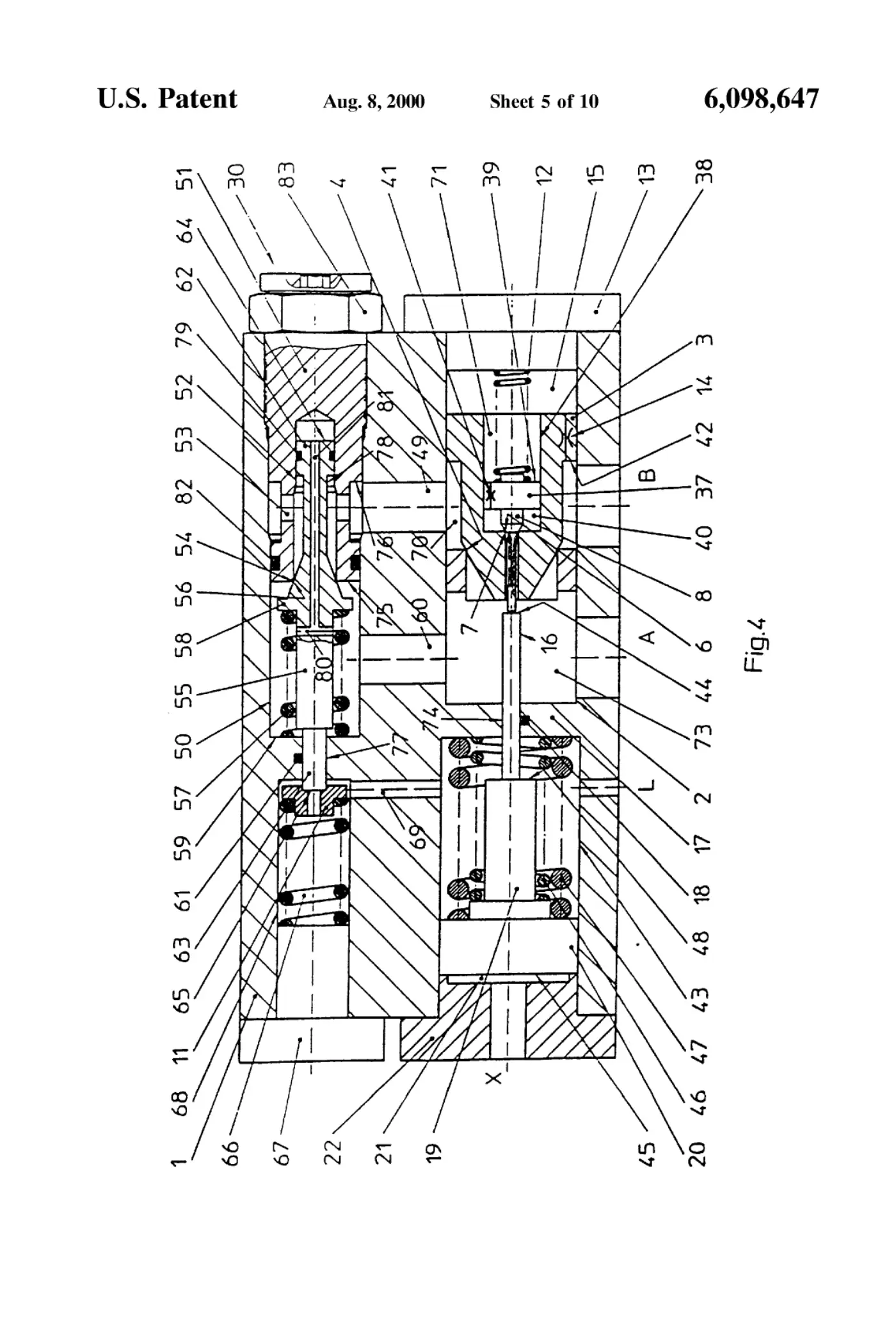
[0005]Sheet 5.
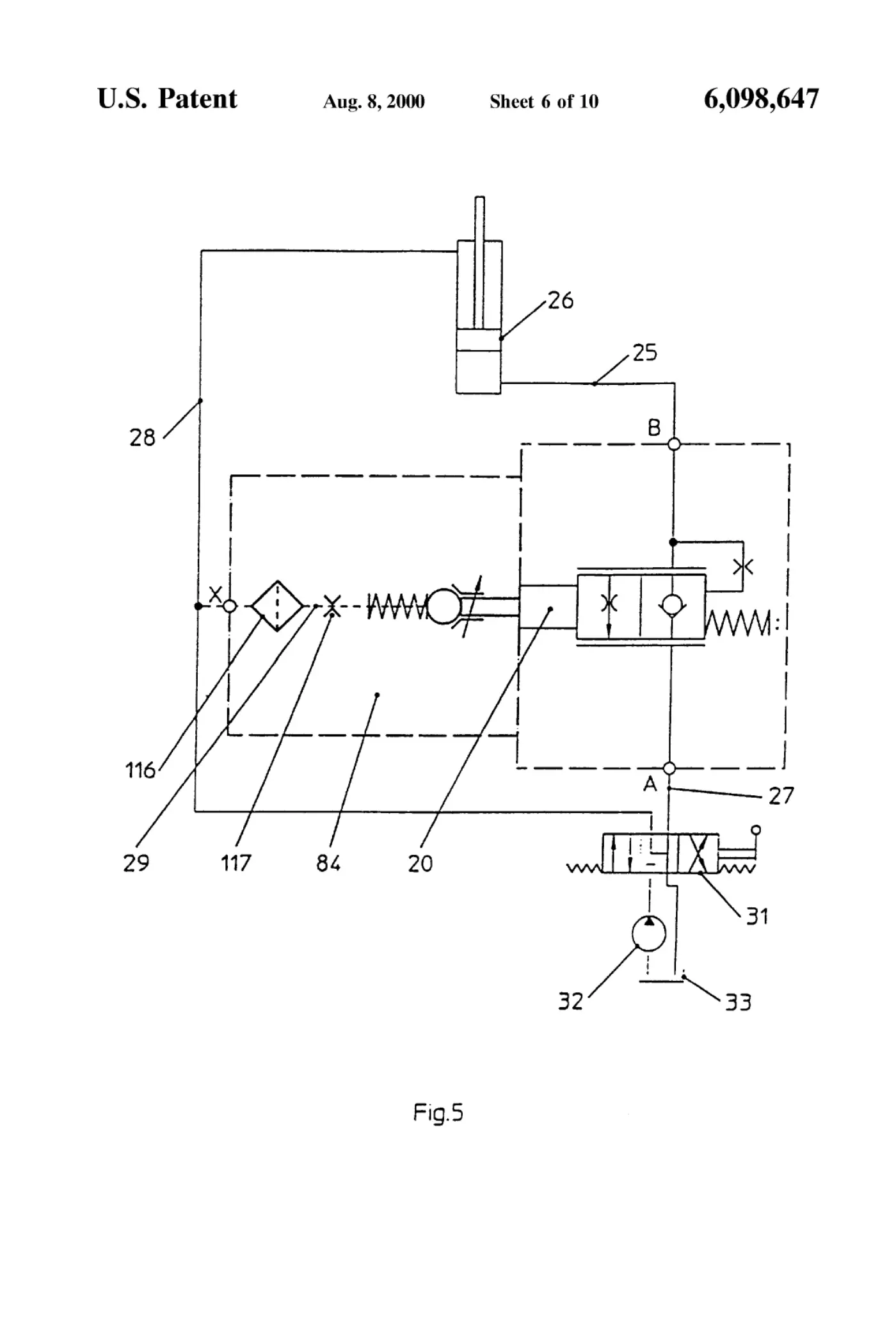
[0006]Sheet 6.
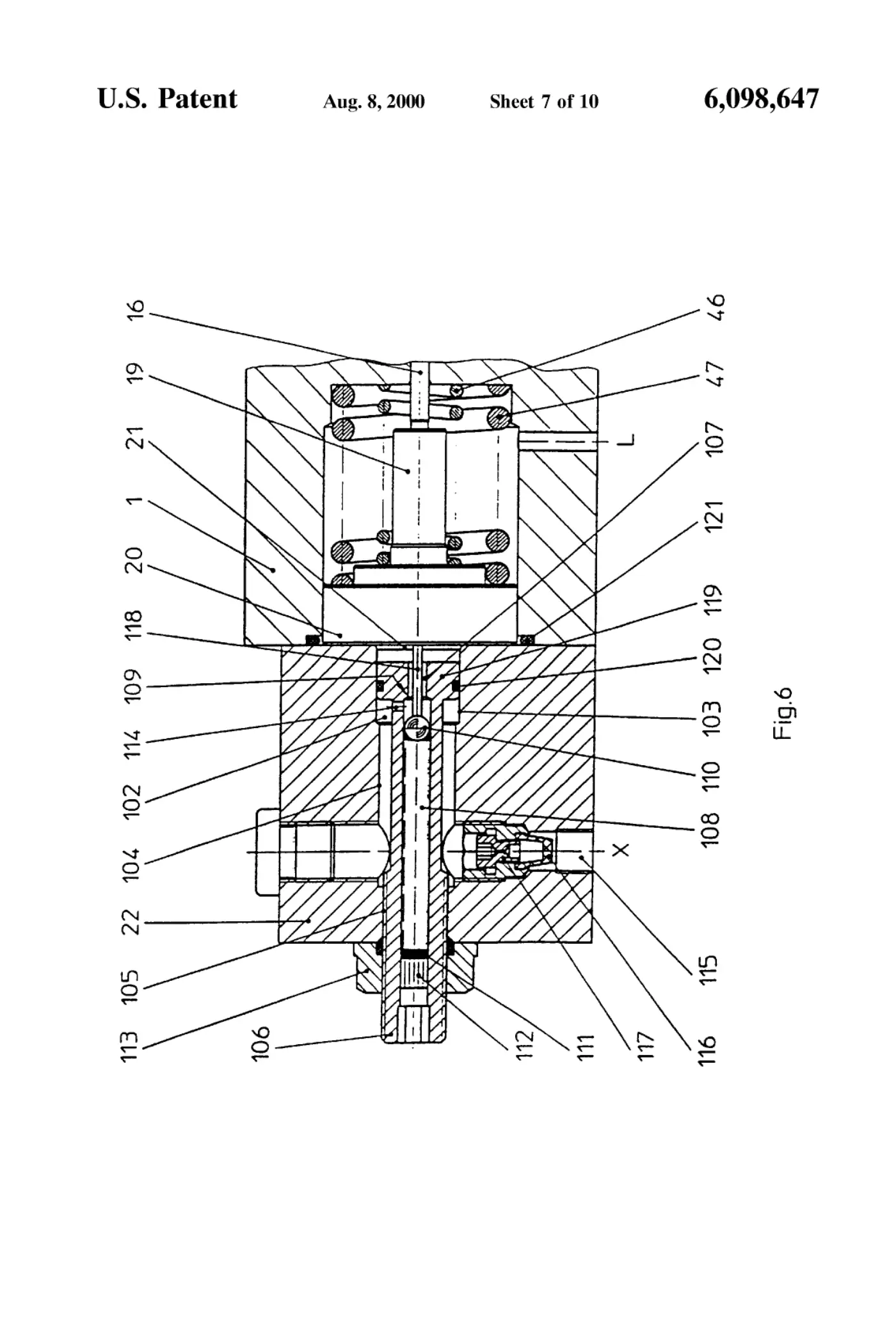
[0007]Sheet 7.
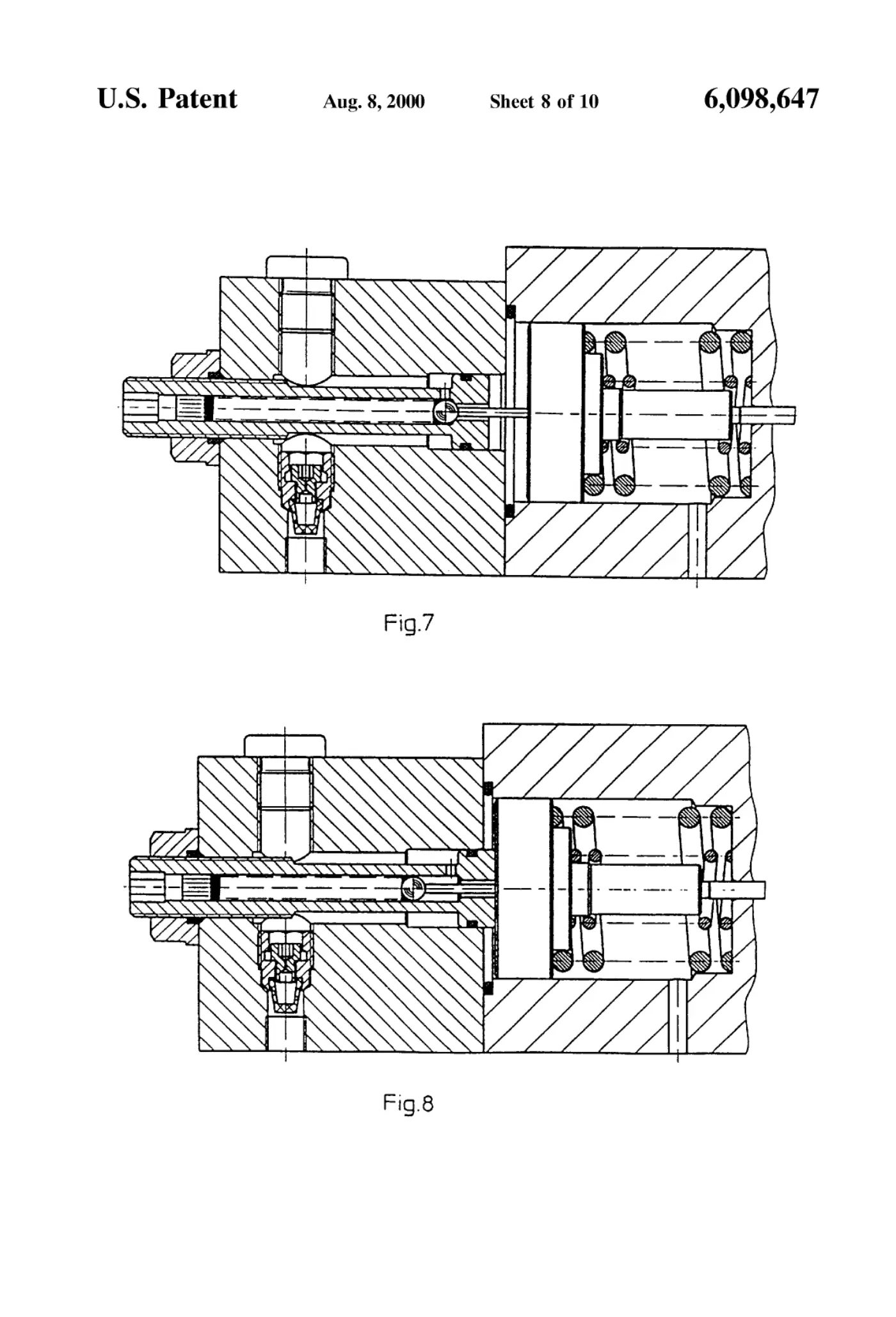
[0008]Sheet 8.
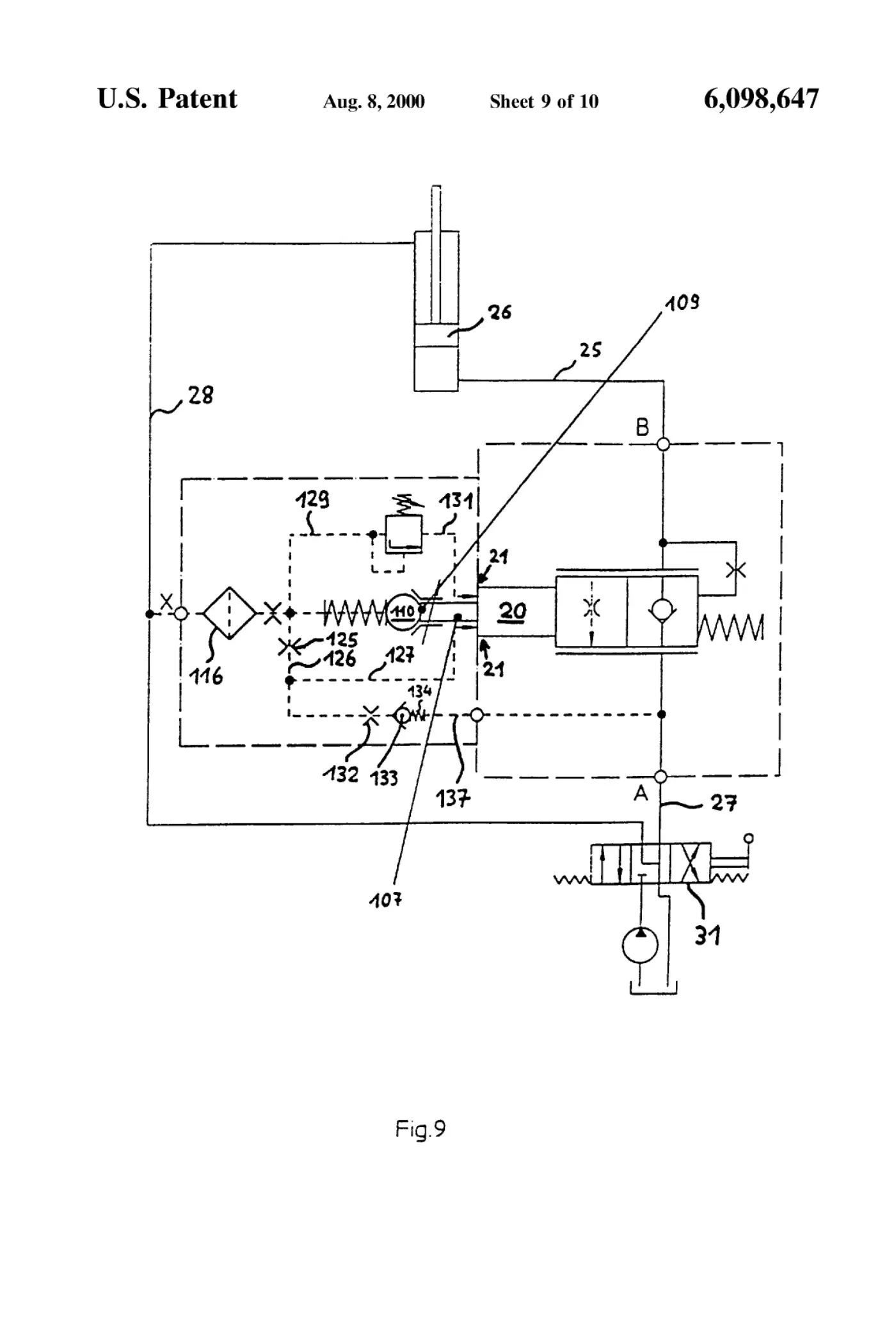
[0009]Sheet 9.
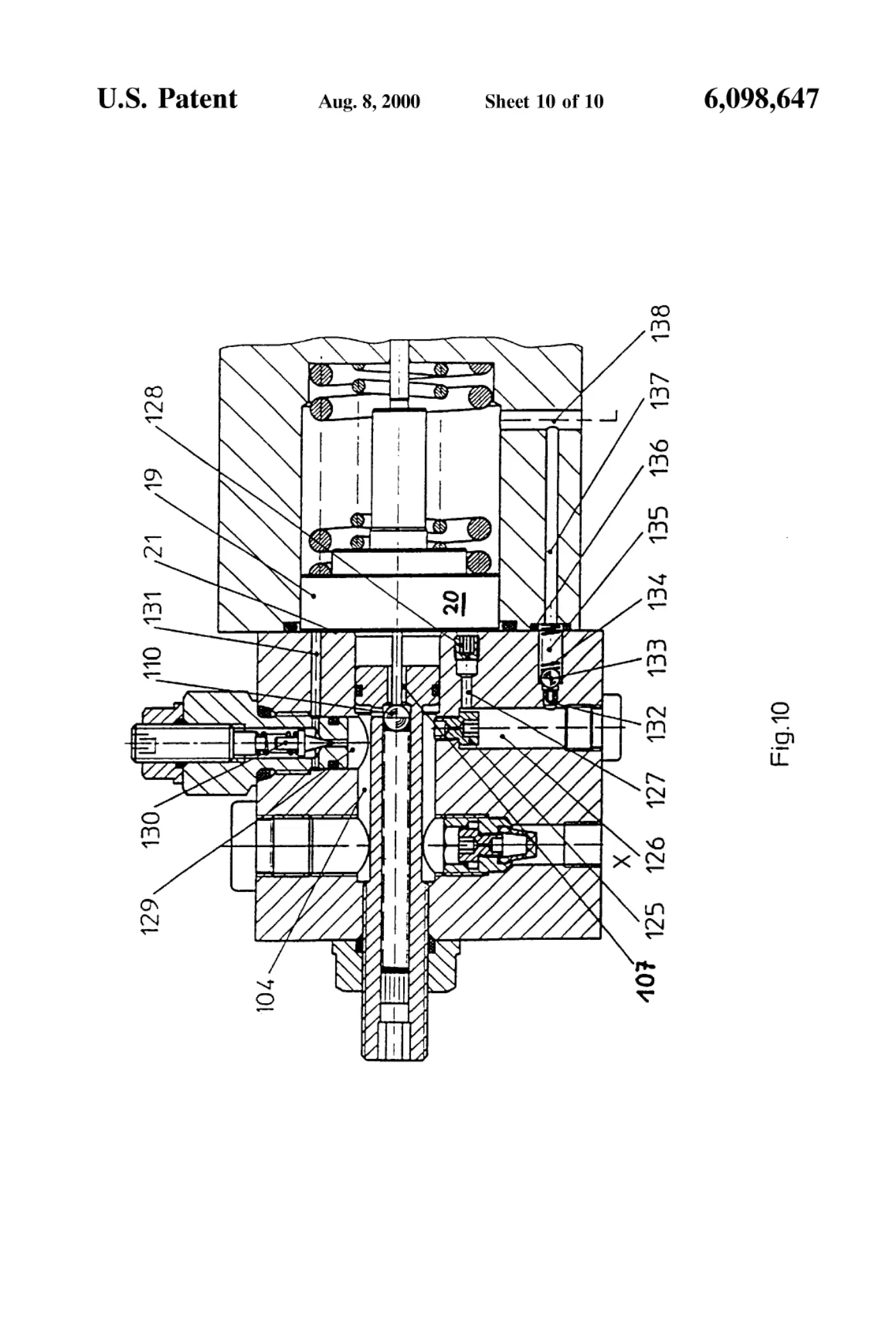
[0010]Sheet 10.
Publication information
Citation
OpenTechnical Publication OT-2026-000003143, “Load-holding brake valve,” published September 15, 2026 at 19:38:01 UTC, https://opentechnical.org/p/OT-2026-000003143.
To cite specific content, add the paragraph or figure numbers.
Terms
This record reproduces a document published elsewhere and is provided for reference and study. Rights in the original remain with its owner. See the publication policy.