OT-2026-000003163
Hybrid lay-up tool
- Published
- Permanent URL
- https://opentechnical.org/p/OT-2026-000003163
- Classification
- Manufacturing & Assembly Equipment › Assembly Systems
- Assignee
- BOEING CO
- Original source
- US-6012883-A, the United States Patent and Trademark Office, 11 January 2000
- Document SHA-256
- 7acc2d37cab7b7496b6fb30dd4eeb0156472028568c292979c202ff4c117278a
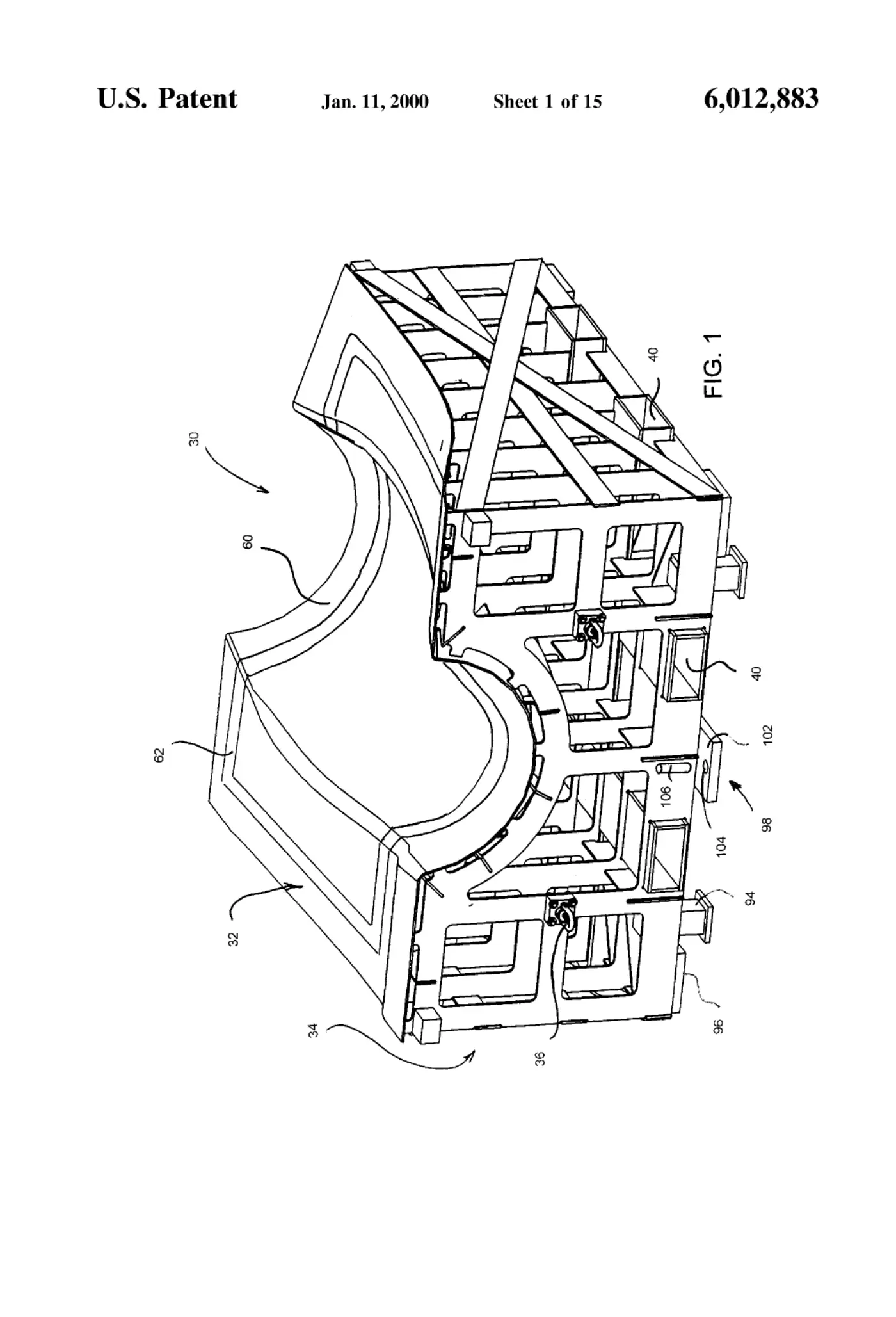
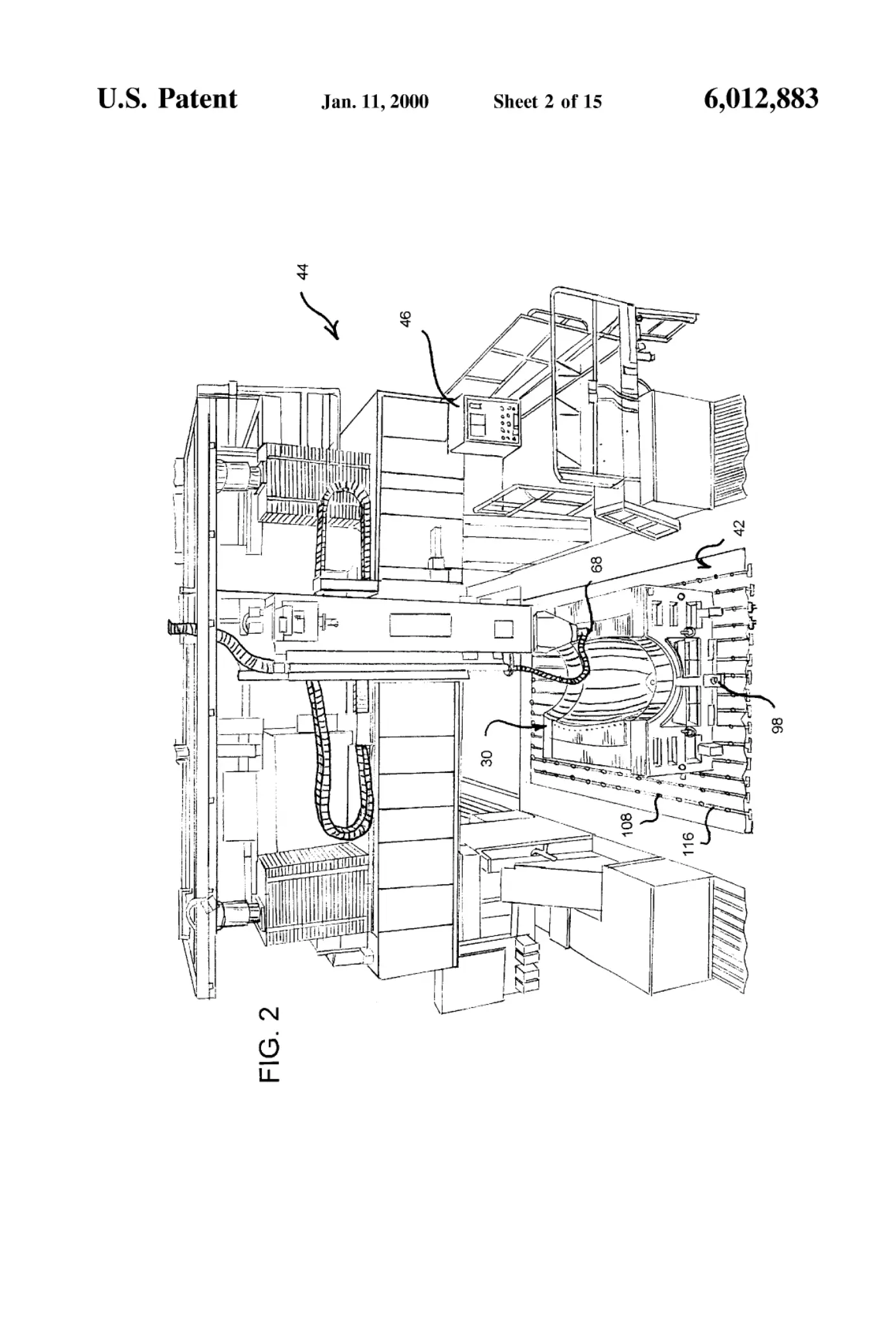
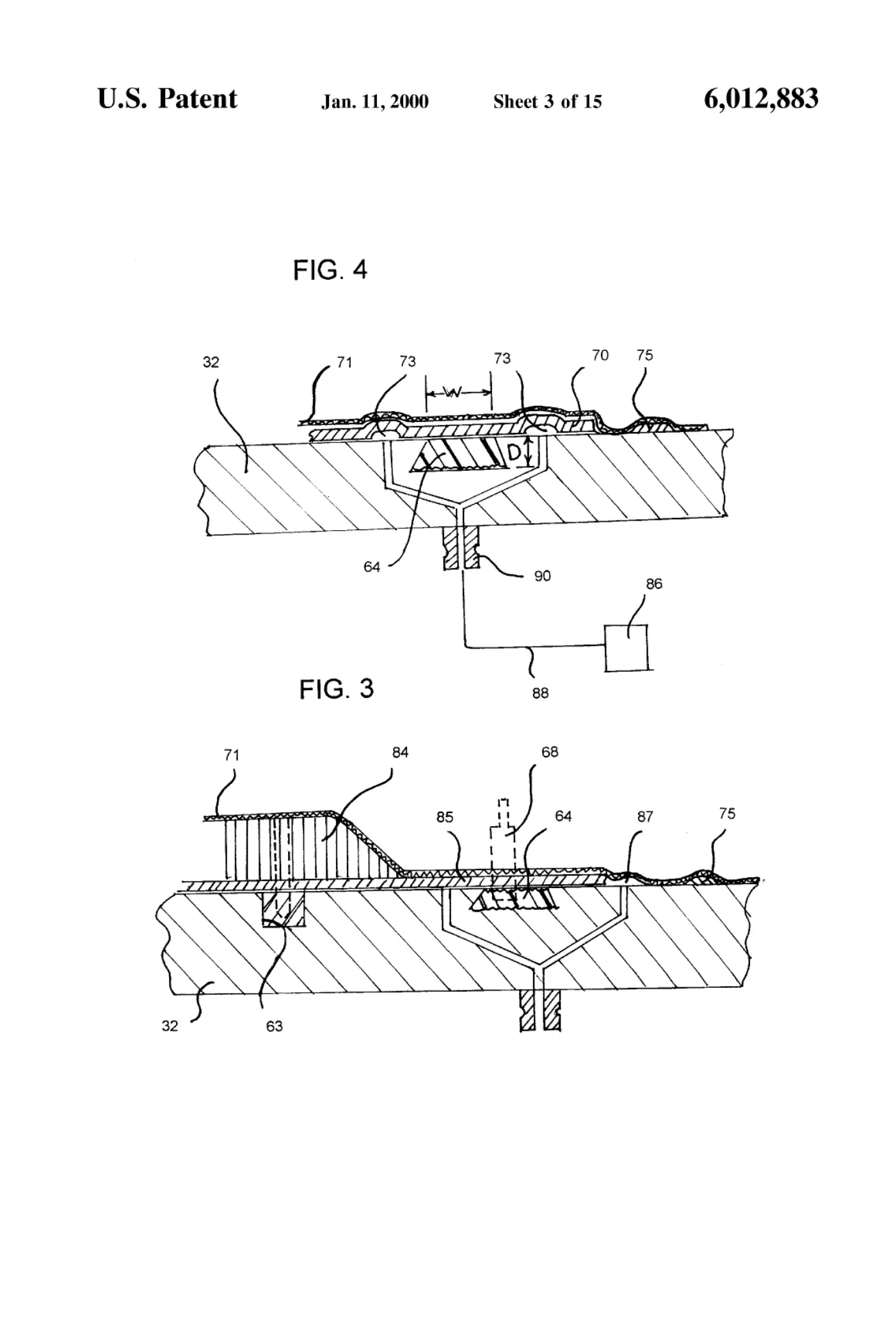
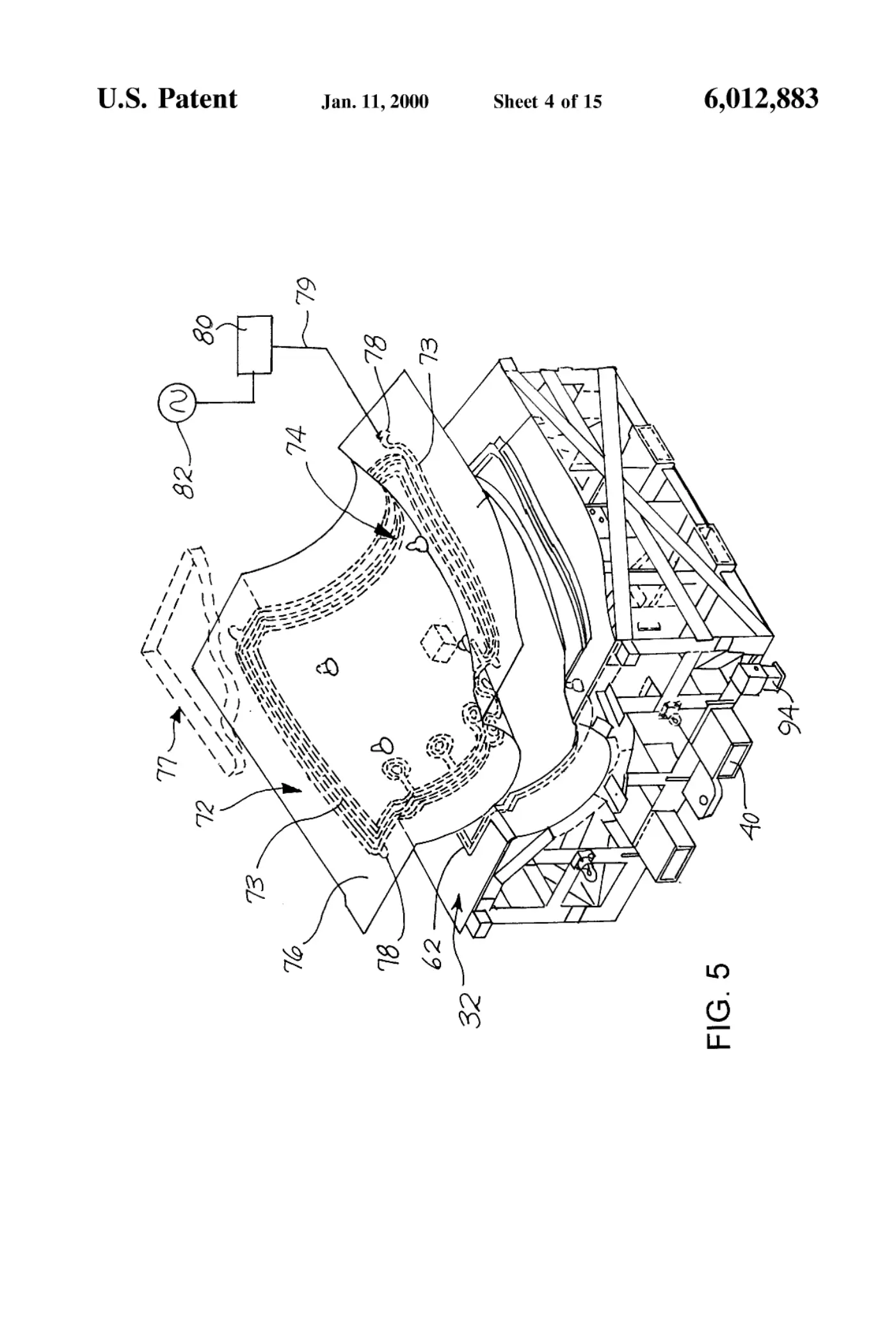
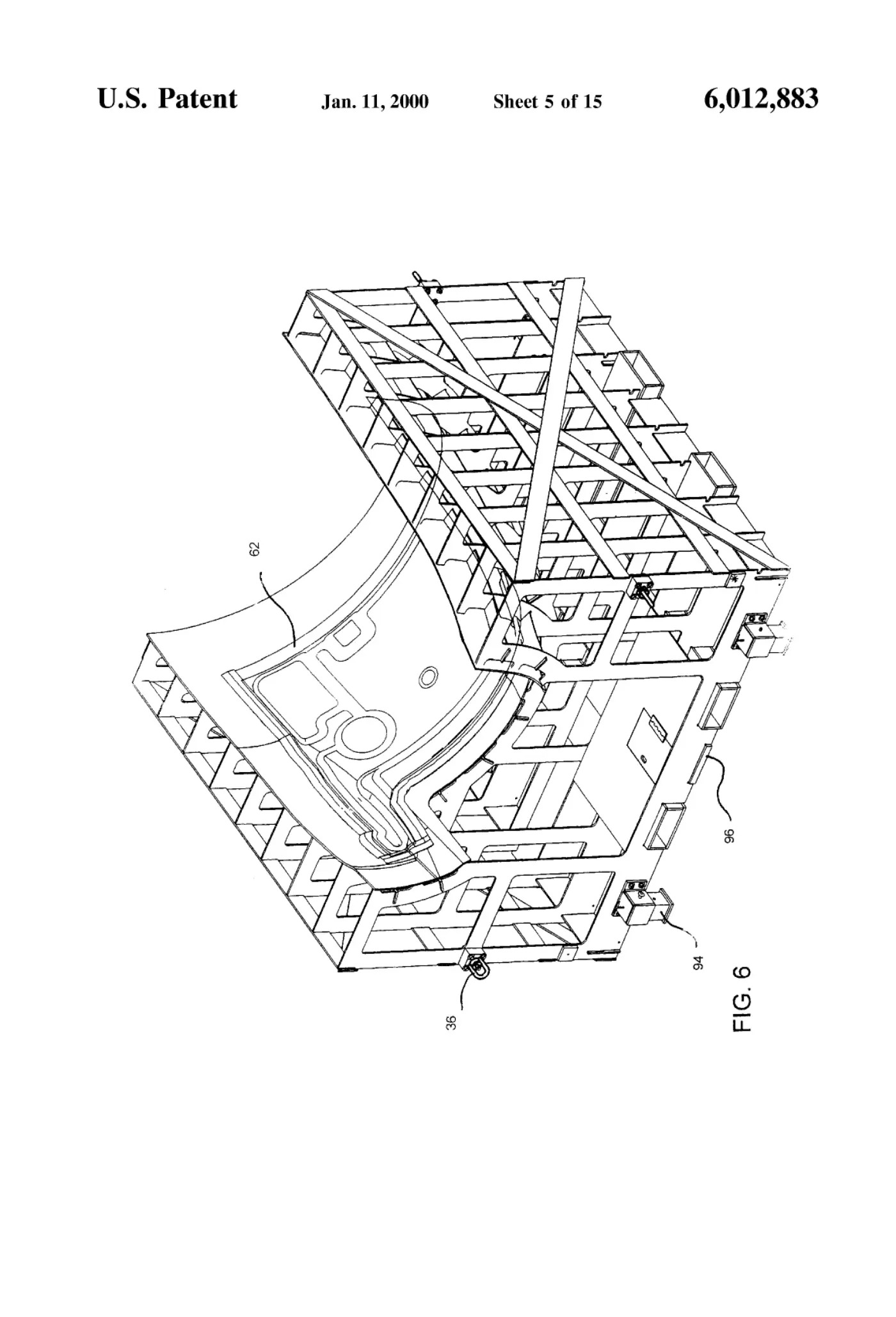
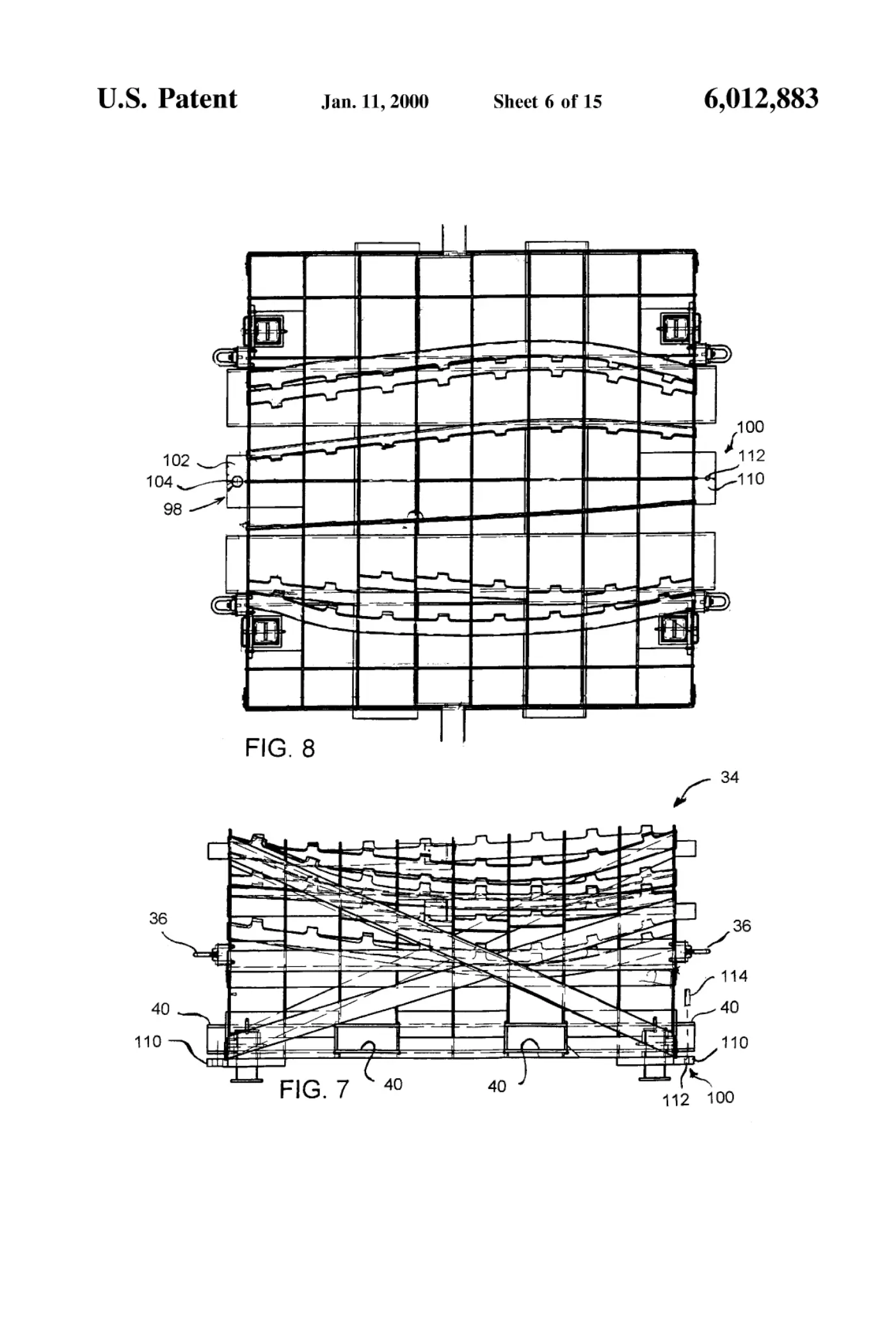
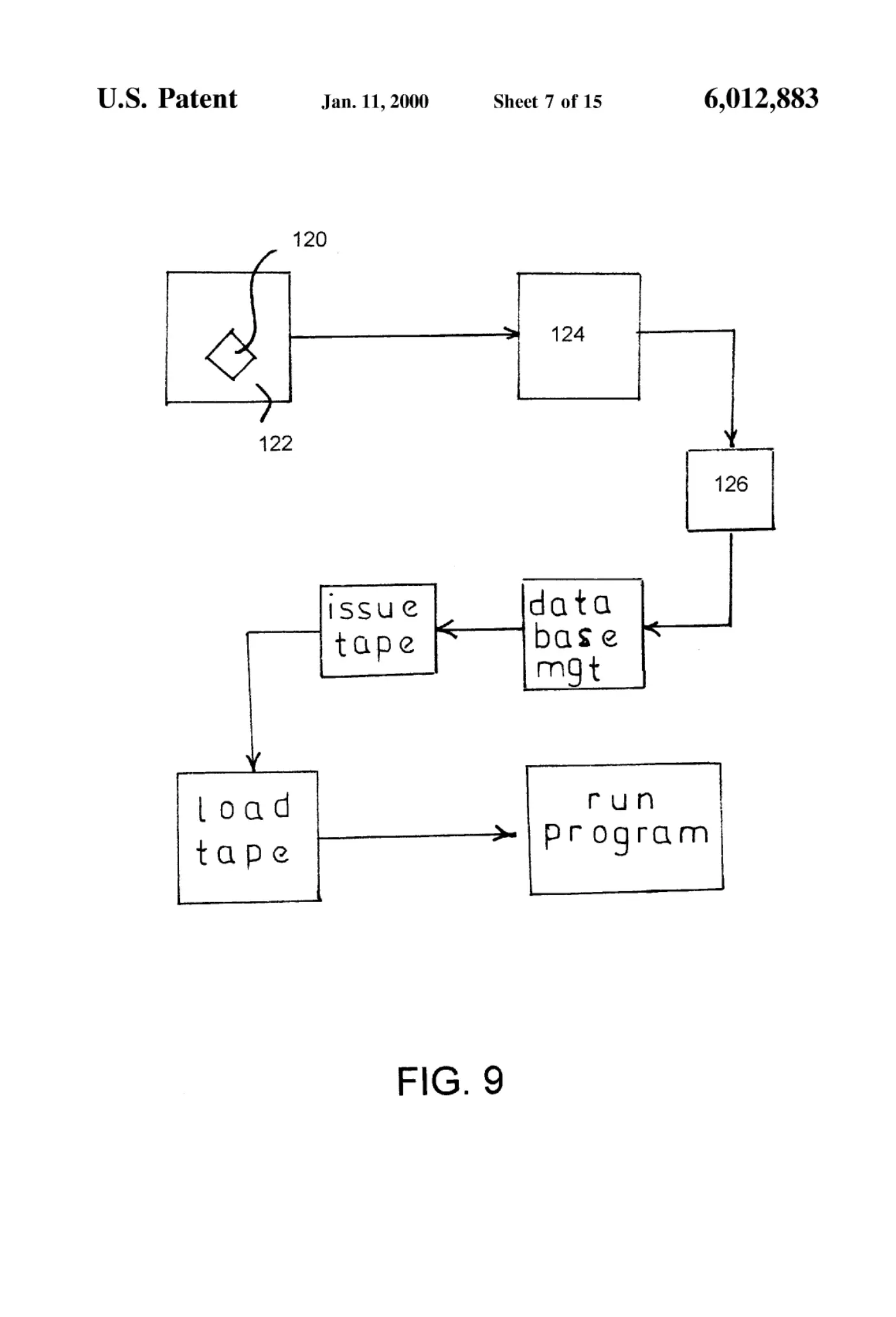
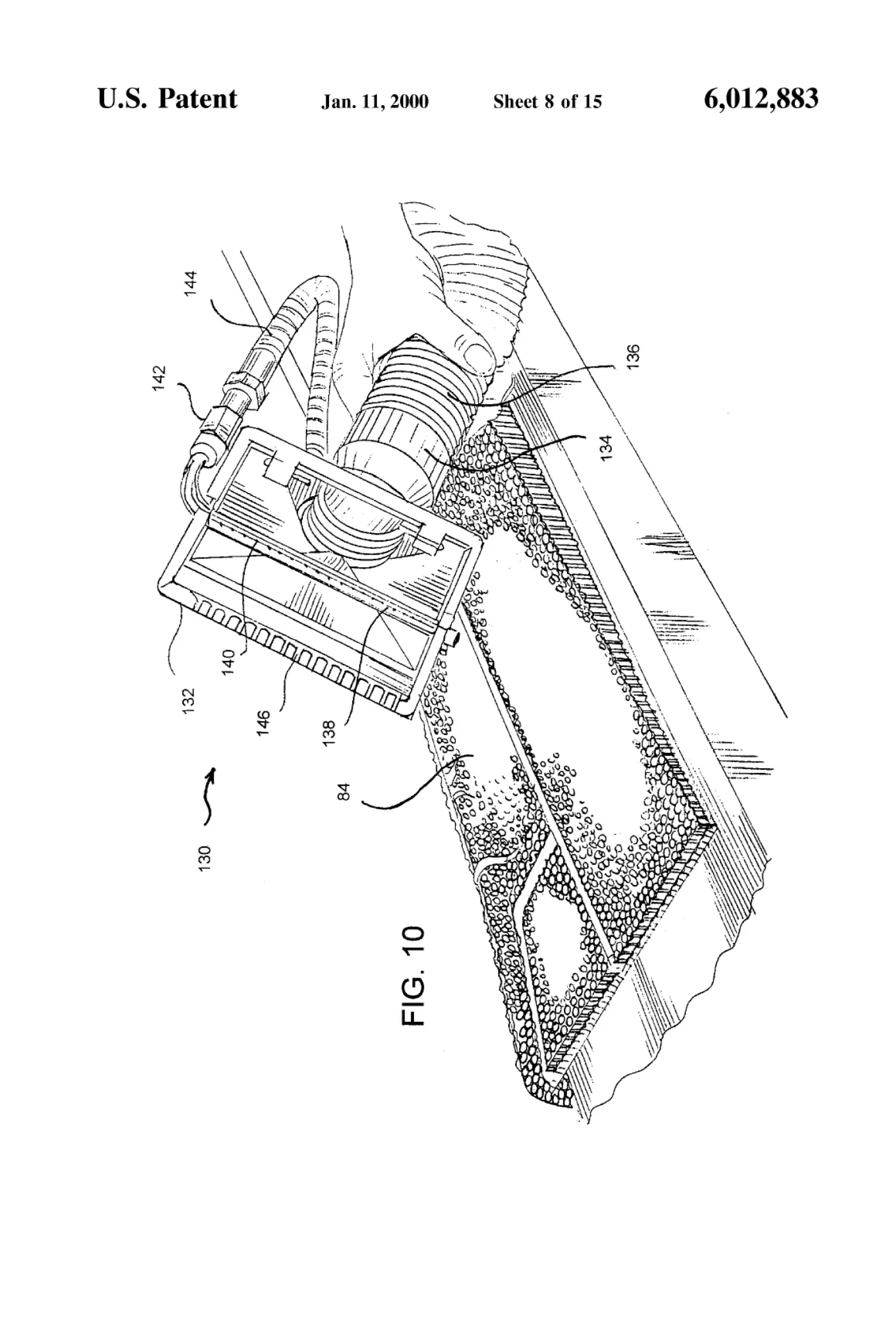
A hybrid tool serves as a form on which constituent materials are applied for bonding or curing into a part in a desired configuration. It also serves as a holder for the bonded or cured materials in the originally applied position during subsequent machining. The hybrid tool is made by fabricating a face sheet of composite material having a facing surface configured to the reverse of a desired shape of one surface of a part to be made on the tool. The actual part will be laid up on the facing surface, cured while on the tool, and even trimmed before release. Base structure of the tool holds the facing surface of the face sheet in the desired shape, and includes ground-engaging pads that define an "A" datum plane. The tool aligns a reference plane of the face sheet parallel to the datum plane. A substantially continuous groove in the face sheet, used for trimming the part, opens in the facing surface. Edge trimming of the part on the tool is performed using a CNC machine tool following a part program to move a cutter extending into the groove to engage the full thickness of the part. The groove corresponds in space to the position represented by the cutter path of travel in the part program because of the accurate spatial relationship of the face sheet reference plane and the datum plane. One embodiment of the invention includes filling the groove in the facing surface with a foaming, self-skinning sacrificial material and covering the facing surface of the tool with a caul sheet. The tool is heated to cure the foaming material, which fills the groove and forms a hard, smooth surface skin, flush with the facing surface of the tool to support the part during lay up. A series of skin plies are laid-up to form a tool-side skin, and other components of the part are laid-up on the tool-side skin. A vacuum bag is sealed to peripheral regions of the facing surface of the tool around the laid-up skin and components. An adhesive/resin matrix in the skin and components is bonded/cured in the conventional manner within the vacuum bag to produce a rigid integral assembly. The vacuum bag is removed, uncovering the rigid integral assembly for trimming. A cutter of a machine tool is guided on a predetermined path around the facing surface of the tool, running in the foam-filled groove below the facing surface of the tool and cutting a peripheral edge around the rigid integral assembly. After trimming, the rigid integral assembly is removed from the facing surface of the tool.
Abstract
A hybrid tool serves as a form on which constituent materials are applied for bonding or curing into a part in a desired configuration. It also serves as a holder for the bonded or cured materials in the originally applied position during subsequent machining. The hybrid tool is made by fabricating a face sheet of composite material having a facing surface configured to the reverse of a desired shape of one surface of a part to be made on the tool. The actual part will be laid up on the facing surface, cured while on the tool, and even trimmed before release. Base structure of the tool holds the facing surface of the face sheet in the desired shape, and includes ground-engaging pads that define an "A" datum plane. The tool aligns a reference plane of the face sheet parallel to the datum plane. A substantially continuous groove in the face sheet, used for trimming the part, opens in the facing surface. Edge trimming of the part on the tool is performed using a CNC machine tool following a part program to move a cutter extending into the groove to engage the full thickness of the part. The groove corresponds in space to the position represented by the cutter path of travel in the part program because of the accurate spatial relationship of the face sheet reference plane and the datum plane. One embodiment of the invention includes filling the groove in the facing surface with a foaming, self-skinning sacrificial material and covering the facing surface of the tool with a caul sheet. The tool is heated to cure the foaming material, which fills the groove and forms a hard, smooth surface skin, flush with the facing surface of the tool to support the part during lay up. A series of skin plies are laid-up to form a tool-side skin, and other components of the part are laid-up on the tool-side skin. A vacuum bag is sealed to peripheral regions of the facing surface of the tool around the laid-up skin and components. An adhesive/resin matrix in the skin and components is bonded/cured in the conventional manner within the vacuum bag to produce a rigid integral assembly. The vacuum bag is removed, uncovering the rigid integral assembly for trimming. A cutter of a machine tool is guided on a predetermined path around the facing surface of the tool, running in the foam-filled groove below the facing surface of the tool and cutting a peripheral edge around the rigid integral assembly. After trimming, the rigid integral assembly is removed from the facing surface of the tool.
1. Drawings
[0001]Sheet 1.
[0002]Sheet 2.
[0003]Sheet 3.
[0004]Sheet 4.
[0005]Sheet 5.
[0006]Sheet 6.
[0007]Sheet 7.
[0008]Sheet 8.
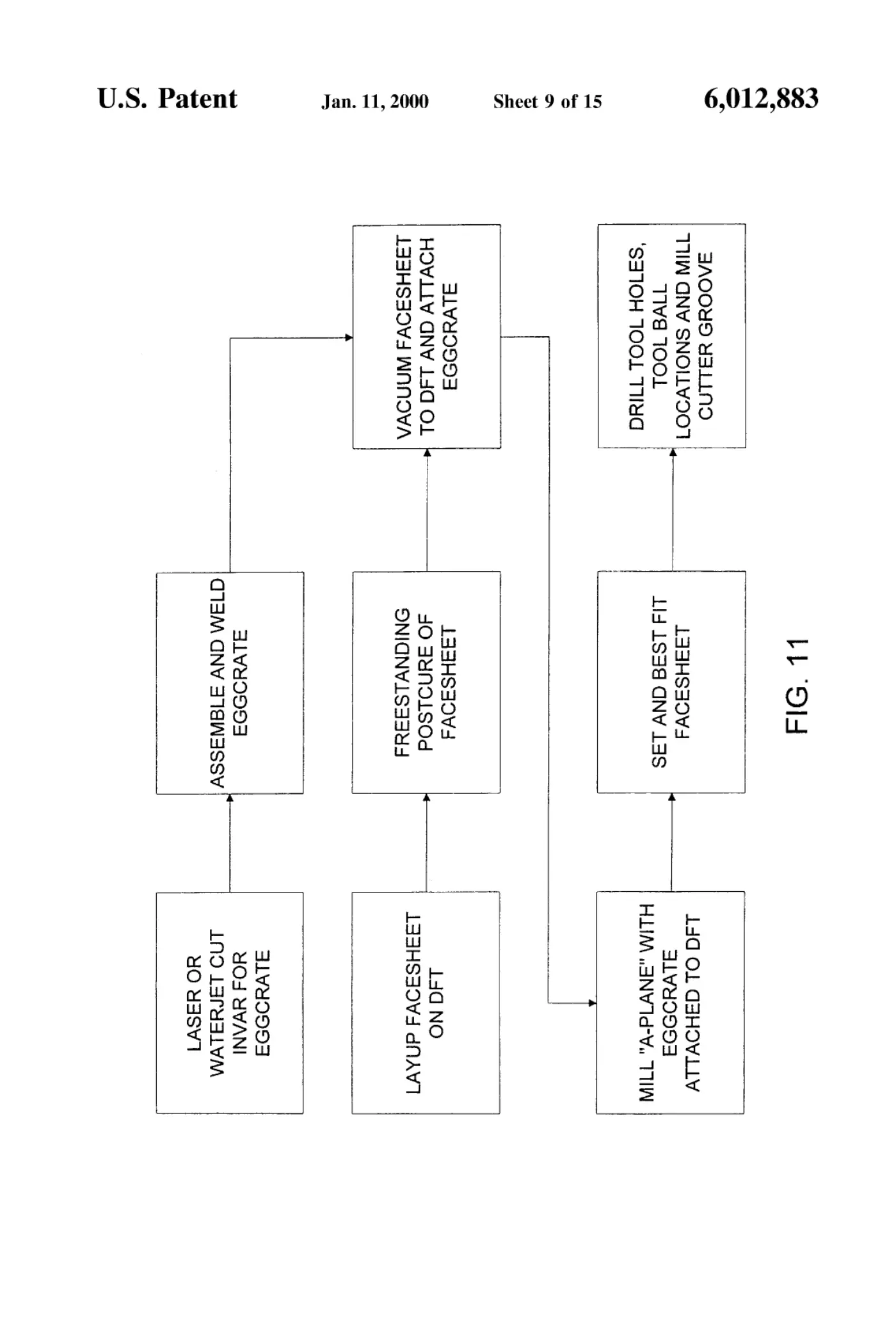
[0009]Sheet 9.
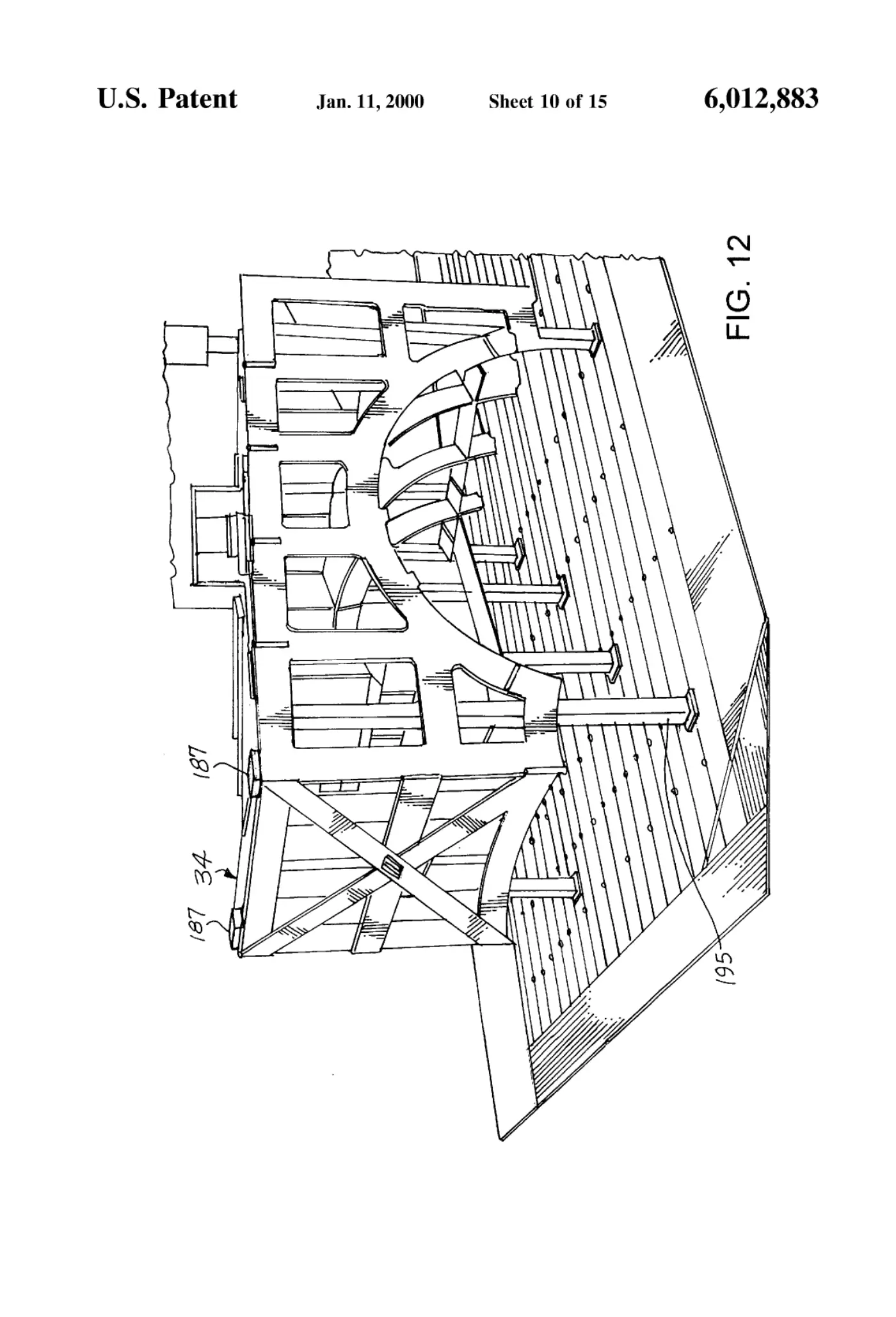
[0010]Sheet 10.
Publication information
Citation
OpenTechnical Publication OT-2026-000003163, “Hybrid lay-up tool,” published September 15, 2026 at 19:41:56 UTC, https://opentechnical.org/p/OT-2026-000003163.
To cite specific content, add the paragraph or figure numbers.
Terms
This record reproduces a document published elsewhere and is provided for reference and study. Rights in the original remain with its owner. See the publication policy.