OT-2026-000003226
Industrial robot
- Published
- Permanent URL
- https://opentechnical.org/p/OT-2026-000003226
- Classification
- Robotics & Automation › Robot Architectures
- Inventors
- IRIYAMA YOSHIKO
- Assignee
- TOKICO LTD
- Original source
- US-5732599-A, the United States Patent and Trademark Office, 31 March 1998
- Document SHA-256
- 596cf8fe4a0cb912d1d59d12dbba984658b349d81dbbed4bc60379476200914a
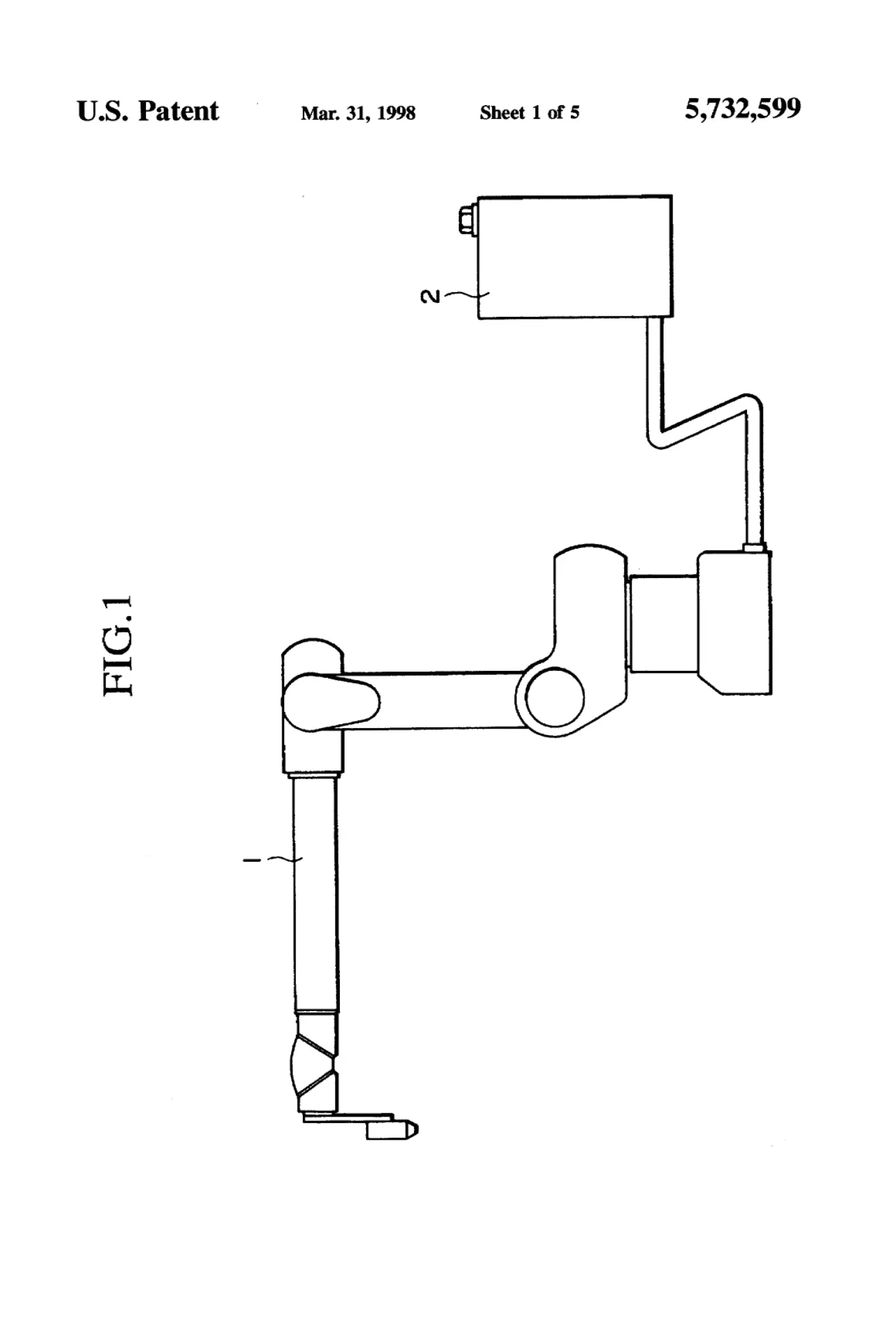
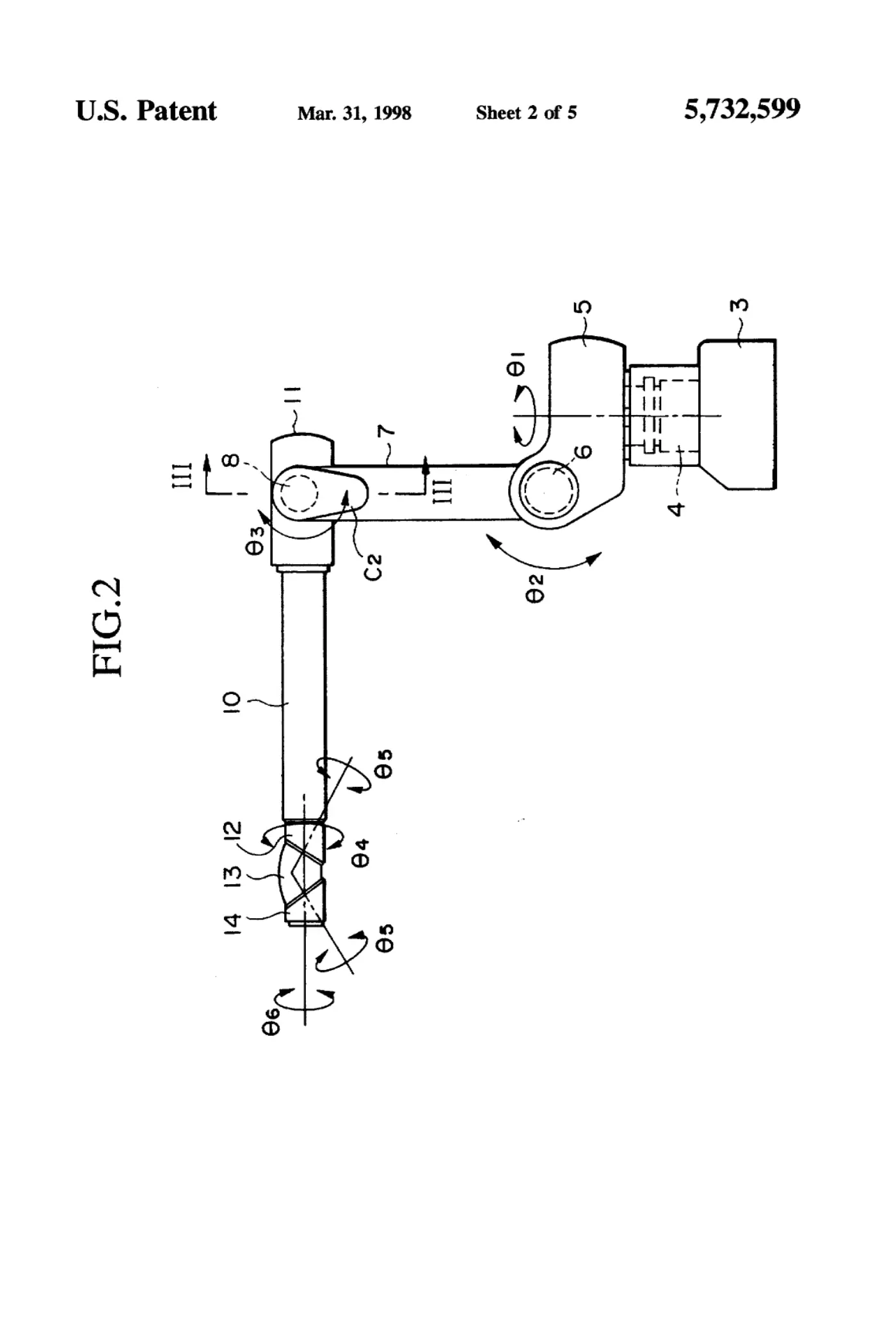
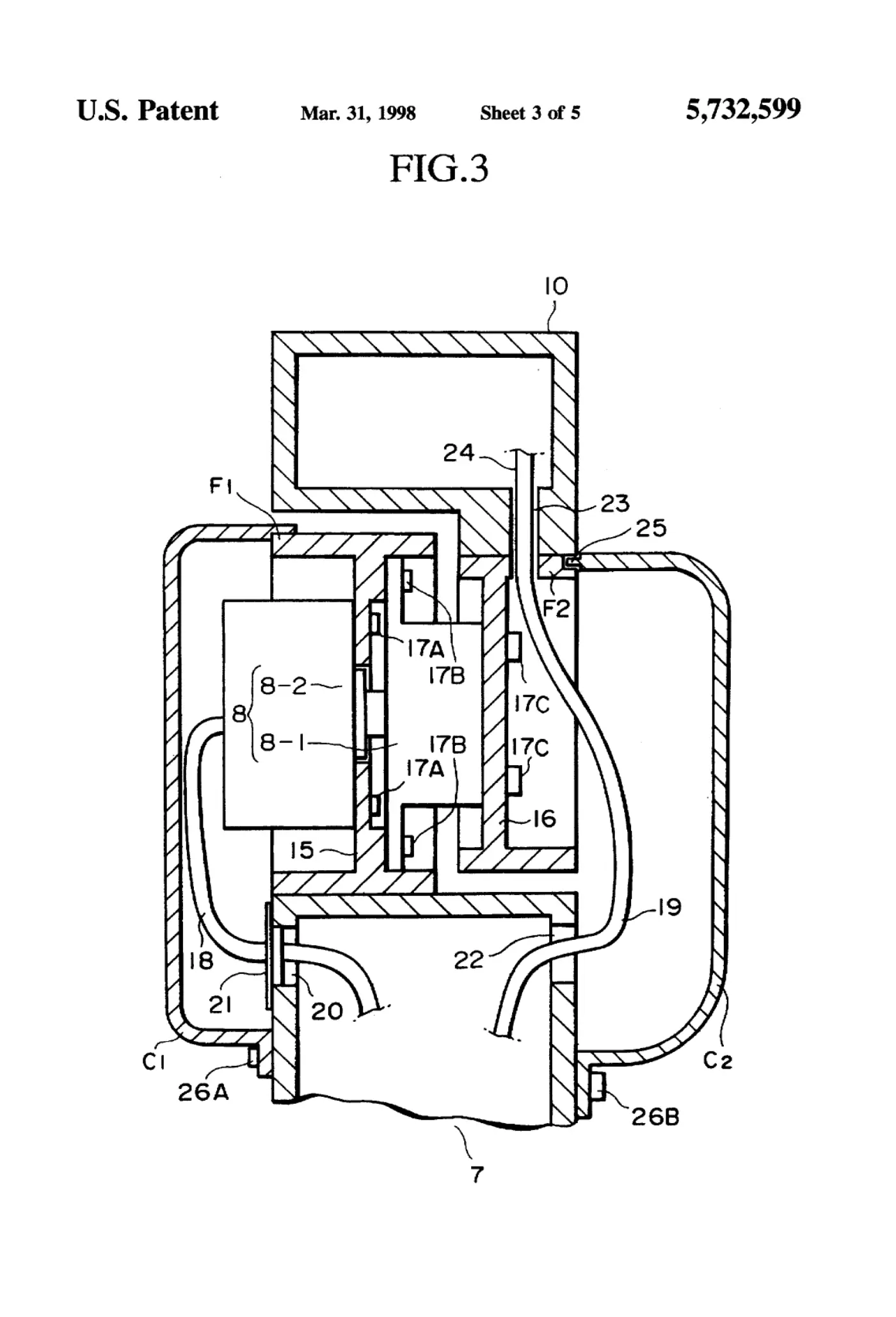
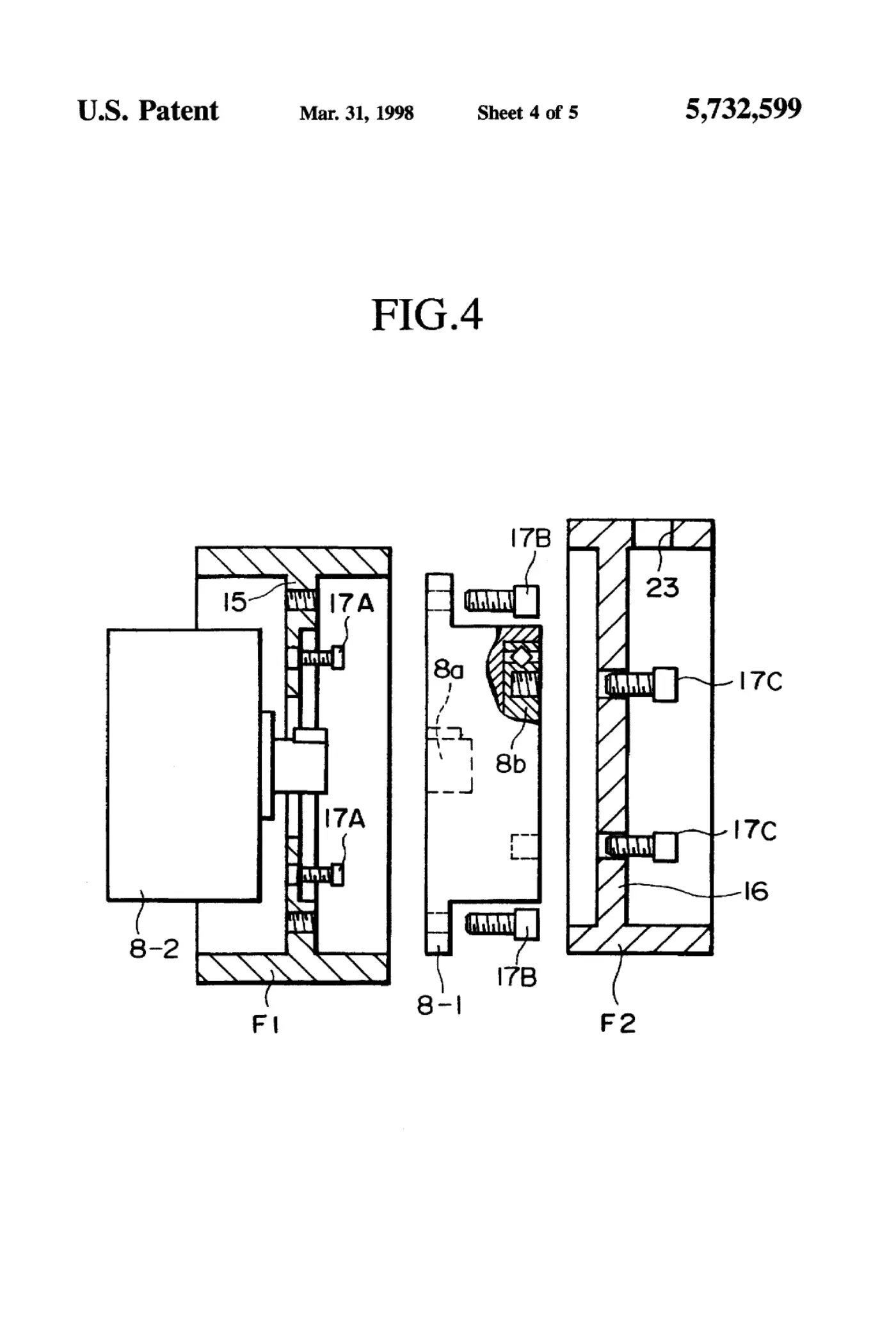
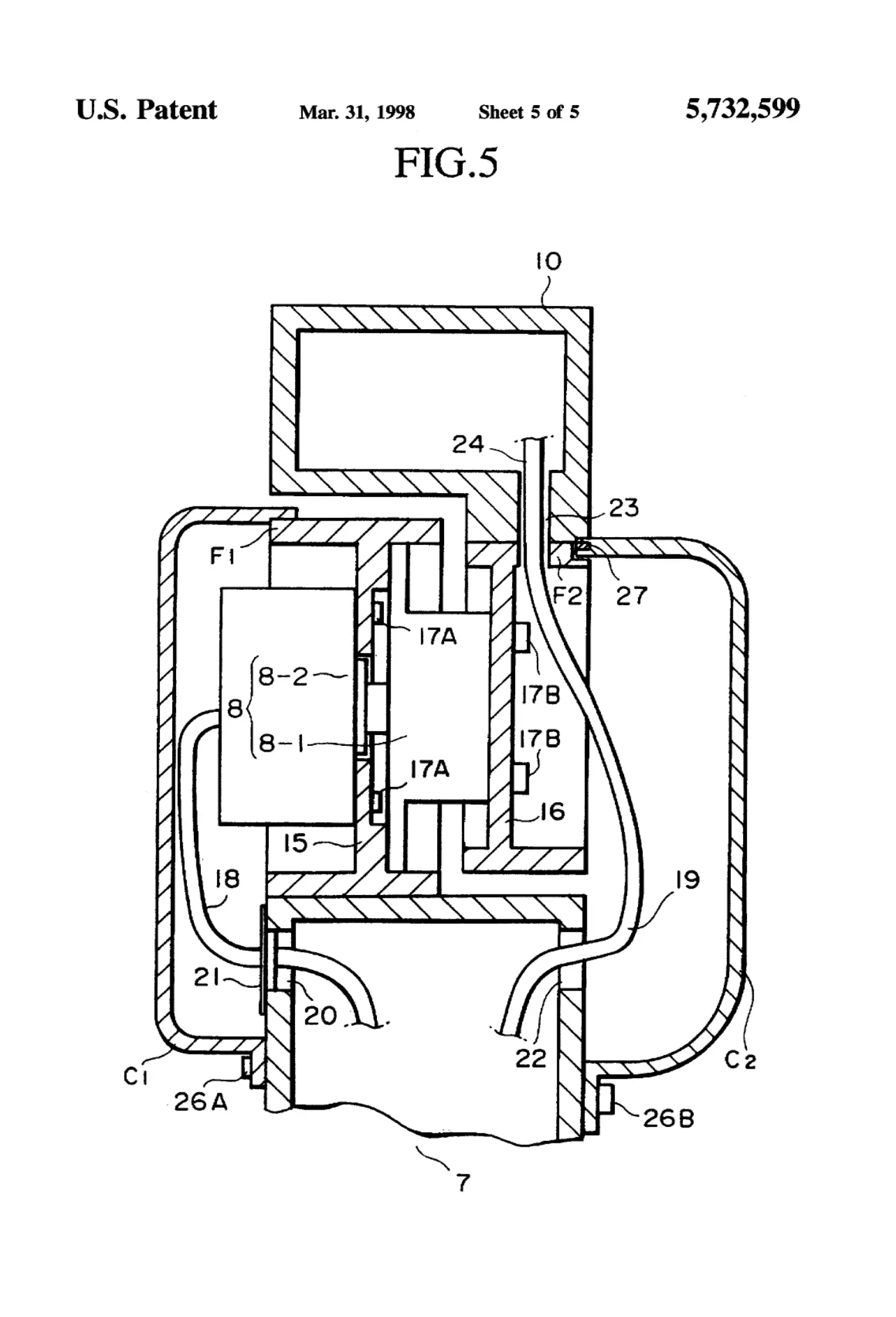
A robotic device having at least first and second arms joined with an elbow-joint is relatively maintenance-free and is particularly suitable for use in an atmosphere full of vapors from paints or organic solvents. These substances pose considerable operational problems in conventional robotic devices because of the accumulation of dust and solvents, which causes not only degradation in the performance of the robot but requires high maintenance cost. These problems are solved in the present robotic device by housing the driving motor for the second arm within the confines of the cross sectional area of the first arm, and the second arm is coupled through a connector to the output shaft of the driving motor, again within the same confined area. Such a compact design includes side caps providing protection of the feed-through cables and wires, which are routed out of the first shaft inner space to loop around the elbow-joint to enter into the second shaft inner space. The protection caps are sealed against the side walls of the first shaft to guard the cables and wires from the organic vapors in the operating atmosphere while allowing a wide degree of freedom of movement of the second arm and preventing inertial loading on the second arm which is should be free to perform quick and complex maneuvers. The sealing material may either be labyrinth-type seal or a felt material seal which permits sliding against the arms.
Abstract
A robotic device having at least first and second arms joined with an elbow-joint is relatively maintenance-free and is particularly suitable for use in an atmosphere full of vapors from paints or organic solvents. These substances pose considerable operational problems in conventional robotic devices because of the accumulation of dust and solvents, which causes not only degradation in the performance of the robot but requires high maintenance cost. These problems are solved in the present robotic device by housing the driving motor for the second arm within the confines of the cross sectional area of the first arm, and the second arm is coupled through a connector to the output shaft of the driving motor, again within the same confined area. Such a compact design includes side caps providing protection of the feed-through cables and wires, which are routed out of the first shaft inner space to loop around the elbow-joint to enter into the second shaft inner space. The protection caps are sealed against the side walls of the first shaft to guard the cables and wires from the organic vapors in the operating atmosphere while allowing a wide degree of freedom of movement of the second arm and preventing inertial loading on the second arm which is should be free to perform quick and complex maneuvers. The sealing material may either be labyrinth-type seal or a felt material seal which permits sliding against the arms.
1. Drawings
[0001]Sheet 1.
[0002]Sheet 2.
[0003]Sheet 3.
[0004]Sheet 4.
[0005]Sheet 5.
Publication information
Citation
OpenTechnical Publication OT-2026-000003226, “Industrial robot,” published September 15, 2026 at 19:52:17 UTC, https://opentechnical.org/p/OT-2026-000003226.
To cite specific content, add the paragraph or figure numbers.
Terms
This record reproduces a document published elsewhere and is provided for reference and study. Rights in the original remain with its owner. See the publication policy.