OT-2026-000003248
Inertial orientation tracker apparatus having automatic drift compensation for tracking human head and other similarly sized body
- Published
- Permanent URL
- https://opentechnical.org/p/OT-2026-000003248
- Classification
- Warehousing & Storage Systems › Racking and Shelving
- Assignee
- MASSACHUSETTS INST TECHNOLOGY
- Original source
- US-5645077-A, the United States Patent and Trademark Office, 8 July 1997
- Document SHA-256
- fdad0dc788015919f06f989eae95a119a5ba55d57bdae34b8421ae9b1a9c016d
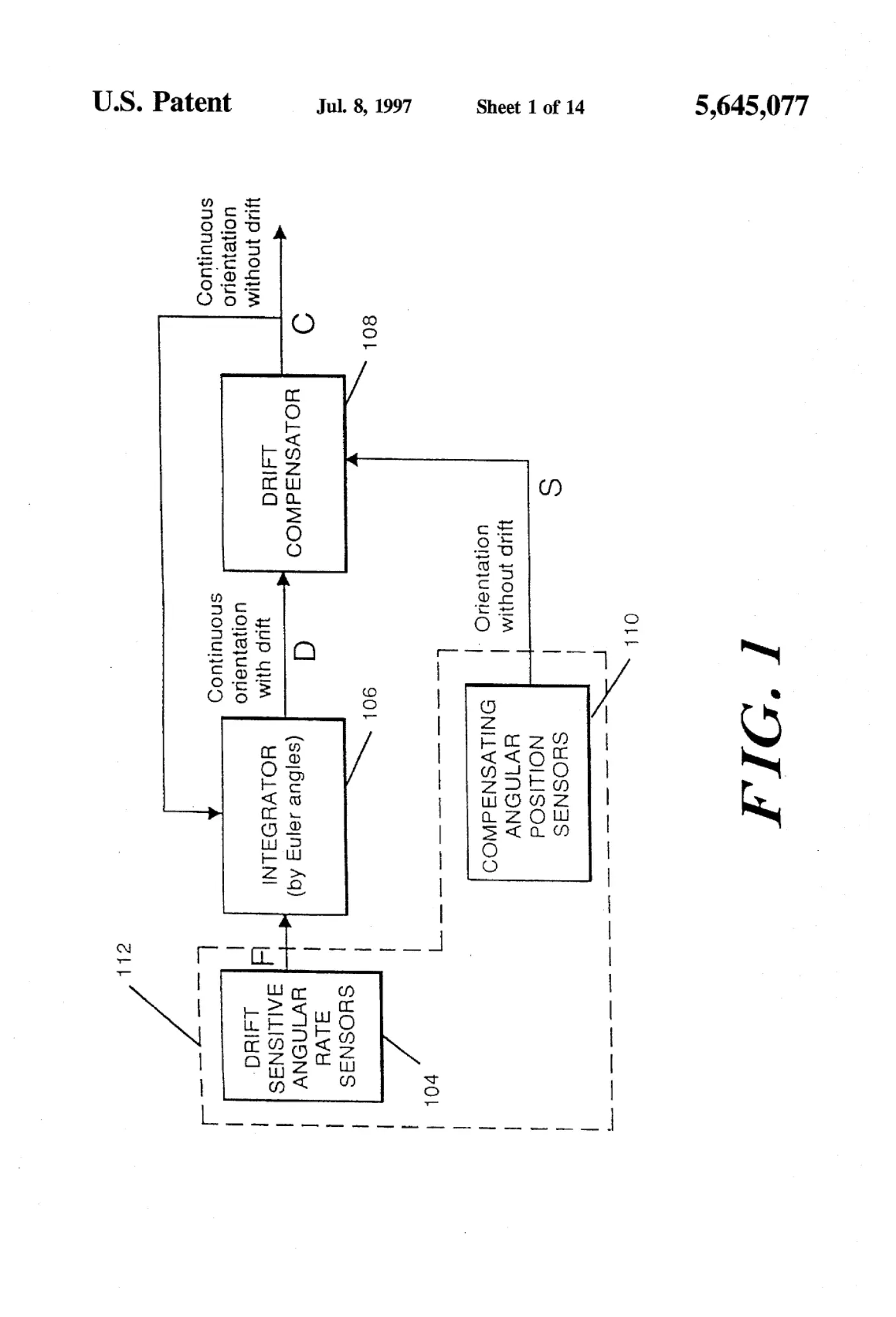
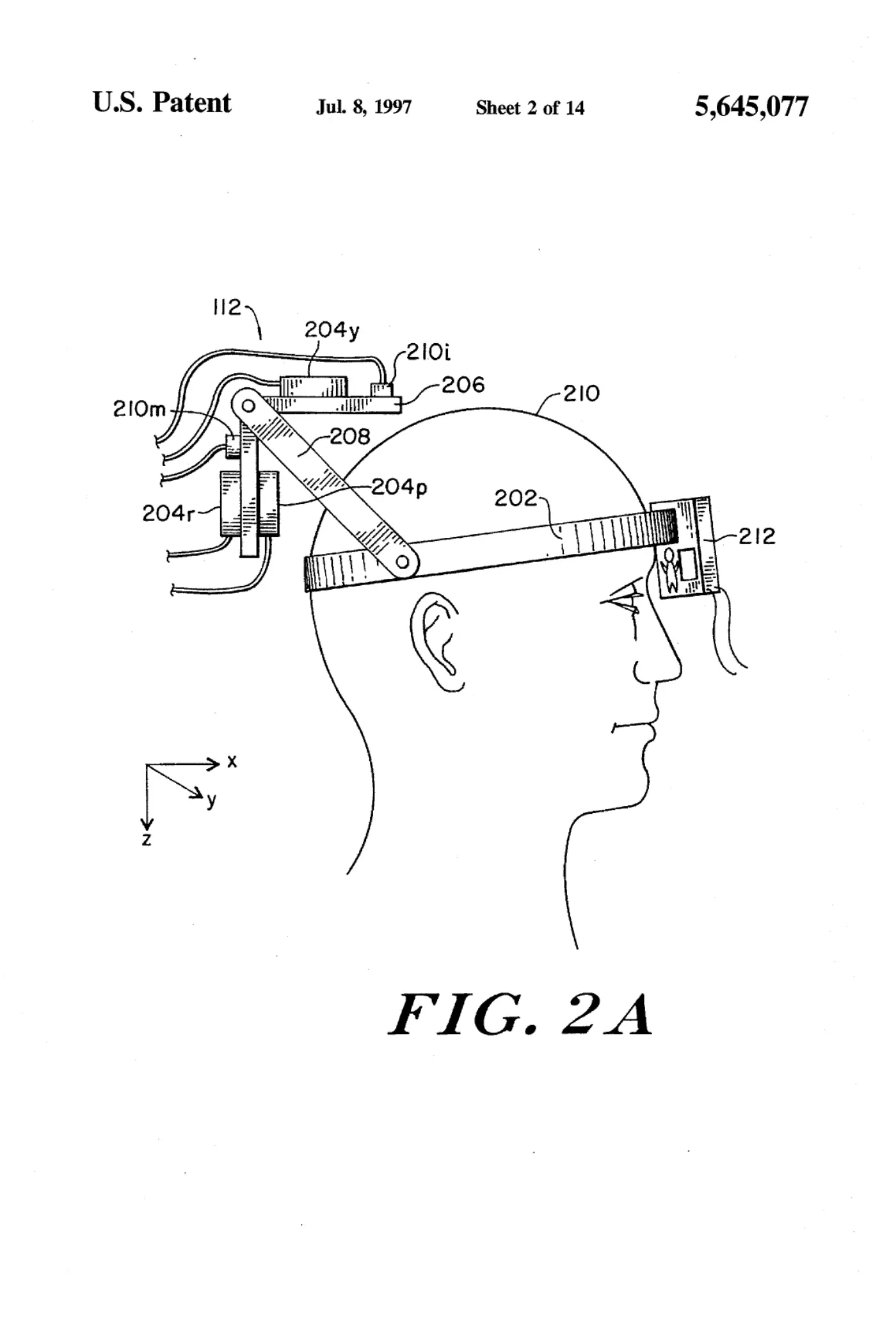
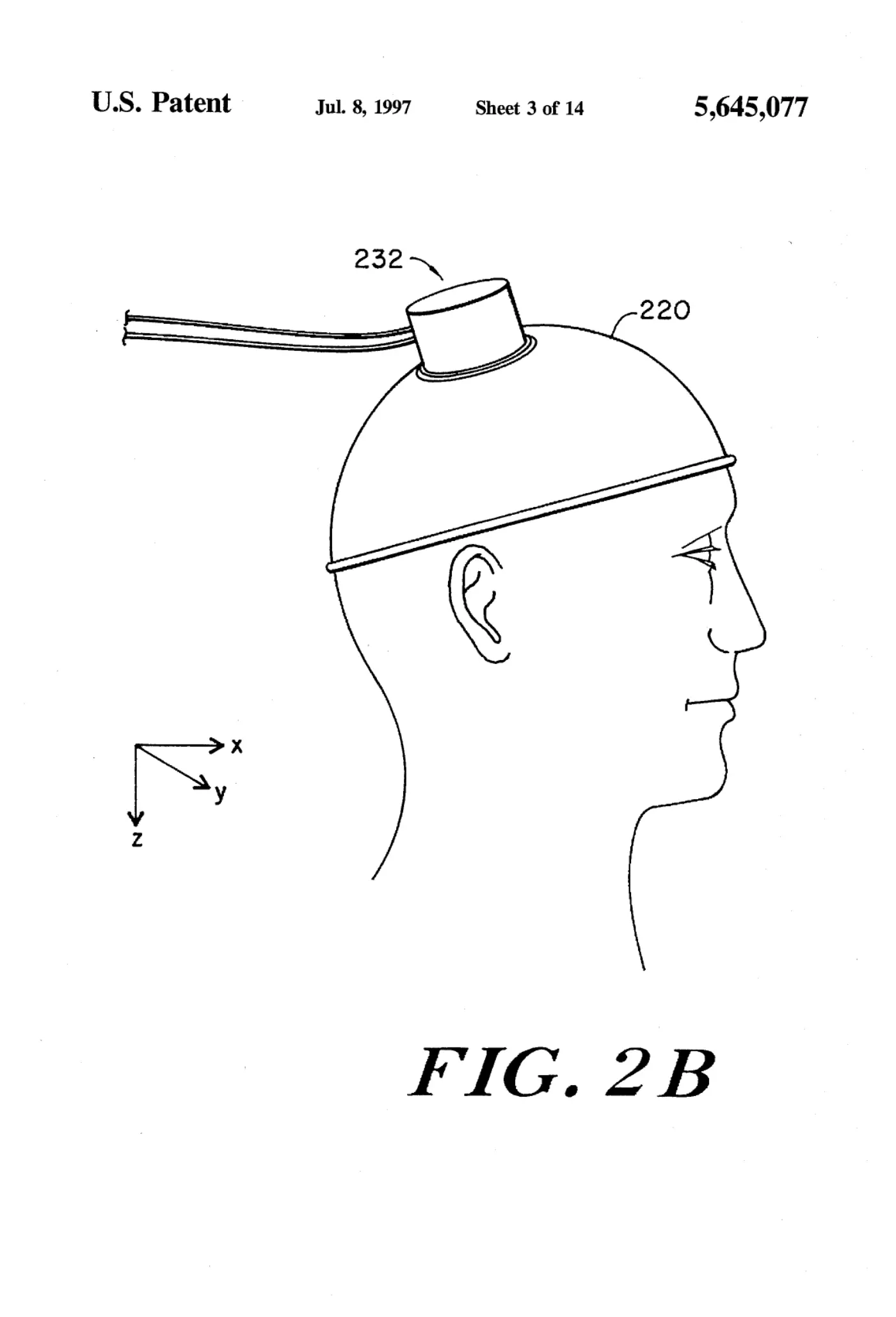
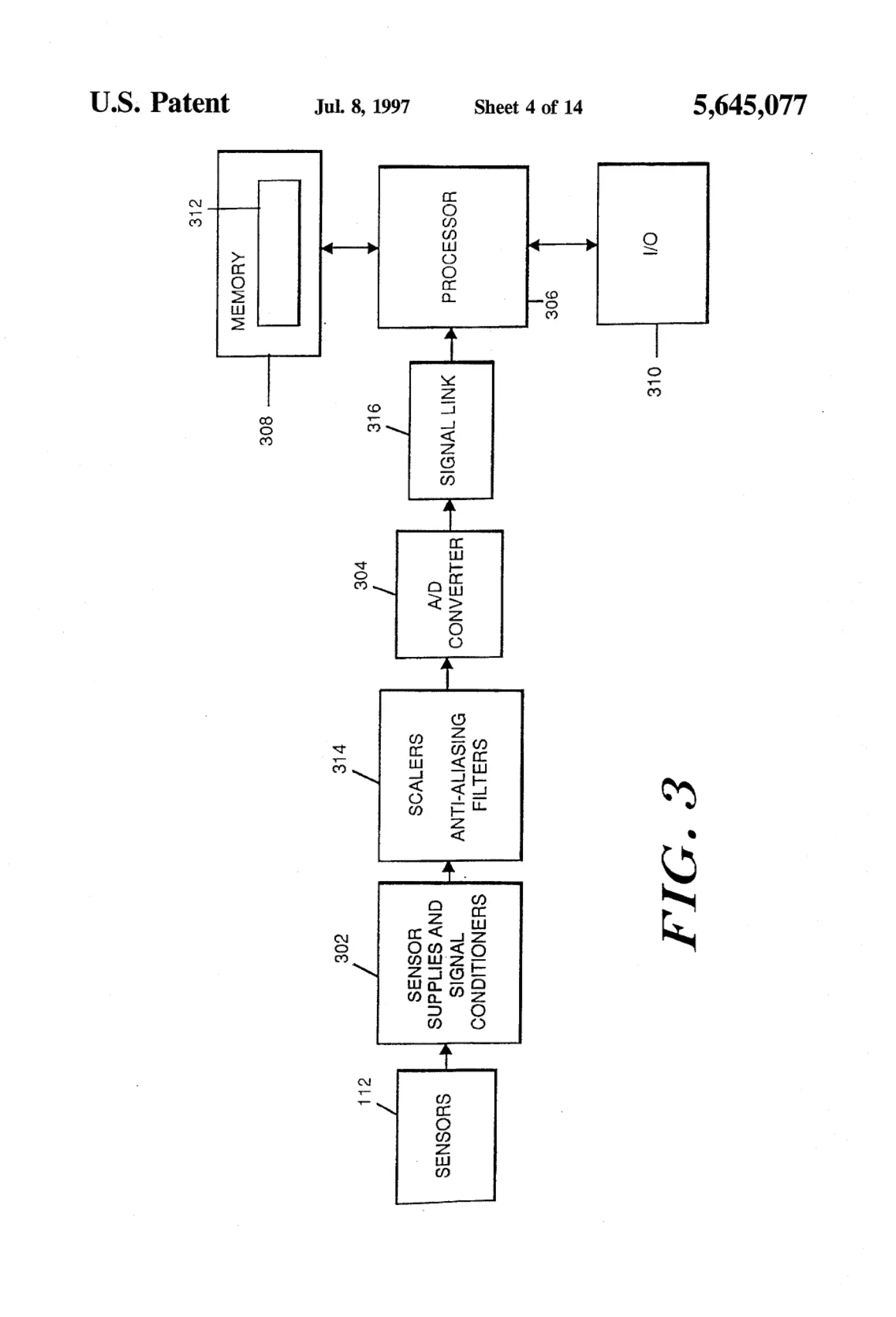
A self contained sensor apparatus generates a signal that corresponds to at least two of the three orientational aspects of yaw, pitch and roll of a human-scale body, relative to an external reference frame. A sensor generates first sensor signals that correspond to rotational accelerations or rates of the body about certain body axes. The sensor may be mounted to the body. Coupled to the sensor is a signal processor for generating orientation signals relative to the external reference frame that correspond to the angular rate or acceleration signals. The first sensor signals are impervious to interference from electromagnetic, acoustic, optical and mechanical sources. The sensors may be rate sensors. An integrator may integrate the rate signal over time. A drift compensator is coupled to the rate sensors and the integrator. The drift compensator may include a gravitational tilt sensor or a magnetic field sensor or both. A verifier periodically measures the orientation of the body by a means different from the drift sensitive rate sensors. The verifier may take into account characteristic features of human motion, such as stillness periods. The drift compensator may be, in part, a Kalman filter, which may utilize statistical data about human head motion.
Abstract
A self contained sensor apparatus generates a signal that corresponds to at least two of the three orientational aspects of yaw, pitch and roll of a human-scale body, relative to an external reference frame. A sensor generates first sensor signals that correspond to rotational accelerations or rates of the body about certain body axes. The sensor may be mounted to the body. Coupled to the sensor is a signal processor for generating orientation signals relative to the external reference frame that correspond to the angular rate or acceleration signals. The first sensor signals are impervious to interference from electromagnetic, acoustic, optical and mechanical sources. The sensors may be rate sensors. An integrator may integrate the rate signal over time. A drift compensator is coupled to the rate sensors and the integrator. The drift compensator may include a gravitational tilt sensor or a magnetic field sensor or both. A verifier periodically measures the orientation of the body by a means different from the drift sensitive rate sensors. The verifier may take into account characteristic features of human motion, such as stillness periods. The drift compensator may be, in part, a Kalman filter, which may utilize statistical data about human head motion.
1. Drawings
[0001]Sheet 1.
[0002]Sheet 2.
[0003]Sheet 3.
[0004]Sheet 4.
[0005]Sheet 5.
[0006]Sheet 6.
[0007]Sheet 7.
[0008]Sheet 8.
[0009]Sheet 9.
[0010]Sheet 10.
Publication information
Citation
OpenTechnical Publication OT-2026-000003248, “Inertial orientation tracker apparatus having automatic drift compensation for tracking human head and other similarly sized body,” published September 15, 2026 at 19:56:21 UTC, https://opentechnical.org/p/OT-2026-000003248.
To cite specific content, add the paragraph or figure numbers.
Terms
This record reproduces a document published elsewhere and is provided for reference and study. Rights in the original remain with its owner. See the publication policy.