OT-2026-000003257
Method and system for loading panels into shipping containers at a work station and end effector for use therein
- Published
- Permanent URL
- https://opentechnical.org/p/OT-2026-000003257
- Classification
- Robotics & Automation › Robot Architectures
- Inventors
- PANYARD JAMES R, PEARSON THOMAS E
- Assignee
- FORD MOTOR CO
- Original source
- US-5632590-A, the United States Patent and Trademark Office, 27 May 1997
- Document SHA-256
- b848432cbeaedc9fce37080674fef2559adeb2e30213705a2eb31b126cbf6b26
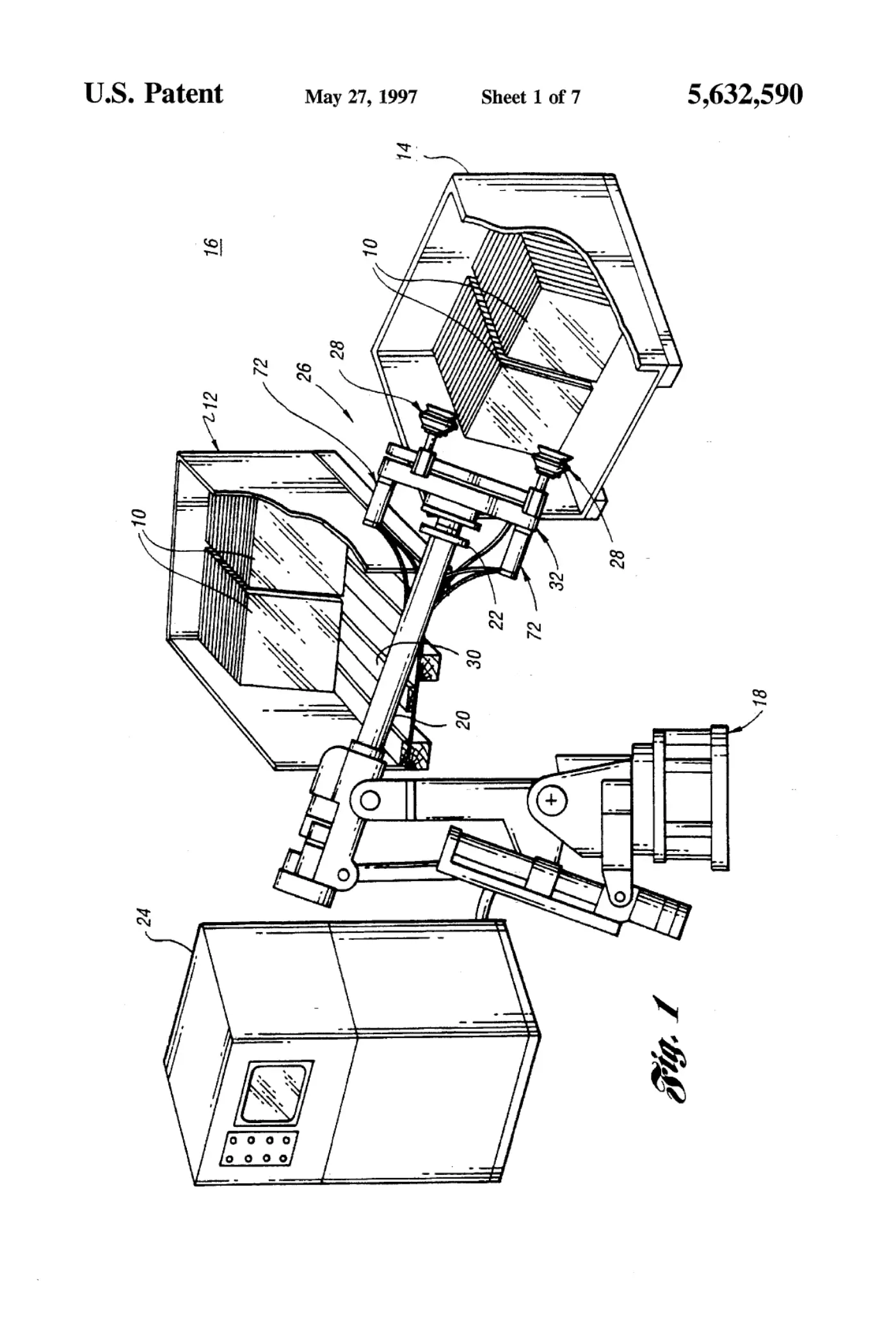
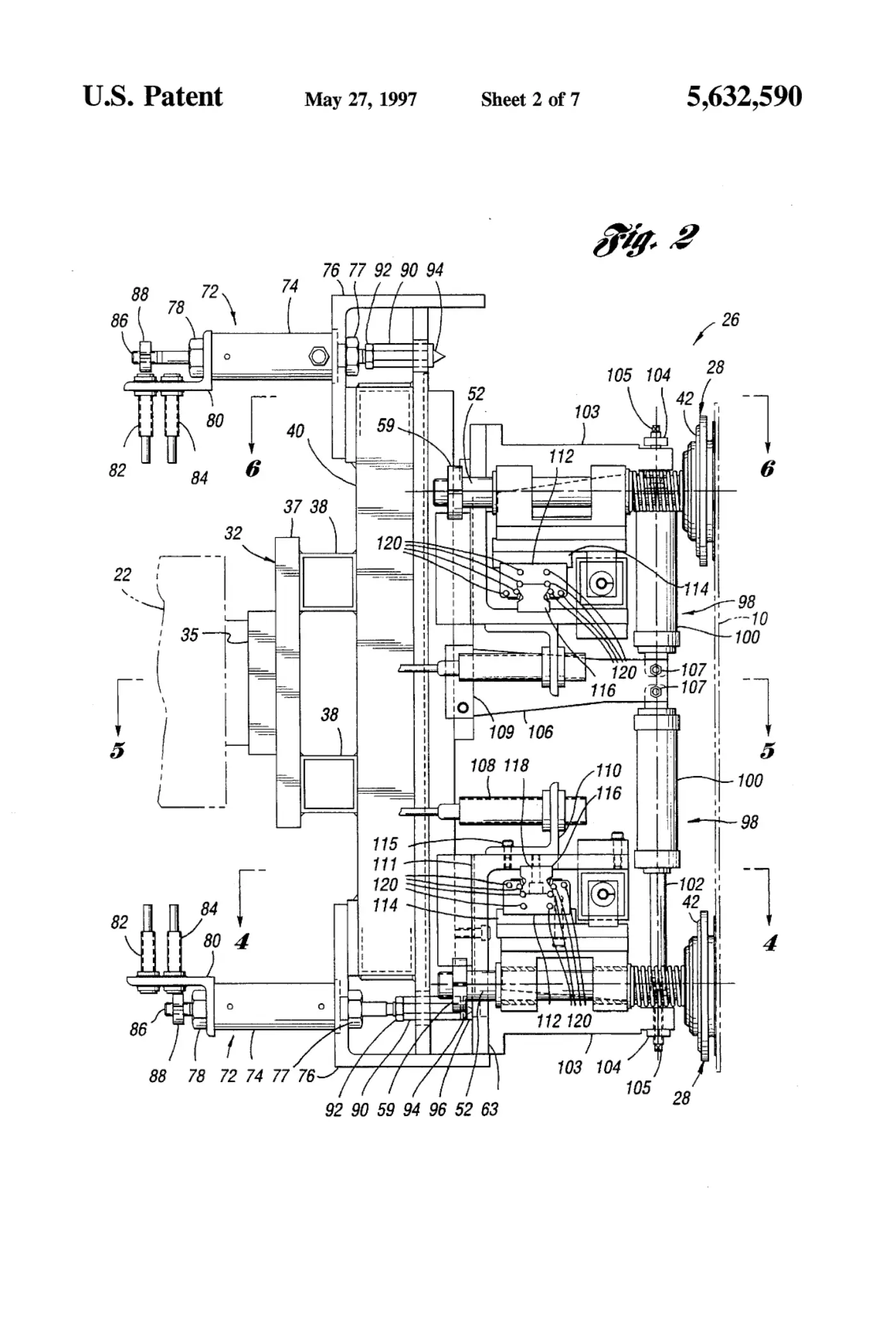
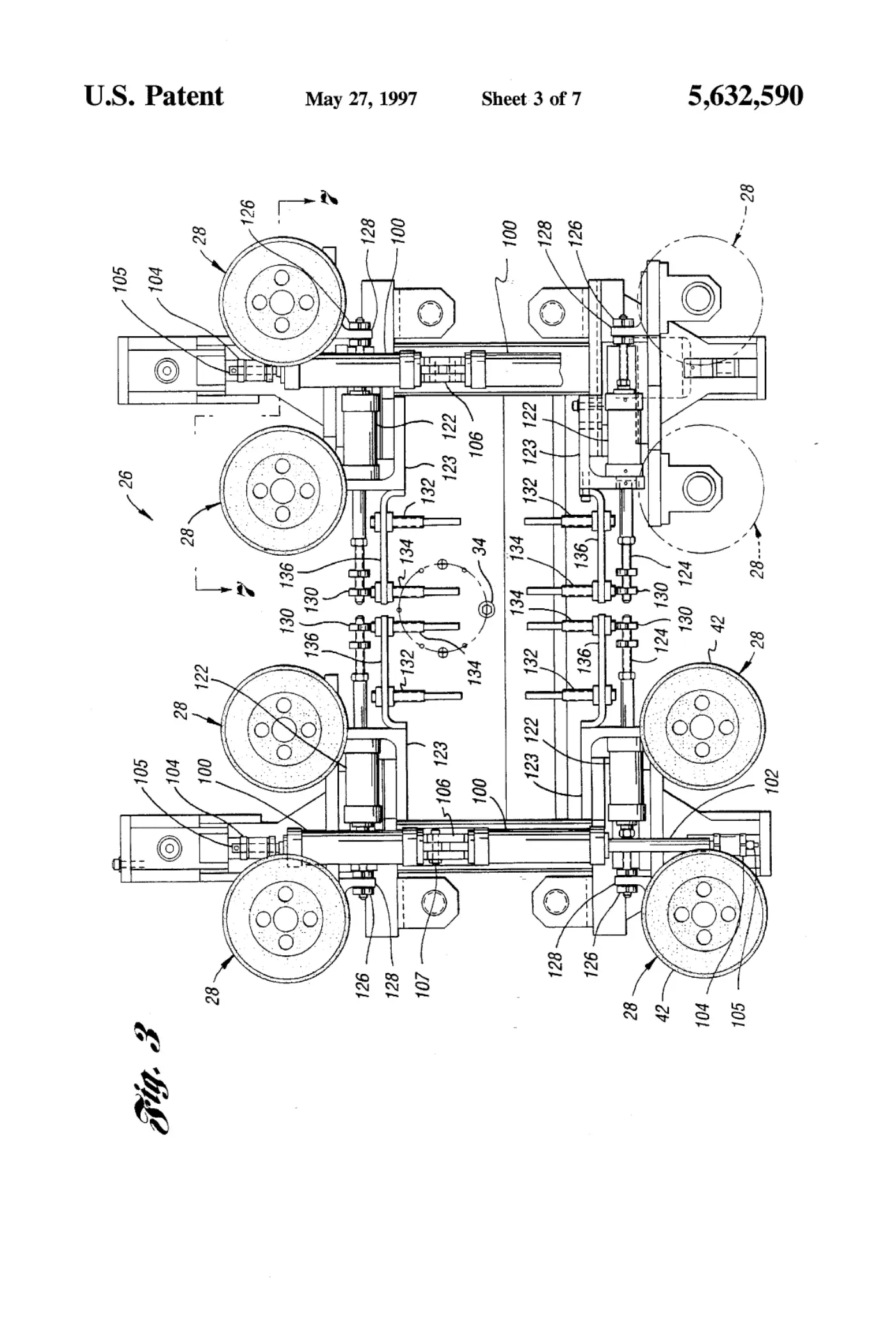
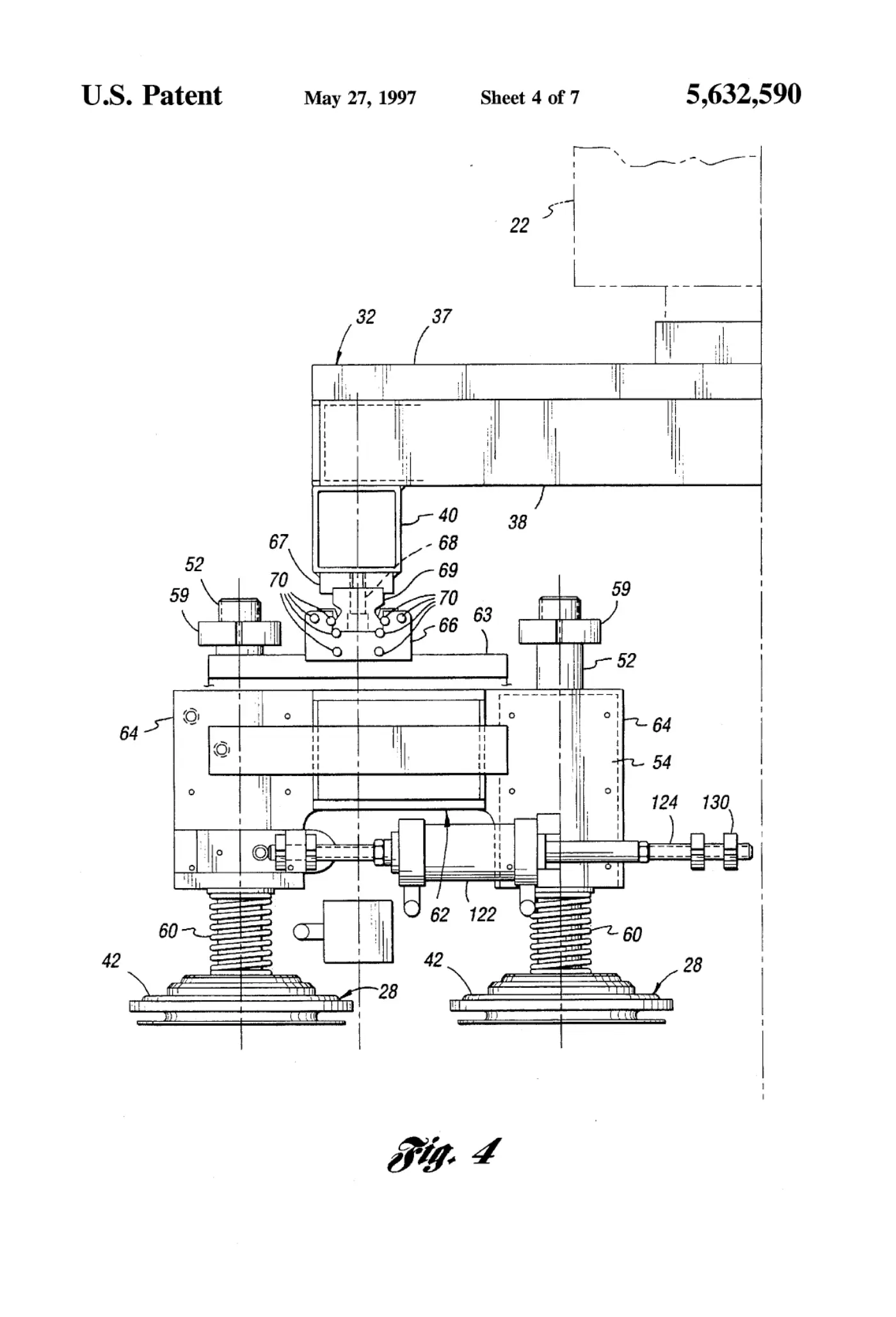
A robotic end effector adapted to be mounted at the end of an arm of a program-controlled robot is capable of providing compliance within a vertical plane as well as alignment along a horizontal axis. A method and system utilizing the end effector to pick up flat or curved glass panels from glass racks and place the glass panels into irregularly-shaped wooden crates. Due to the compliance and horizontal alignment provided by the end effector, the system allows essentially perfect piece-to-piece vertical edge-of-glass alignment and side-edge to side-edge alignment during the packaging process so as to eliminate glass etching/scratching and breakage. The end effector includes a base frame on which compliance devices and side-shift alignment devices in the form of linear bearing systems support a number of material handling devices in the form of suction devices. The handling devices are typically material holding/gripping devices. Selected ones of the compliance devices can be locked out under the control of a controller for the robot. Also, a number of counterbalancers change counterbalance forces based on glass panel size also under control of the controller of the robot. Each suction device includes a spring-biased suction cup to also provide compliance in a direction substantially normal to the compliance provided in the vertical plane.
Abstract
A robotic end effector adapted to be mounted at the end of an arm of a program-controlled robot is capable of providing compliance within a vertical plane as well as alignment along a horizontal axis. A method and system utilizing the end effector to pick up flat or curved glass panels from glass racks and place the glass panels into irregularly-shaped wooden crates. Due to the compliance and horizontal alignment provided by the end effector, the system allows essentially perfect piece-to-piece vertical edge-of-glass alignment and side-edge to side-edge alignment during the packaging process so as to eliminate glass etching/scratching and breakage. The end effector includes a base frame on which compliance devices and side-shift alignment devices in the form of linear bearing systems support a number of material handling devices in the form of suction devices. The handling devices are typically material holding/gripping devices. Selected ones of the compliance devices can be locked out under the control of a controller for the robot. Also, a number of counterbalancers change counterbalance forces based on glass panel size also under control of the controller of the robot. Each suction device includes a spring-biased suction cup to also provide compliance in a direction substantially normal to the compliance provided in the vertical plane.
1. Drawings
[0001]Sheet 1.
[0002]Sheet 2.
[0003]Sheet 3.
[0004]Sheet 4.
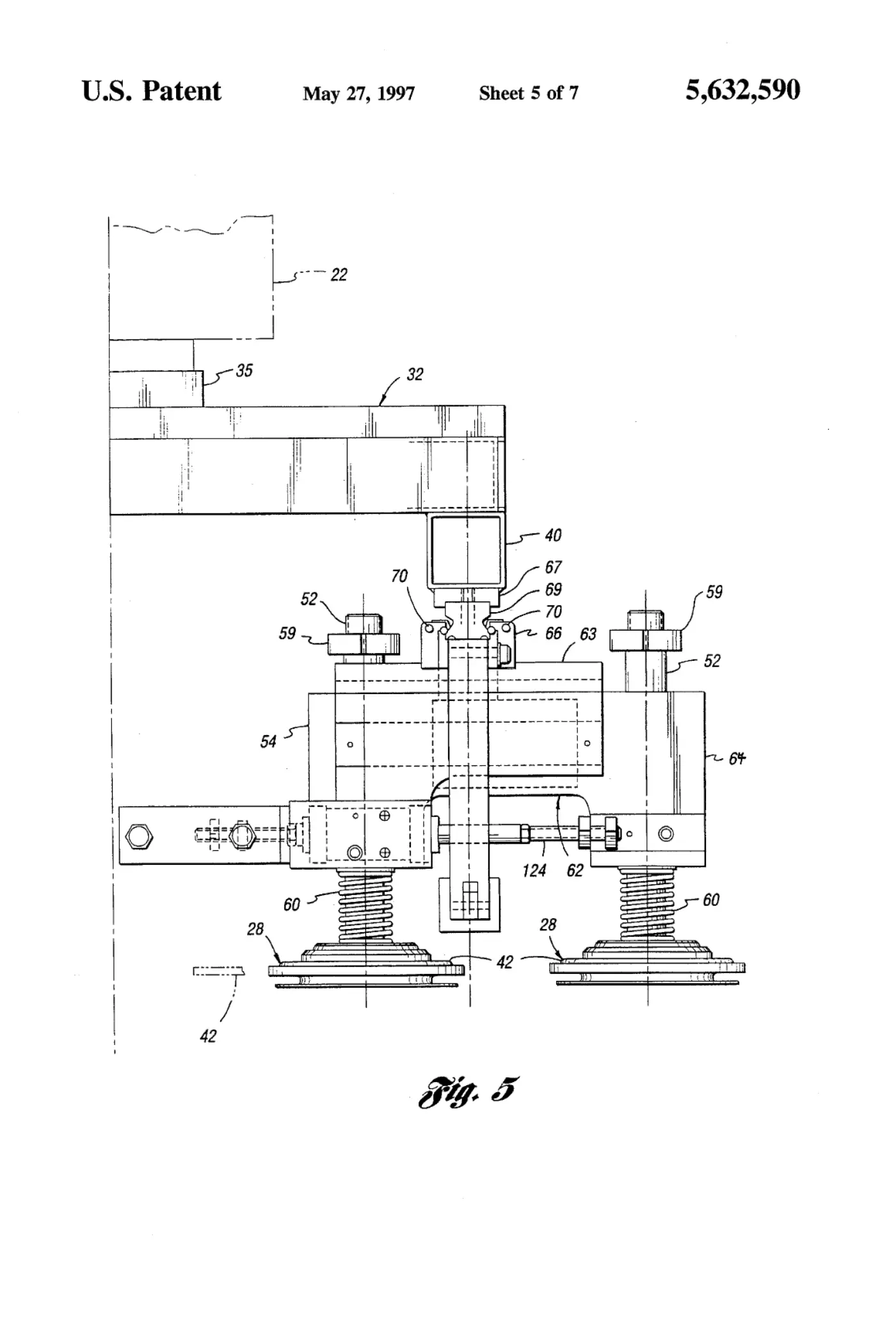
[0005]Sheet 5.
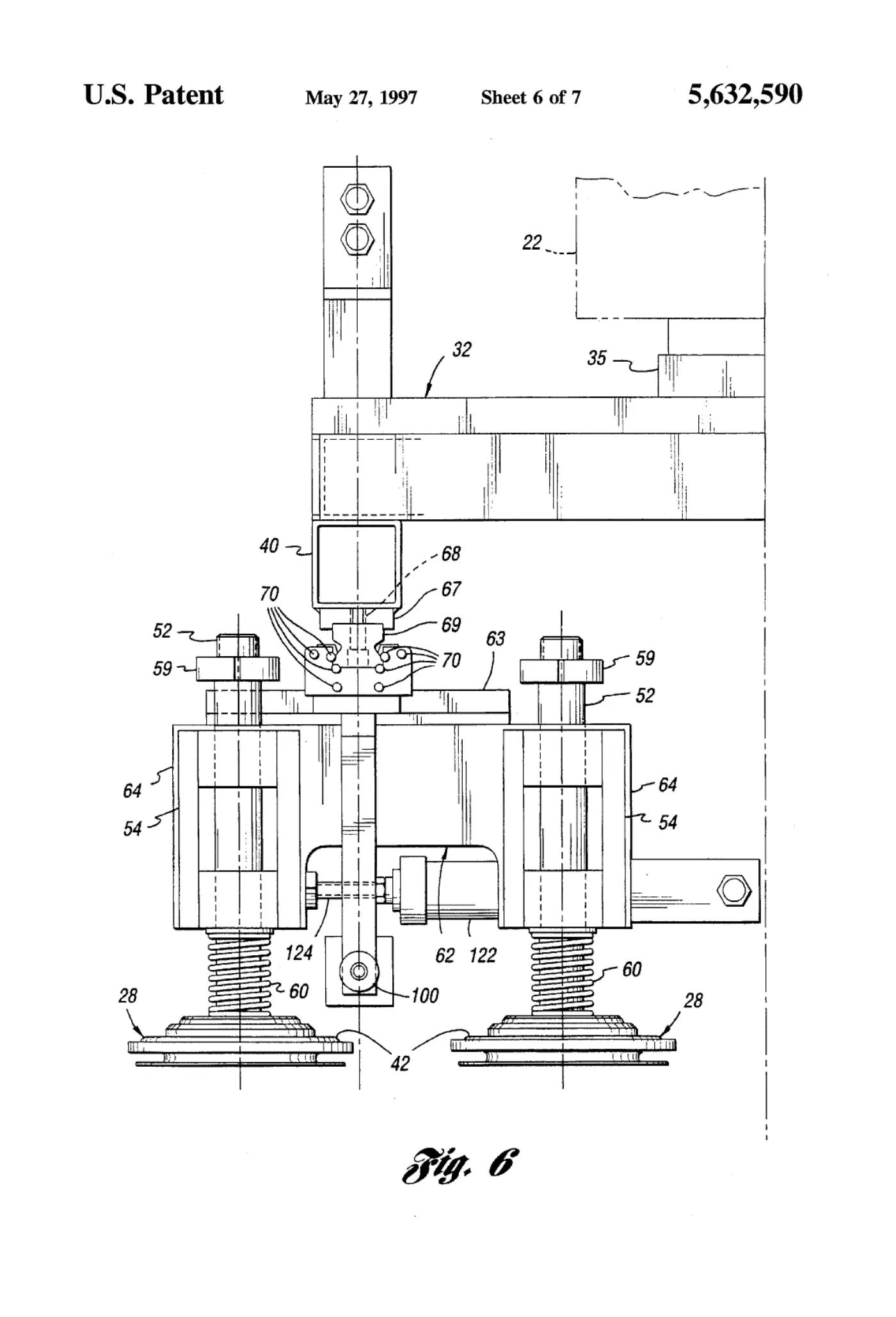
[0006]Sheet 6.
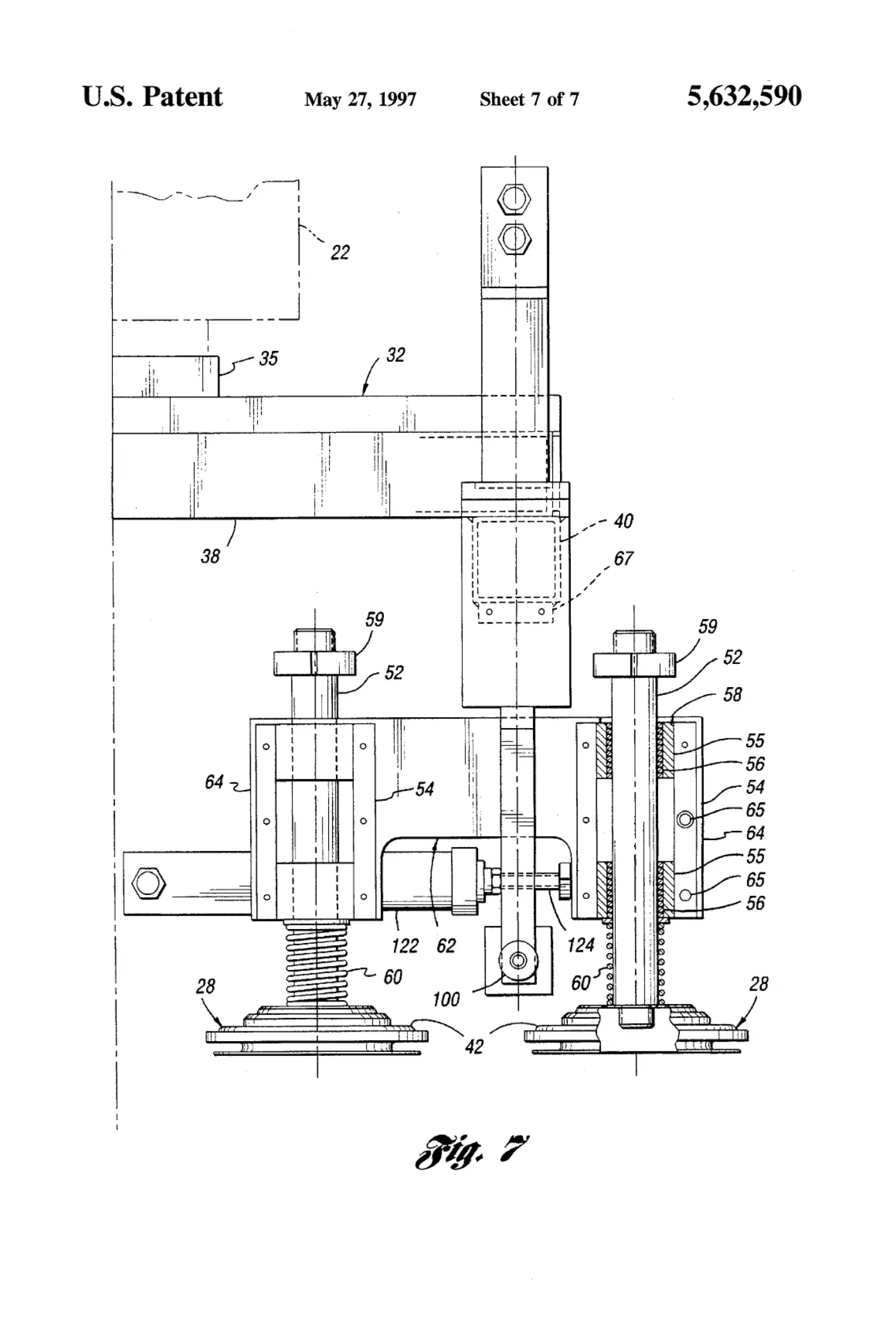
[0007]Sheet 7.
Publication information
Citation
OpenTechnical Publication OT-2026-000003257, “Method and system for loading panels into shipping containers at a work station and end effector for use therein,” published September 15, 2026 at 19:57:25 UTC, https://opentechnical.org/p/OT-2026-000003257.
To cite specific content, add the paragraph or figure numbers.
Terms
This record reproduces a document published elsewhere and is provided for reference and study. Rights in the original remain with its owner. See the publication policy.