OT-2026-000003312
Light scanner with interlaced camera fields and parallel light beams
- Published
- Permanent URL
- https://opentechnical.org/p/OT-2026-000003312
- Classification
- Sensors, Controls & Machine Vision › Position and Presence Sensing
- Assignee
- COE MFG CO
- Original source
- US-5414268-A, the United States Patent and Trademark Office, 9 May 1995
- Document SHA-256
- 7789e3d6cdb799db6c72287a321d08efaab29e33f087dd9f3a35ce3dfe67dee2
A light scanner for determining the configuration of elongated objects, such as logs or lumber, is described. The object is moved laterally through the scanner past a plurality of laser light sources and a plurality of photo-detector cameras spaced along the object. The coherent laser light beams are parallel to each other and to the lens axis centerline of the cameras for easier alignment and to prevent the laser light spot on the object from moving relative to such axis centerline for objects of different thickness. The cameras have a photo-detector target which may be a linear diode aray CCD semiconductor device for producing scan data signals in response to reflected light beams which are processed by a computer system giving preference to the data produced by the beams in the outer portions of the camera viewing field to determine the thickness of the object at points spaced along the object. Non-coherent polychromatic light is also reflected from the object to the cameras to detect the ends of the object and to determine its length. Reference targets are provided along one side of the object to sense the leading end and the trailing edge of the object as it is moved laterally to block light reflected from or emitted by such targets to the cameras on the opposite side of the object.
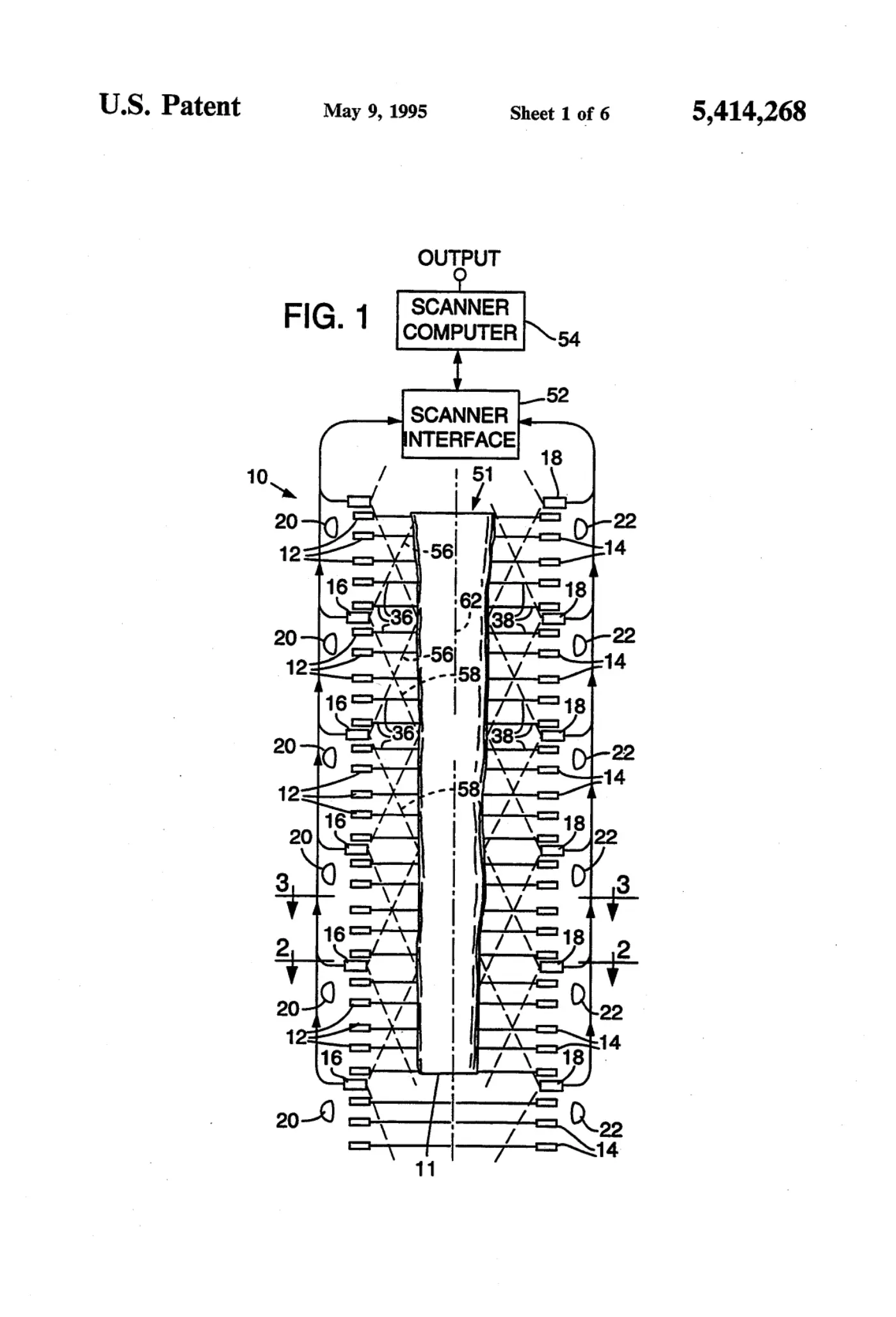
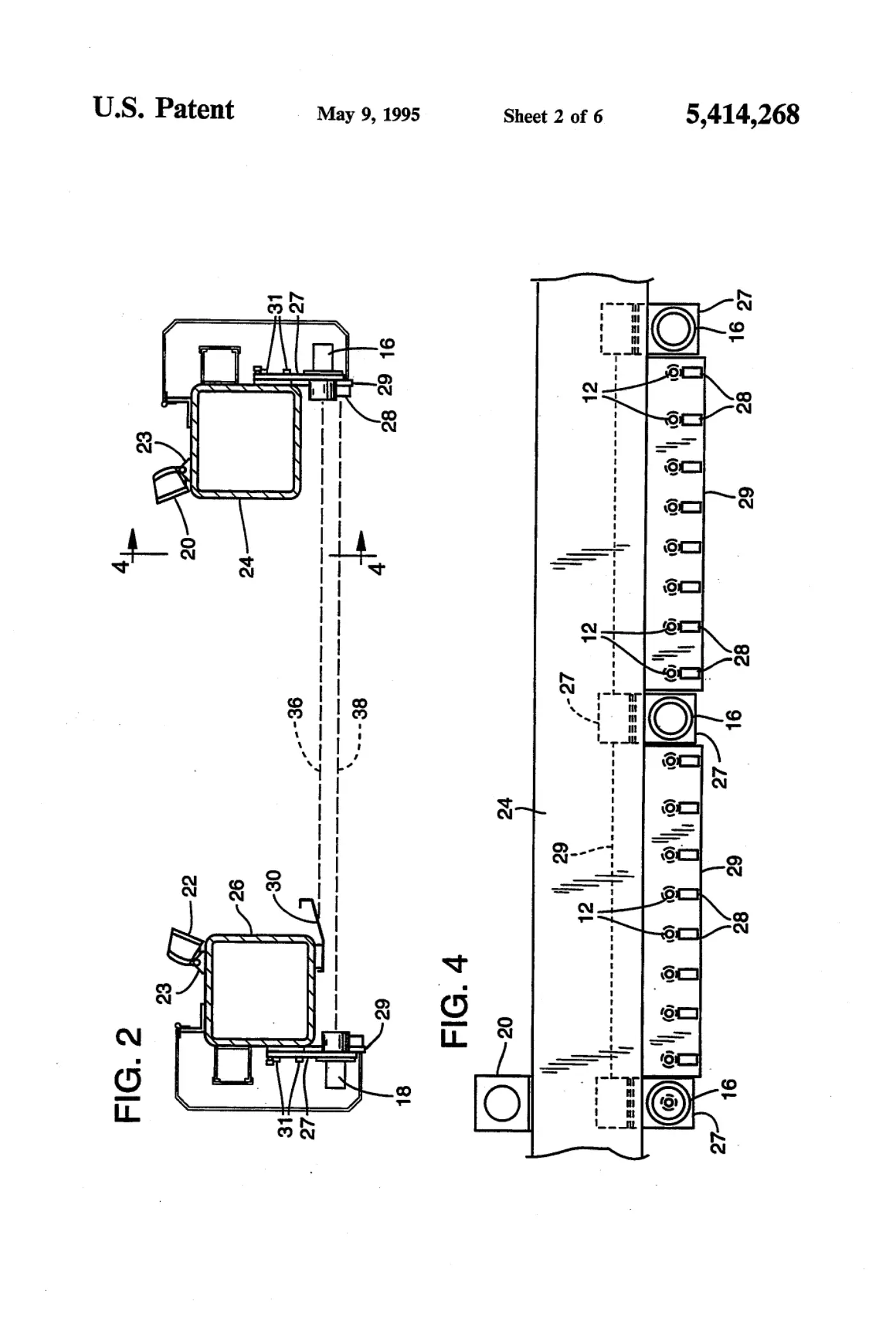
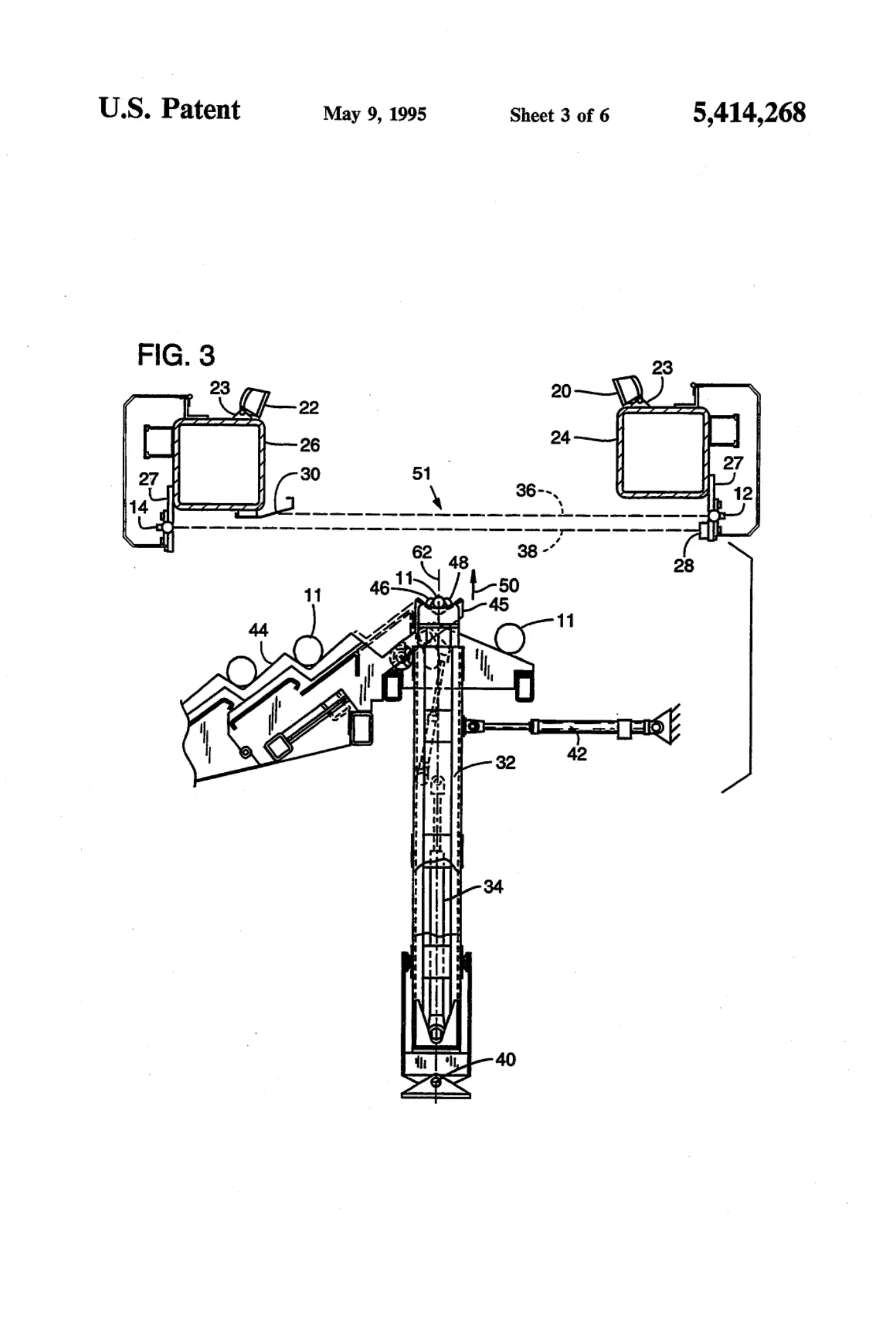
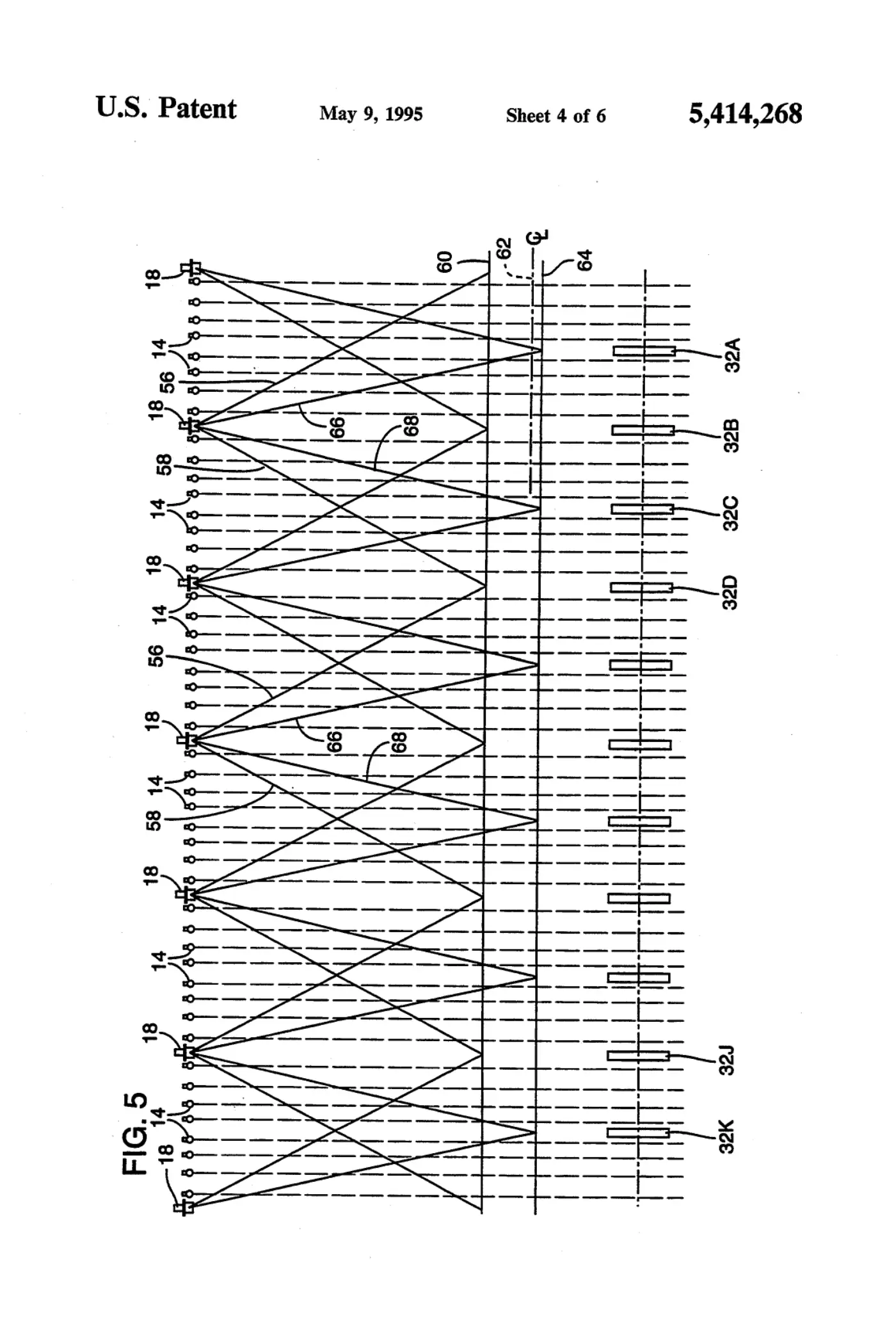
Abstract
A light scanner for determining the configuration of elongated objects, such as logs or lumber, is described. The object is moved laterally through the scanner past a plurality of laser light sources and a plurality of photo-detector cameras spaced along the object. The coherent laser light beams are parallel to each other and to the lens axis centerline of the cameras for easier alignment and to prevent the laser light spot on the object from moving relative to such axis centerline for objects of different thickness. The cameras have a photo-detector target which may be a linear diode aray CCD semiconductor device for producing scan data signals in response to reflected light beams which are processed by a computer system giving preference to the data produced by the beams in the outer portions of the camera viewing field to determine the thickness of the object at points spaced along the object. Non-coherent polychromatic light is also reflected from the object to the cameras to detect the ends of the object and to determine its length. Reference targets are provided along one side of the object to sense the leading end and the trailing edge of the object as it is moved laterally to block light reflected from or emitted by such targets to the cameras on the opposite side of the object.
1. Drawings
[0001]Sheet 1.
[0002]Sheet 2.
[0003]Sheet 3.
[0004]Sheet 4.
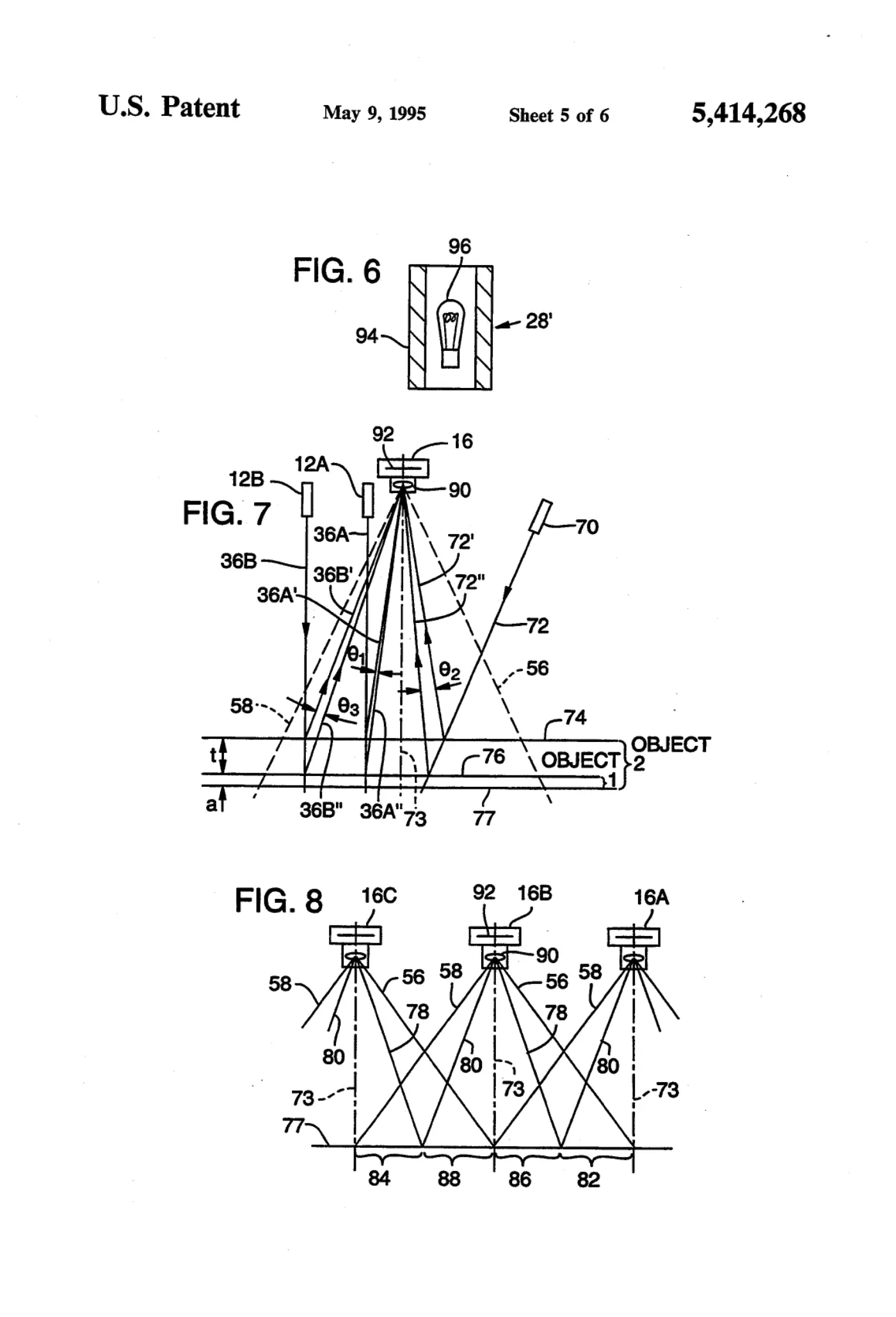
[0005]Sheet 5.
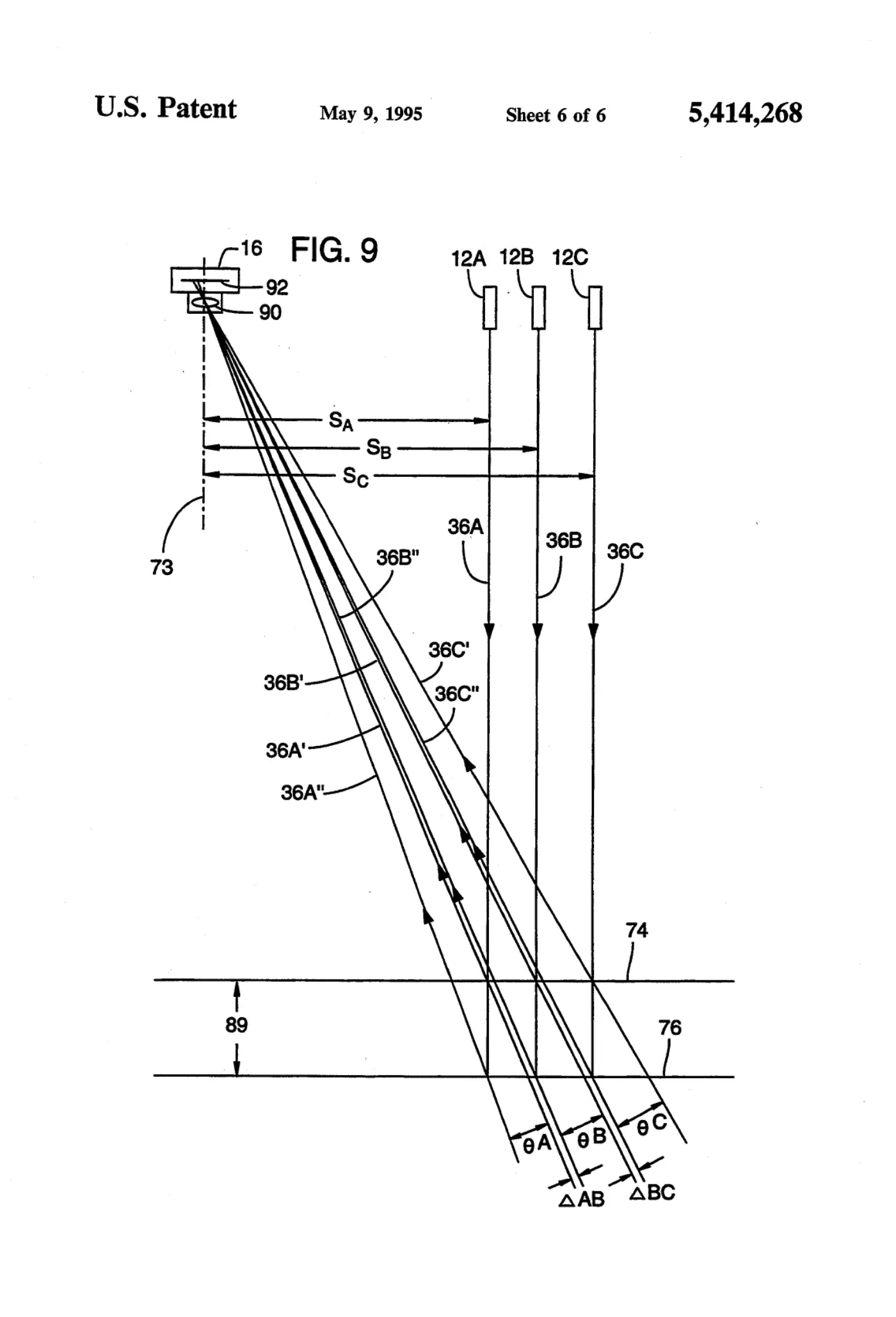
[0006]Sheet 6.
Publication information
Citation
OpenTechnical Publication OT-2026-000003312, “Light scanner with interlaced camera fields and parallel light beams,” published September 15, 2026 at 20:07:35 UTC, https://opentechnical.org/p/OT-2026-000003312.
To cite specific content, add the paragraph or figure numbers.
Terms
This record reproduces a document published elsewhere and is provided for reference and study. Rights in the original remain with its owner. See the publication policy.