OT-2026-000003352
Automatic load sensing vacuum valve
- Published
- Permanent URL
- https://opentechnical.org/p/OT-2026-000003352
- Classification
- Lifting, Positioning & Manipulation › Hoists and Cranes
- Inventors
- HOKE THOMAS A
- Assignee
- HOKE THOMAS A
- Original source
- US-5297830-A, the United States Patent and Trademark Office, 29 March 1994
- Document SHA-256
- 80a27a16ec1f8b8006bc6f19ee047c7c4802e61681c6da36066413f9e5b5ebe1
A valve for vacuum lifting systems has a flow passage with a load end, a vacuum end, orifices at each end, and an air impermeable float member within the passage. The valve is positioned in the air flow path between a vacuum lifting pad and a vacuum pump, with its vacuum end in the direction of the pump and its load end in the direction of the pad. Activation of the vacuum pump creates an initial air flow which causes the float member to move at a determinable rate from a rest position at the load end toward the vacuum end. If the load end of the valve is open, activation of the pump causes the float member to form a vacuum seal with the interior wall of the flow passage at the vacuum end orifice. If the lifting pad is in operative contact with a suitable load surface, the length of the valve flow passage is such that on activation of the pump a vacuum seal will be formed between the load and the lifting pad before the float member reaches the vacuum end orifice. With multi-port lifting pads, valves of the invention function to prevent air flow through any vacuum port which is not in proper vacuum contact with the load surface. The load end orifice is configured to allow air flow from the flow passage through the orifice even when the float member is in its rest position, thereby allowing rapid release of vacuum from all ports at the completion of a lift.
Abstract
A valve for vacuum lifting systems has a flow passage with a load end, a vacuum end, orifices at each end, and an air impermeable float member within the passage. The valve is positioned in the air flow path between a vacuum lifting pad and a vacuum pump, with its vacuum end in the direction of the pump and its load end in the direction of the pad. Activation of the vacuum pump creates an initial air flow which causes the float member to move at a determinable rate from a rest position at the load end toward the vacuum end. If the load end of the valve is open, activation of the pump causes the float member to form a vacuum seal with the interior wall of the flow passage at the vacuum end orifice. If the lifting pad is in operative contact with a suitable load surface, the length of the valve flow passage is such that on activation of the pump a vacuum seal will be formed between the load and the lifting pad before the float member reaches the vacuum end orifice. With multi-port lifting pads, valves of the invention function to prevent air flow through any vacuum port which is not in proper vacuum contact with the load surface. The load end orifice is configured to allow air flow from the flow passage through the orifice even when the float member is in its rest position, thereby allowing rapid release of vacuum from all ports at the completion of a lift.
1. Drawings
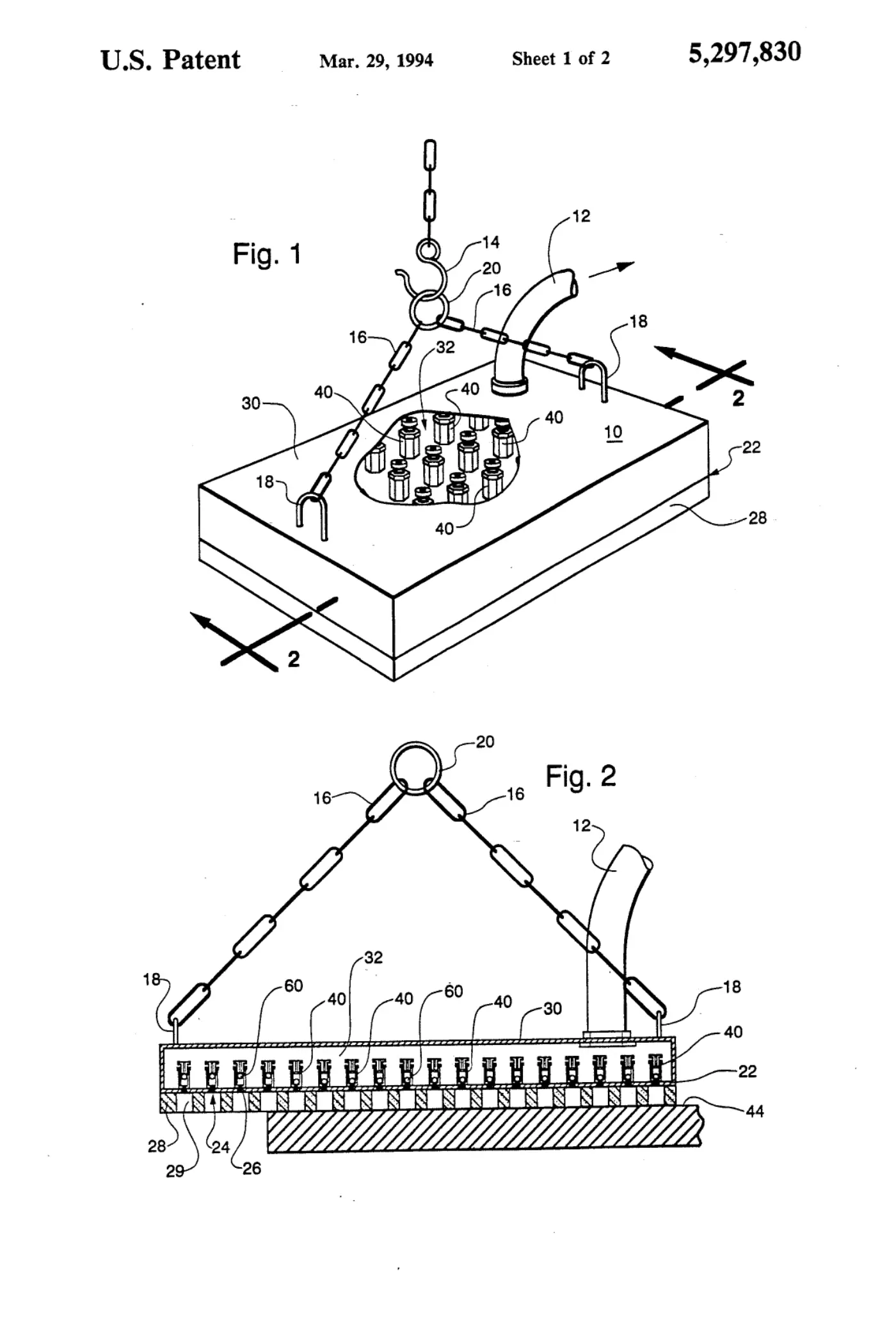
[0001]Sheet 1.
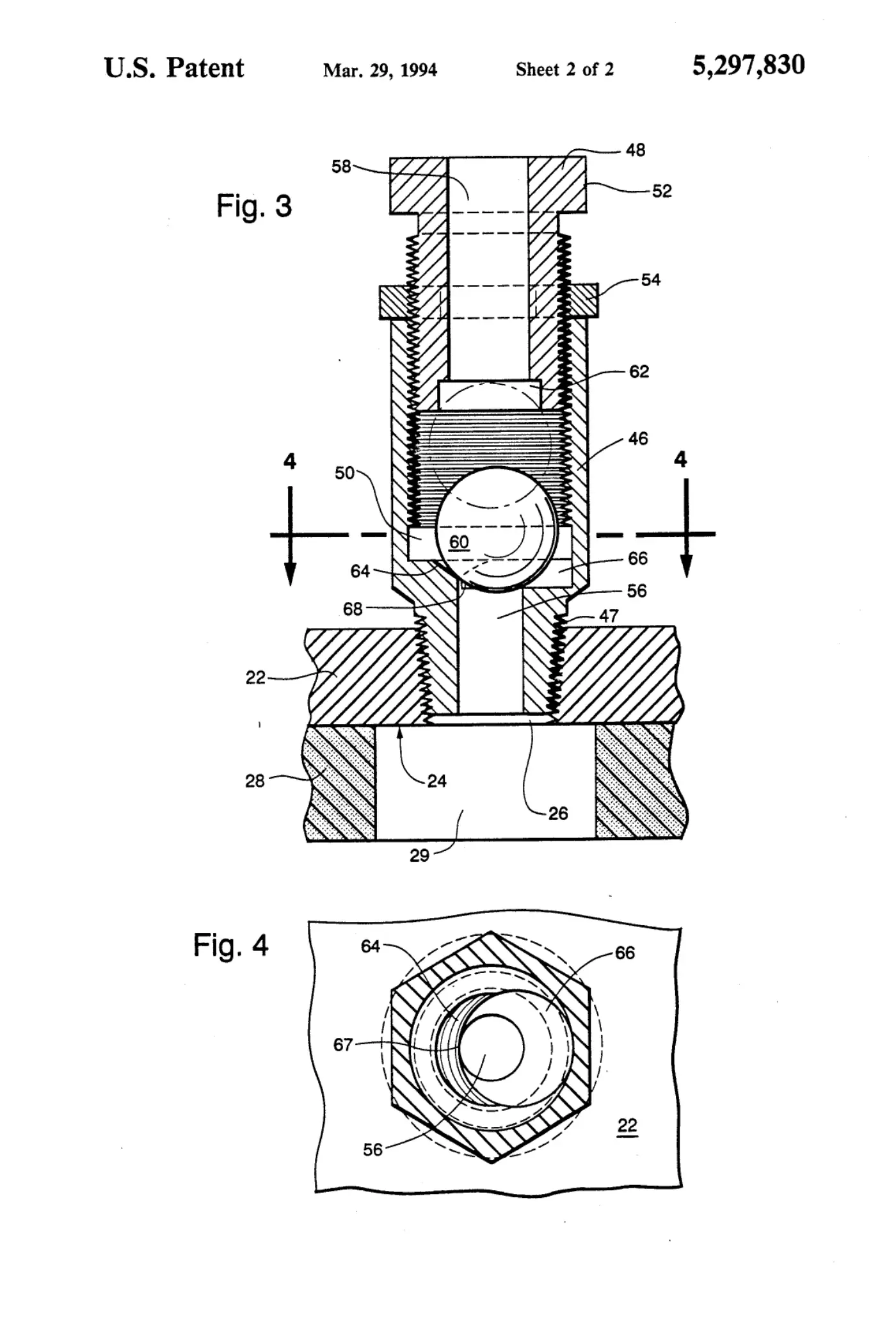
[0002]Sheet 2.
Publication information
Citation
OpenTechnical Publication OT-2026-000003352, “Automatic load sensing vacuum valve,” published September 15, 2026 at 20:14:39 UTC, https://opentechnical.org/p/OT-2026-000003352.
To cite specific content, add the paragraph or figure numbers.
Terms
This record reproduces a document published elsewhere and is provided for reference and study. Rights in the original remain with its owner. See the publication policy.