OT-2026-000003374
Clamping device for releasably connecting two profiled parts
- Published
- Permanent URL
- https://opentechnical.org/p/OT-2026-000003374
- Classification
- Tools & Tooling › Clamping Tools
- Inventors
- ZUELLIG KURT
- Assignee
- SYMA INTERCONTINENTAL SA
- Original source
- US-5209598-A, the United States Patent and Trademark Office, 11 May 1993
- Document SHA-256
- 374beca892e2516791cf33a3ad92c708eeea520ebb62fb03d7dfdcc24c55e977
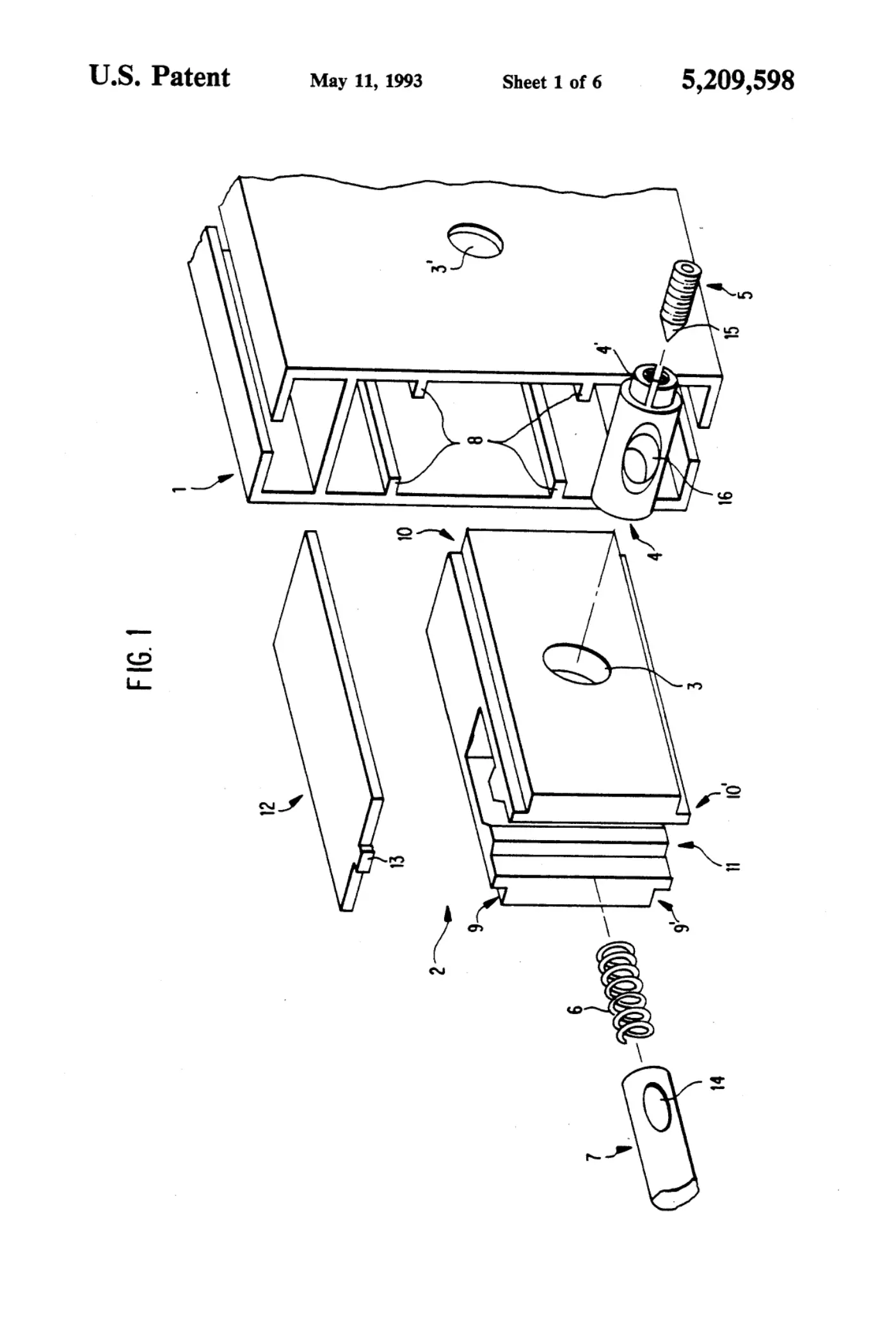
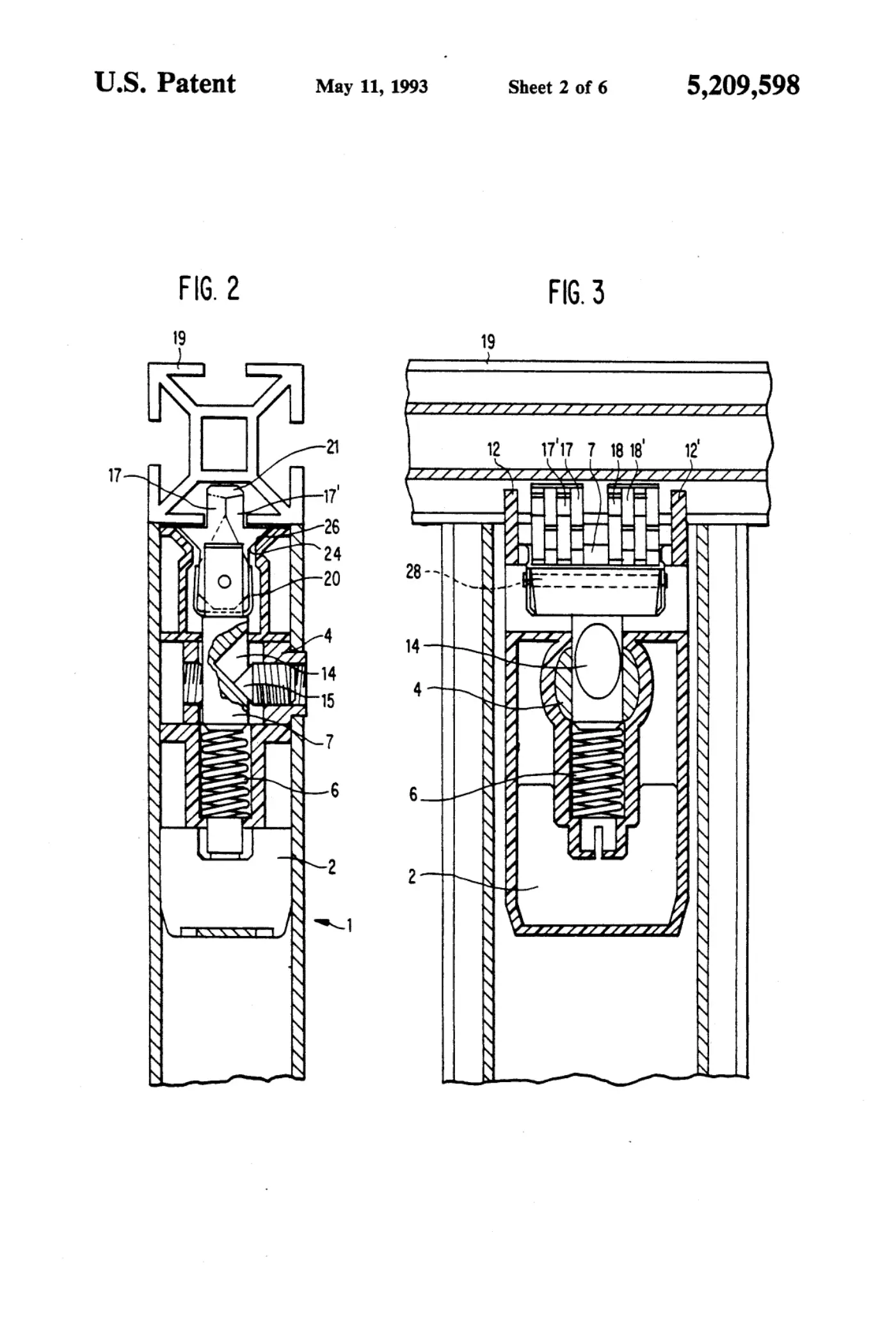
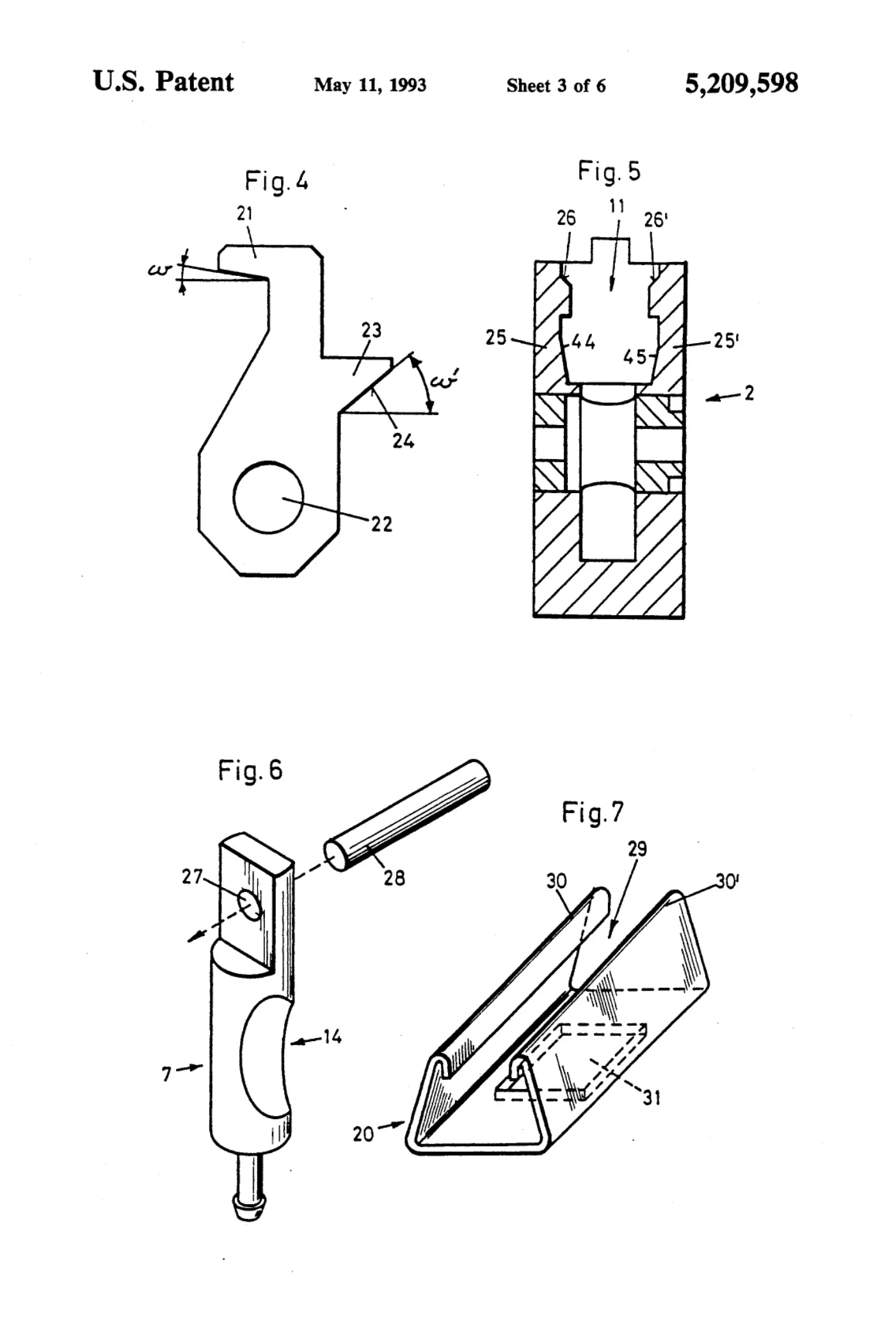
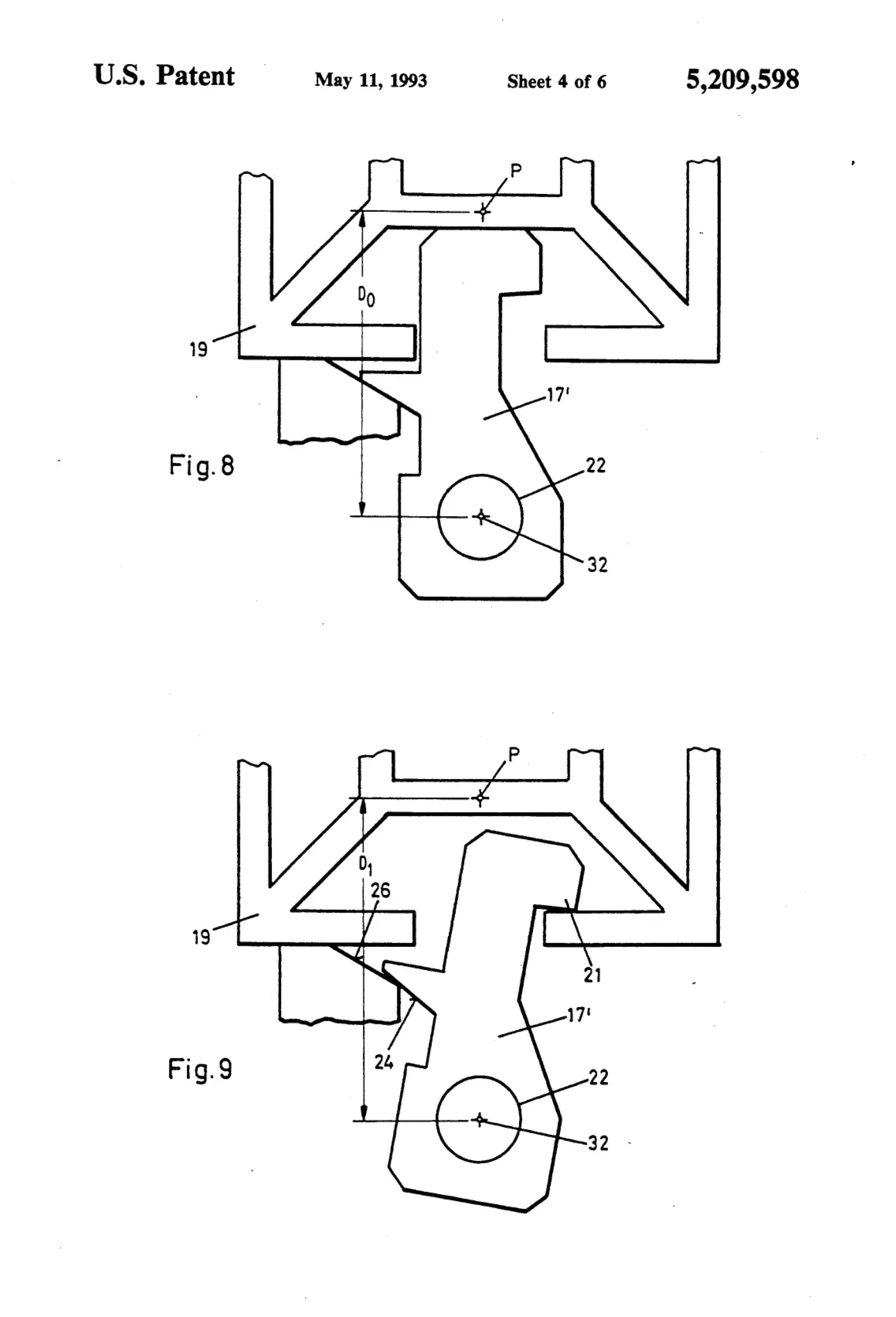
This clamping device is intended for releasably connecting two profiled parts (1,19). One of the profiled parts (1) is arranged so that an insert core (2) can be inserted and fixed in it. The core (2) has an axially movable bolt (7) having an end portion which comprises a projection (21) intended to be introduced in a slot of a second profiled part (19) in order to exert a force against an area of a portion of said second profiled part (19) partially covering said opening. A screw received in a threaded bush (4) engages the bolt (7) by means of a system of sliding surfaces (14,15) in order to displace the bolt axially. The bolt (7) has supporting means (27,28) for pivotally supporting holding pieces (17,17'). Said holding pieces and the interior walls of the insert core (2) have a second system of sliding surfaces (24,26) which owing to the axial movement of the bolt (7) cause a deviation of the holding pieces (17) having in its free end area said projection (21) intended to exert said force. Preferably, the thread of the screw (5) and the threaded bush (4) have a pitch of more than 1 mm per revolution, and preferably, the bolt (7) is led through a laterally expanded transverse hole of a threaded bush (4), and a transverse bore of the insert core (2) and the threaded bush (4) guided in it are designed in such a formlocking way that a lateral displacement of the threaded bush (4) along the transverse bore of the insert core (2) is possible.
Abstract
This clamping device is intended for releasably connecting two profiled parts (1,19). One of the profiled parts (1) is arranged so that an insert core (2) can be inserted and fixed in it. The core (2) has an axially movable bolt (7) having an end portion which comprises a projection (21) intended to be introduced in a slot of a second profiled part (19) in order to exert a force against an area of a portion of said second profiled part (19) partially covering said opening. A screw received in a threaded bush (4) engages the bolt (7) by means of a system of sliding surfaces (14,15) in order to displace the bolt axially. The bolt (7) has supporting means (27,28) for pivotally supporting holding pieces (17,17'). Said holding pieces and the interior walls of the insert core (2) have a second system of sliding surfaces (24,26) which owing to the axial movement of the bolt (7) cause a deviation of the holding pieces (17) having in its free end area said projection (21) intended to exert said force. Preferably, the thread of the screw (5) and the threaded bush (4) have a pitch of more than 1 mm per revolution, and preferably, the bolt (7) is led through a laterally expanded transverse hole of a threaded bush (4), and a transverse bore of the insert core (2) and the threaded bush (4) guided in it are designed in such a formlocking way that a lateral displacement of the threaded bush (4) along the transverse bore of the insert core (2) is possible.
1. Drawings
[0001]Sheet 1.
[0002]Sheet 2.
[0003]Sheet 3.
[0004]Sheet 4.
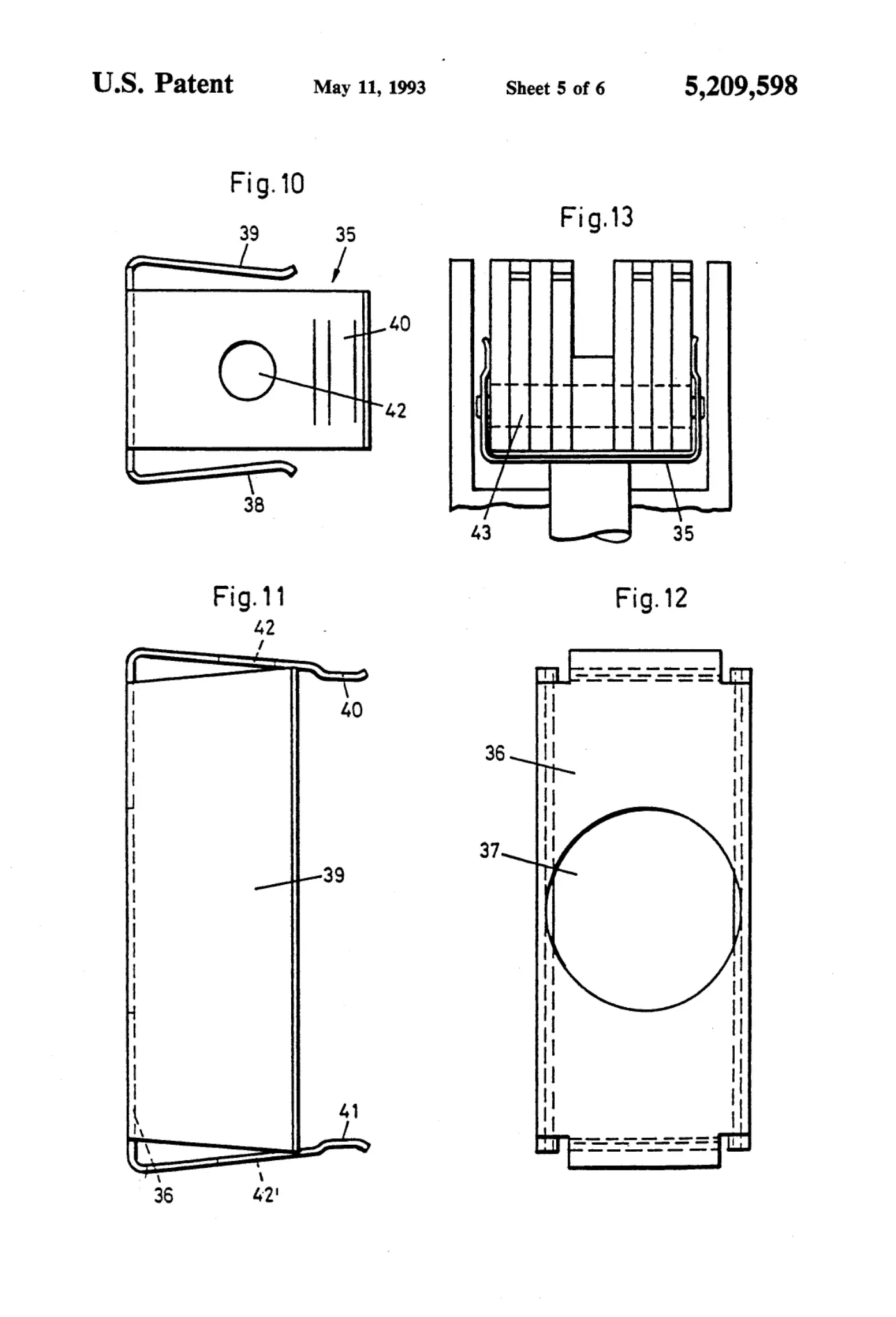
[0005]Sheet 5.
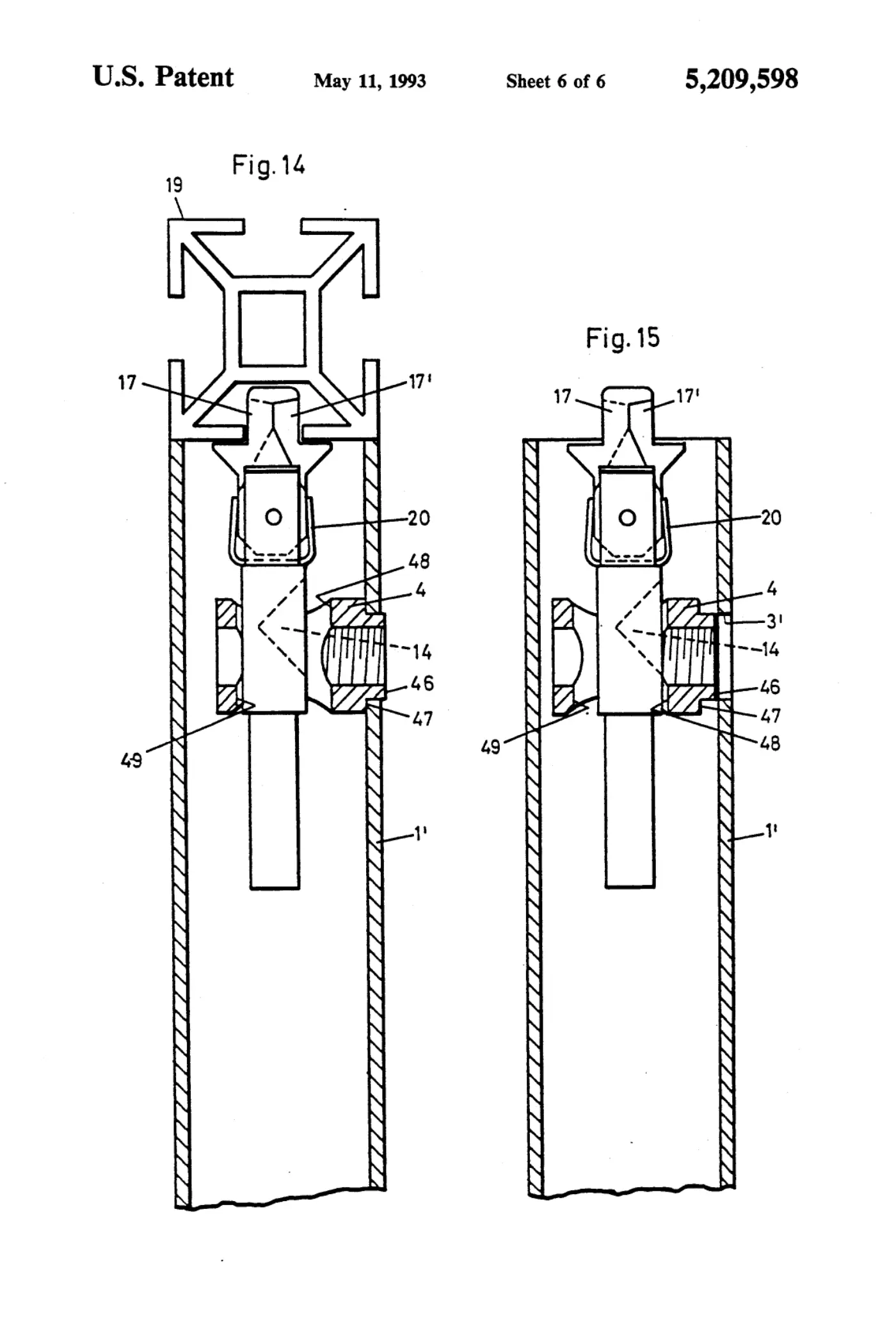
[0006]Sheet 6.
[0007]Sheet 7.
Publication information
Citation
OpenTechnical Publication OT-2026-000003374, “Clamping device for releasably connecting two profiled parts,” published September 15, 2026 at 20:18:11 UTC, https://opentechnical.org/p/OT-2026-000003374.
To cite specific content, add the paragraph or figure numbers.
Terms
This record reproduces a document published elsewhere and is provided for reference and study. Rights in the original remain with its owner. See the publication policy.