OT-2026-000003400
Poppet valve and valve assemblies utilizing same
- Published
- Permanent URL
- https://opentechnical.org/p/OT-2026-000003400
- Classification
- Industrial Motion & Power Transmission › Fluid Power
- Assignee
- FOSTER RAYMOND K
- Original source
- US-5103866-A, the United States Patent and Trademark Office, 14 April 1992
- Document SHA-256
- 9c4fab5397c038c3dbf11b6005652a297a314b84015c7711aa869014d9f22a14
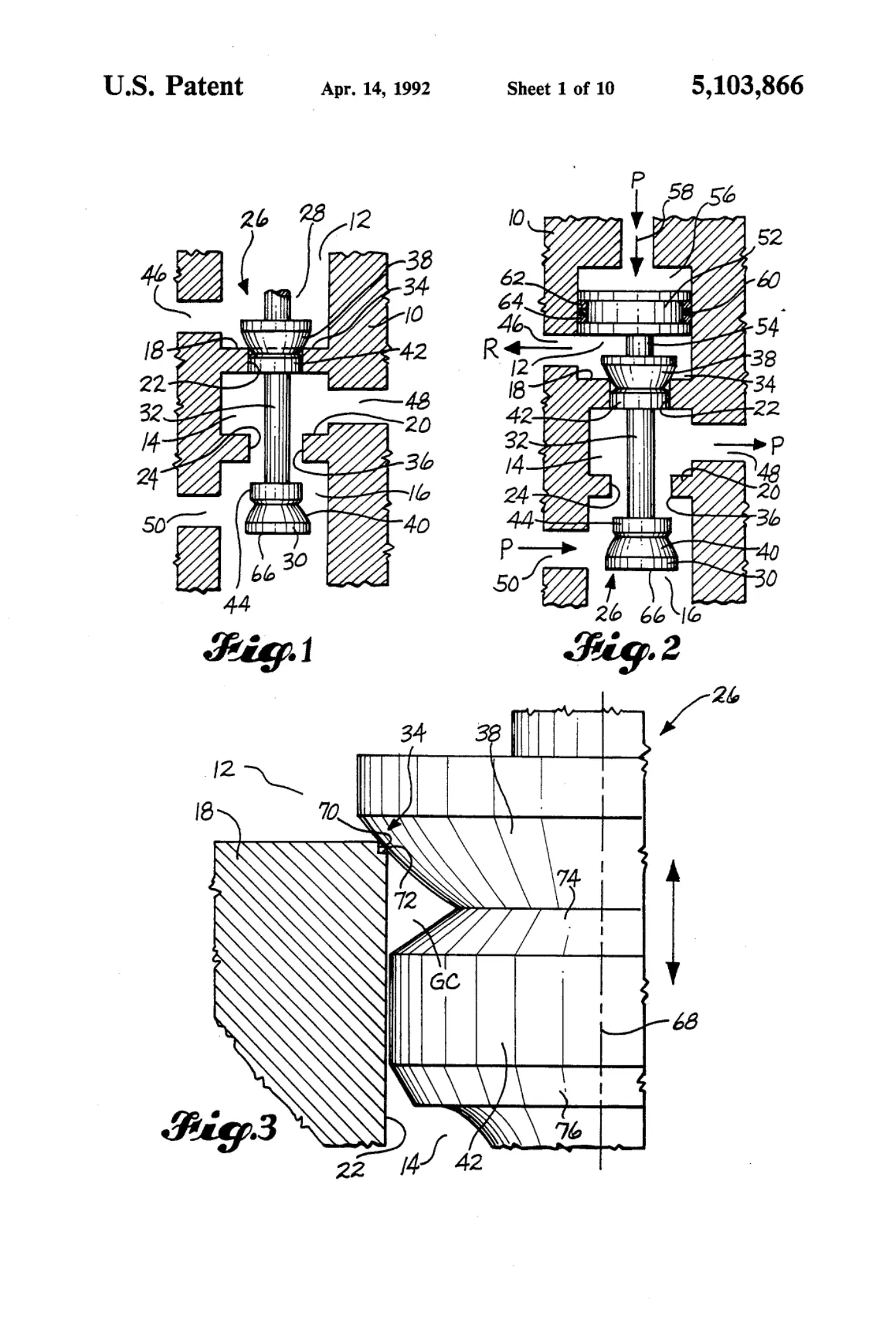
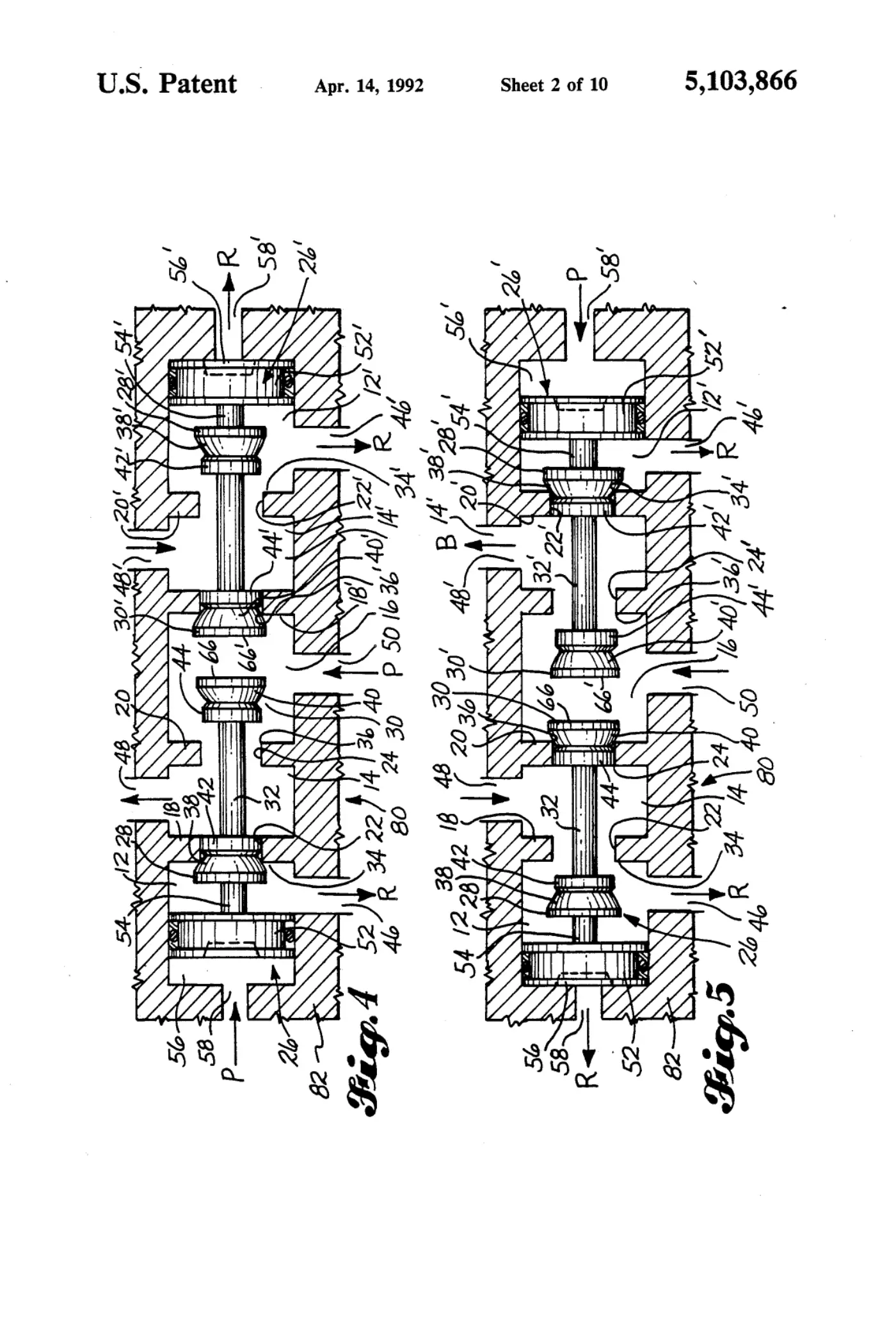
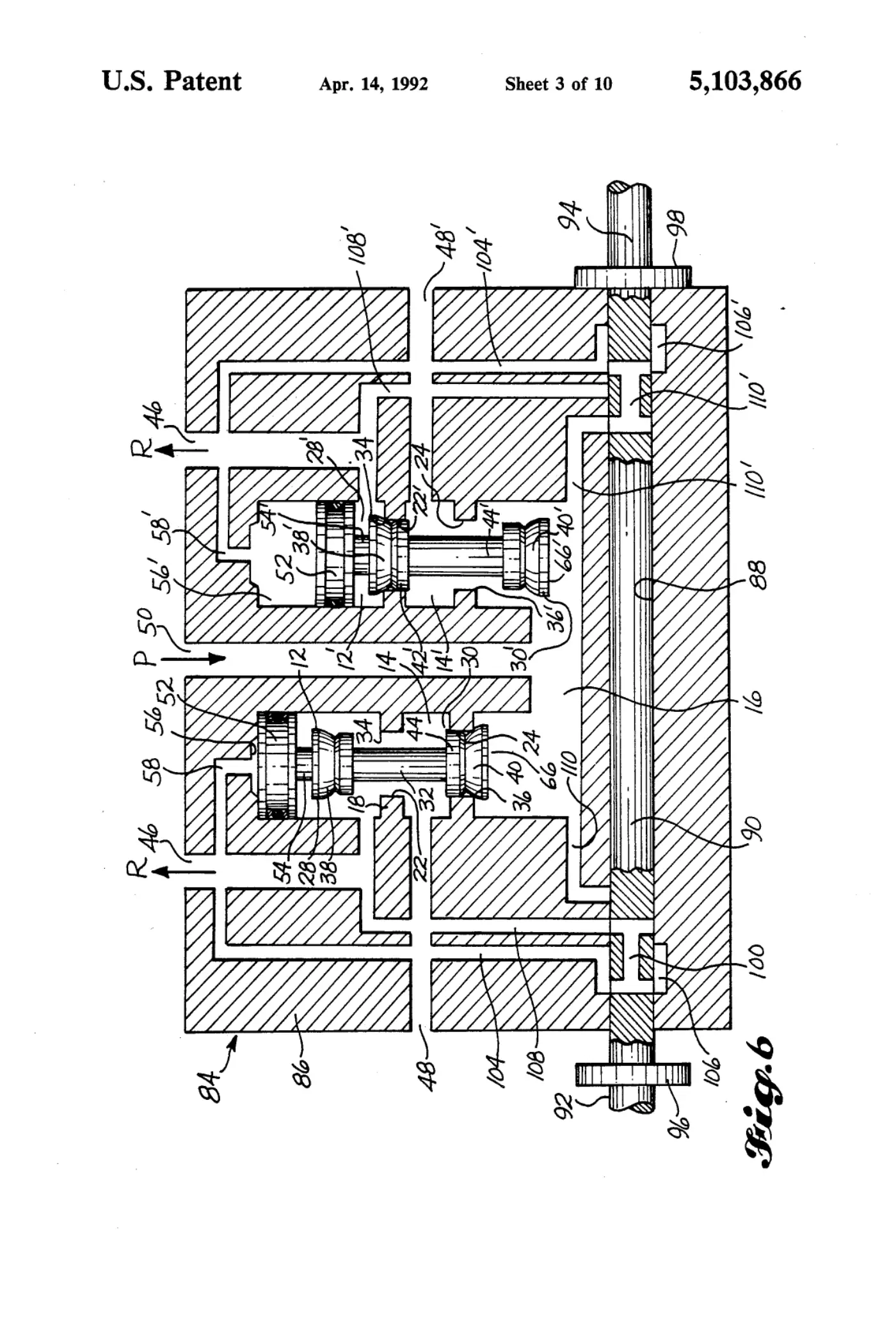
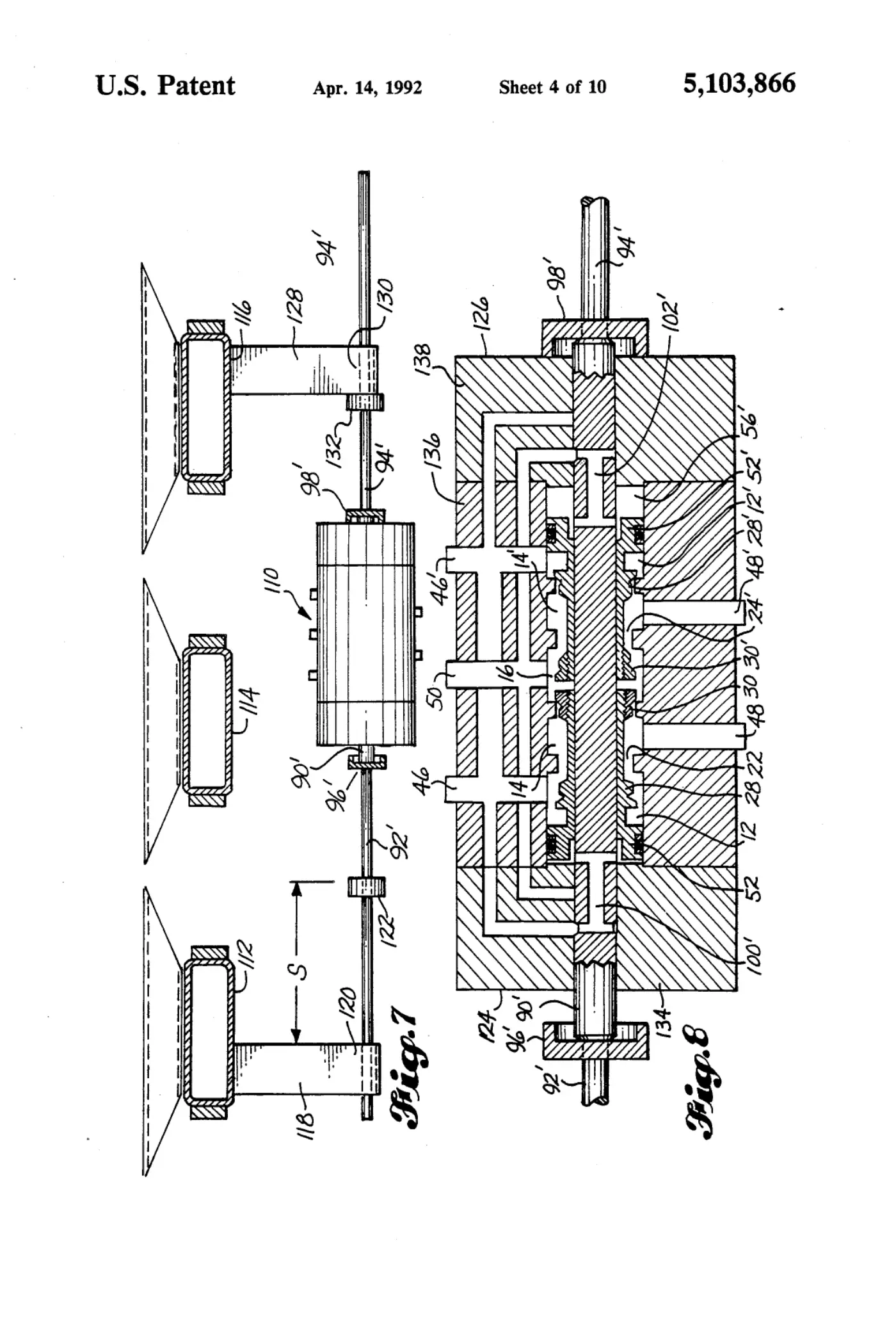
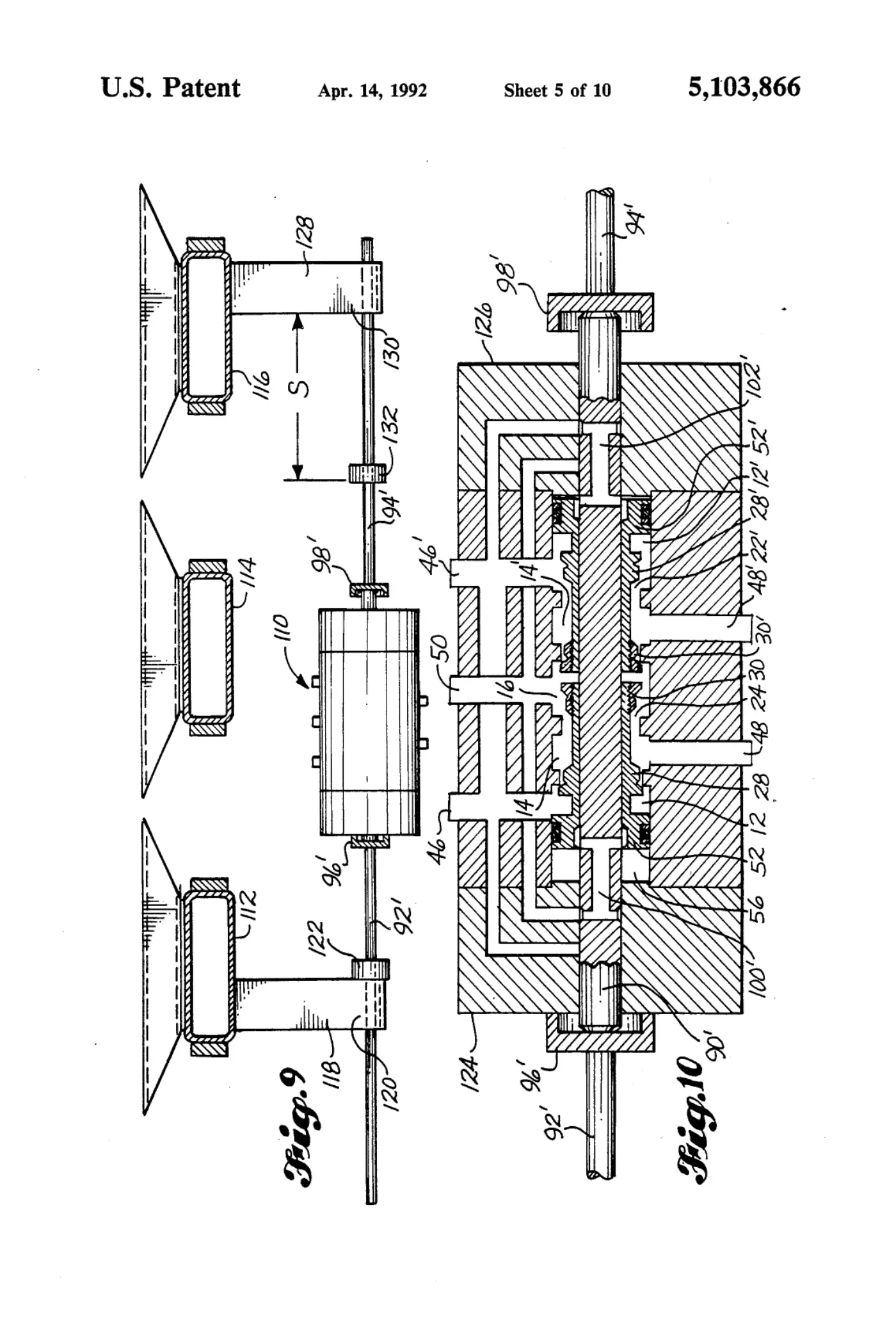
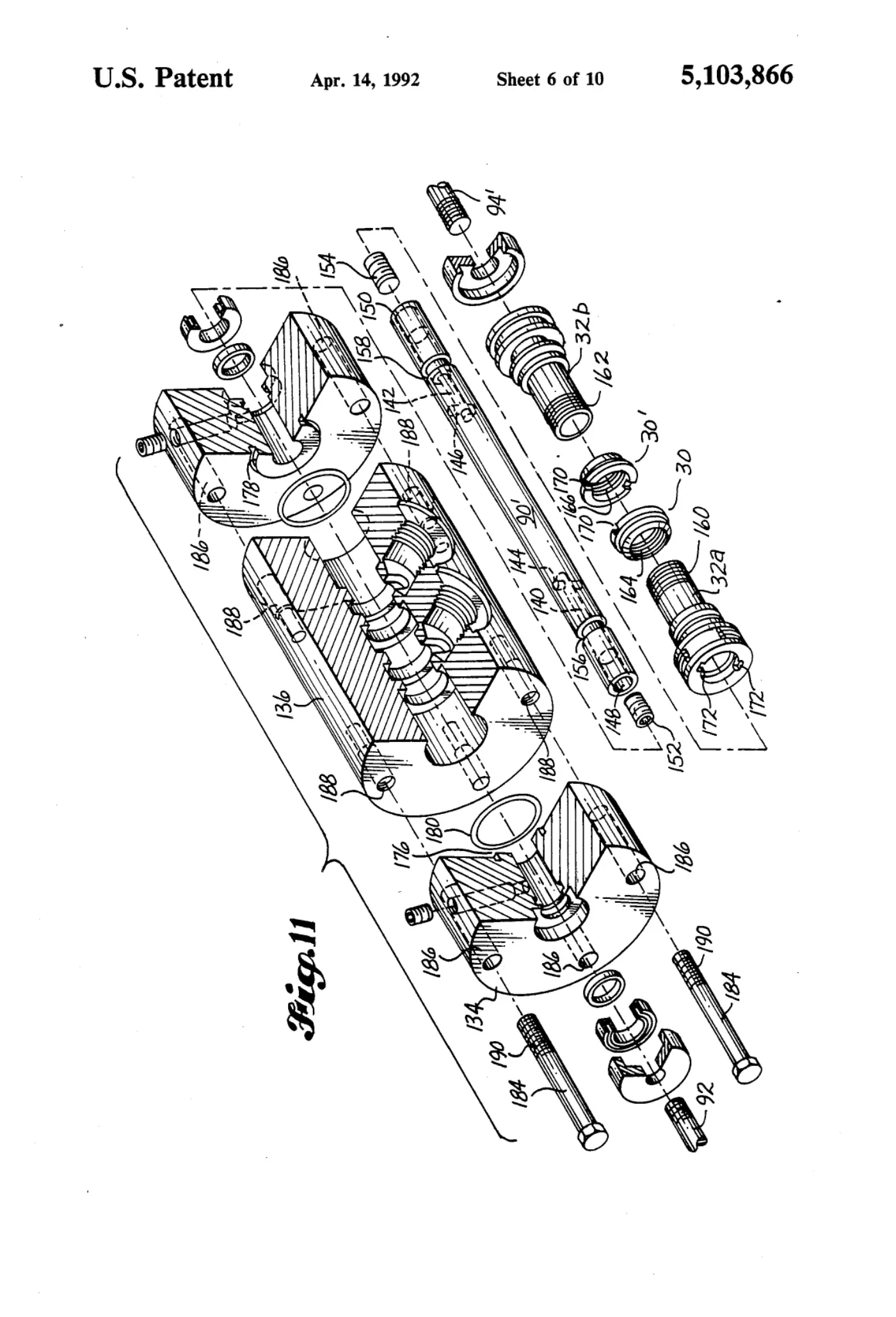
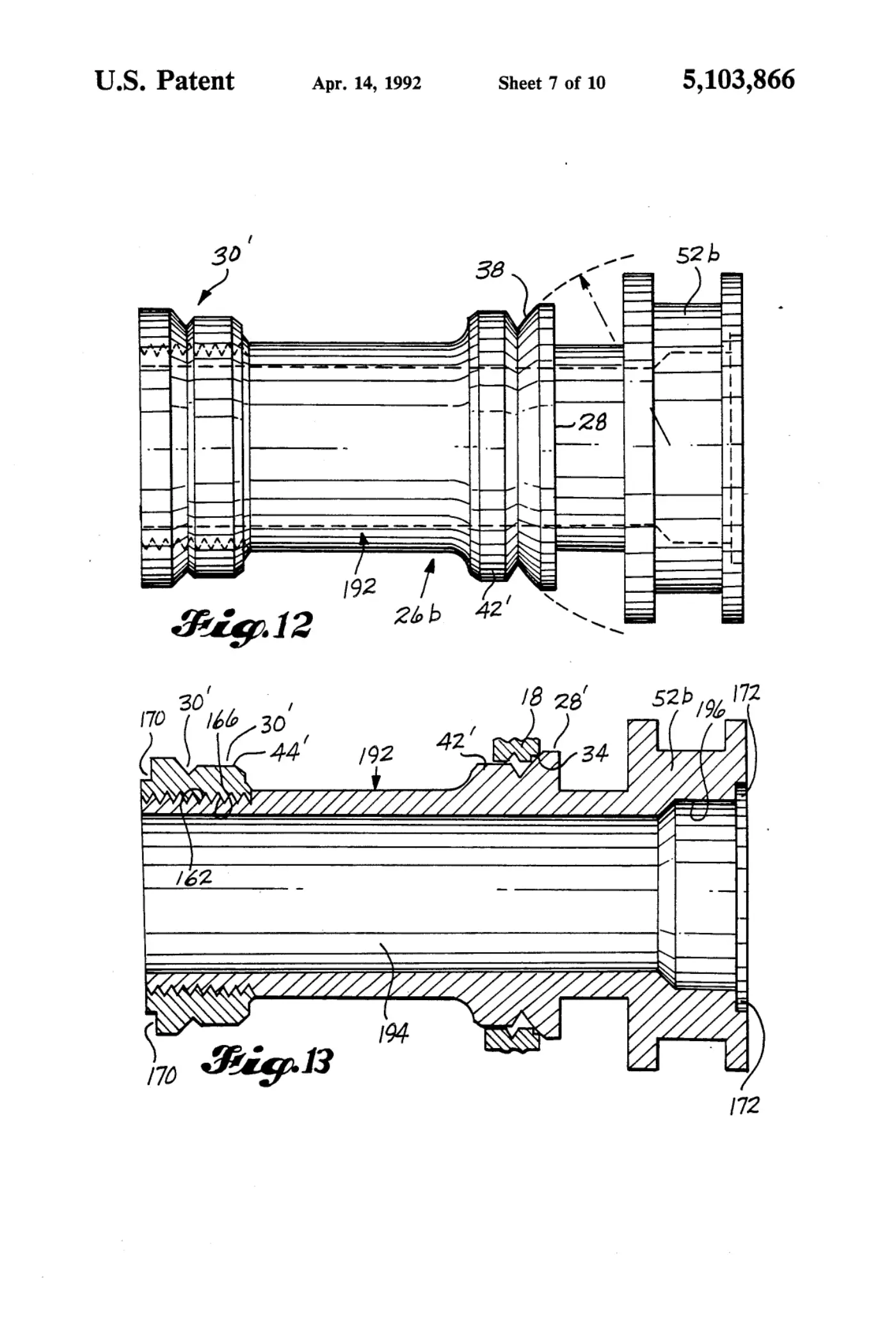
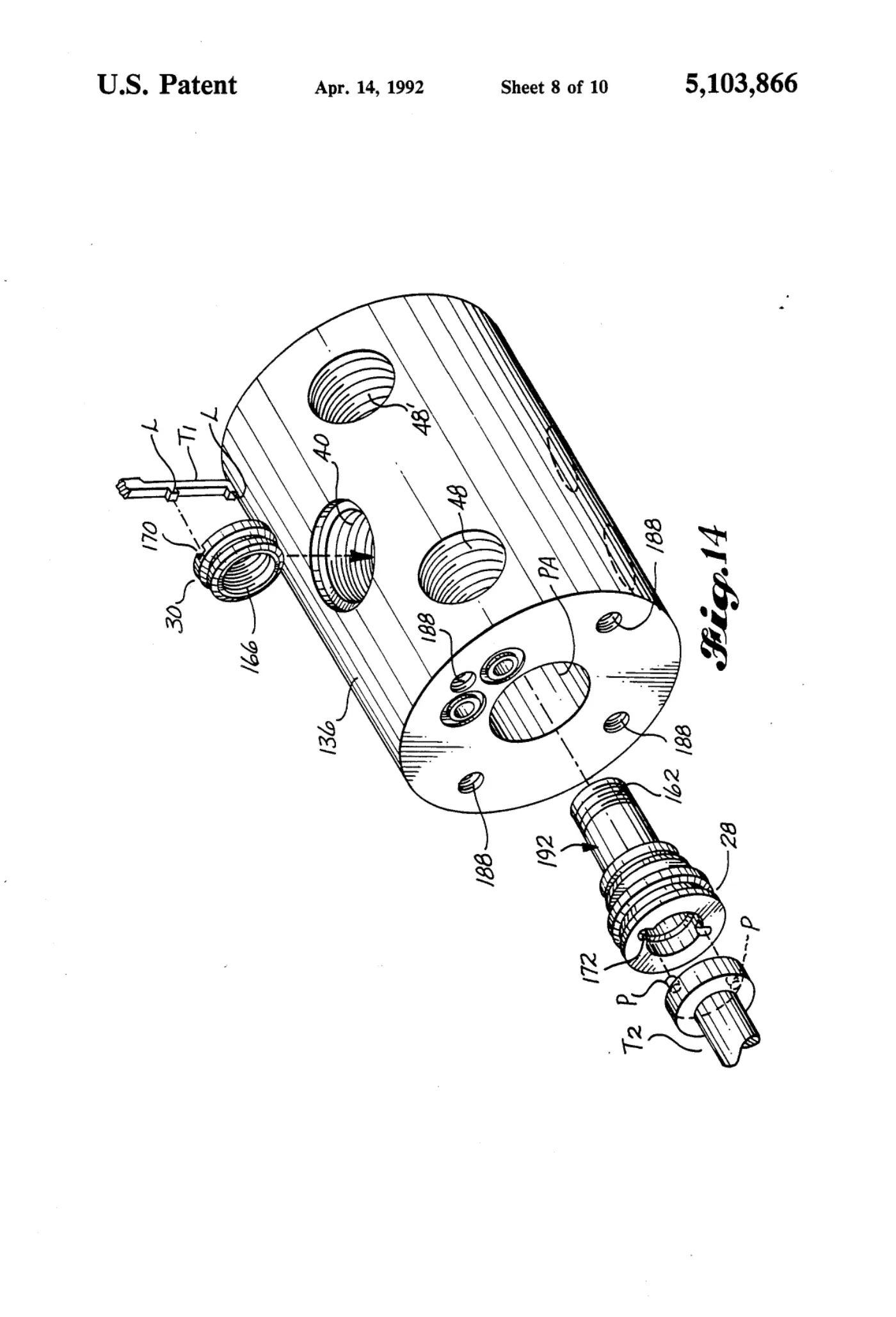
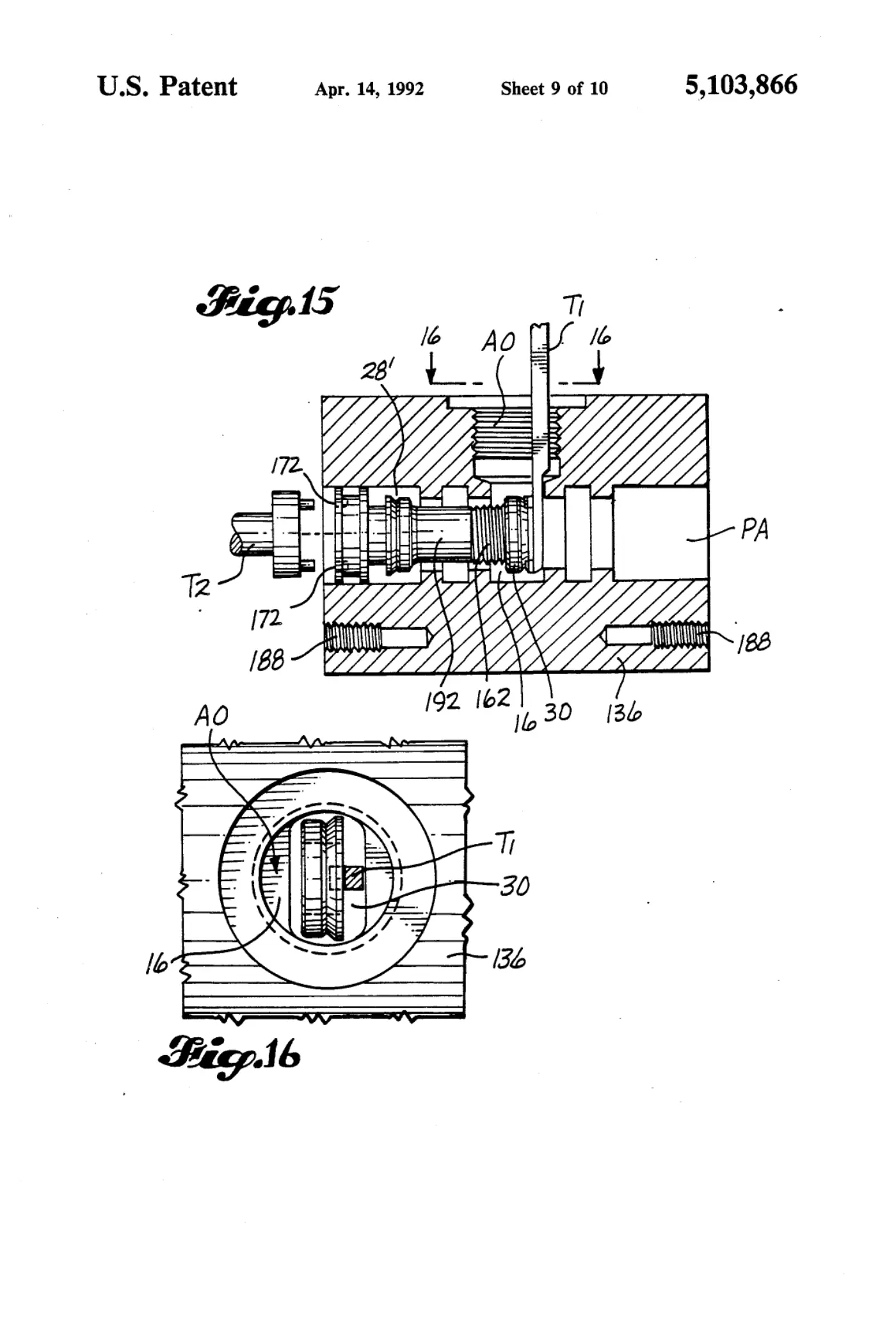
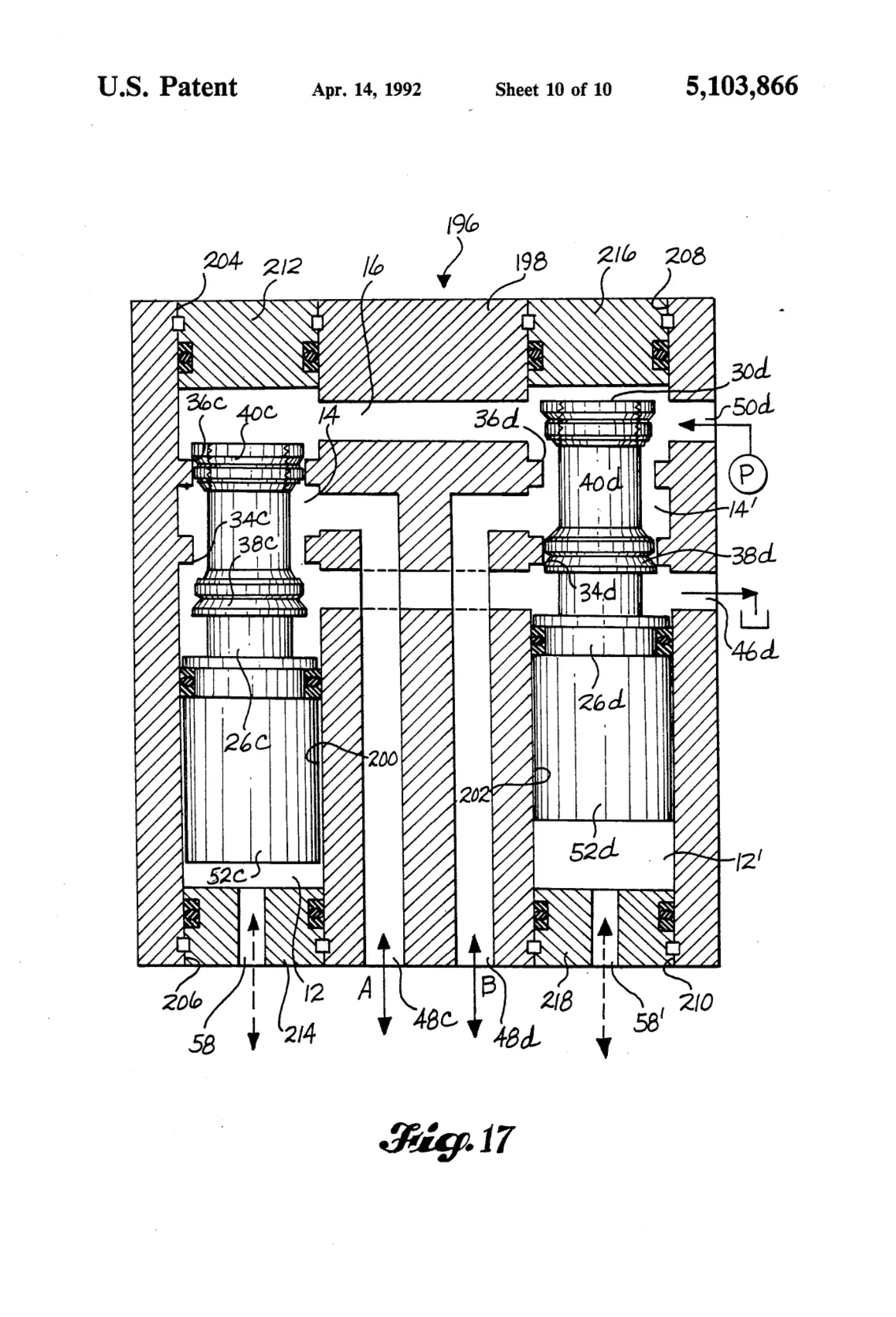
In a housing, there is formed, in series, a first end cavity, a first cylinder cavity, a pressure cavity, a second cylinder cavity and a second end cavity. The cavities are separated by walls which include orifices. Two identical valve members are located in the housing. The first valve member has a piston and a valve plug in the first end cavity and a valve plug in the pressure cavity. The second valve member has a piston and a valve plug in the second end cavity and a valve plug in the pressure cavity. Pressure in the pressure cavity acts on the confronting ends of the two valve members. A two position control rod, in a first position, connects pressure to the piston in the first end chamber and connects the second end chamber to return. The piston has a larger area than the second end of the valve member, creating a force differential which moves the first valve member endwise inwardly. Pressure acting on the second end of the second valve member moves it endwise outwardly. The same control rod, in its second position, connects the second piston with pressure and the first piston with return. Pressure acting on the second end of the first valve member moves it endwise outwardly. Pressure acting on the second piston moves the second valve member endwise inwardly. Such movement of the valve members moves the valve plugs to open and close orifices in the separator walls, to switch pressure and return between two paths leading from the valve assembly.
Abstract
In a housing, there is formed, in series, a first end cavity, a first cylinder cavity, a pressure cavity, a second cylinder cavity and a second end cavity. The cavities are separated by walls which include orifices. Two identical valve members are located in the housing. The first valve member has a piston and a valve plug in the first end cavity and a valve plug in the pressure cavity. The second valve member has a piston and a valve plug in the second end cavity and a valve plug in the pressure cavity. Pressure in the pressure cavity acts on the confronting ends of the two valve members. A two position control rod, in a first position, connects pressure to the piston in the first end chamber and connects the second end chamber to return. The piston has a larger area than the second end of the valve member, creating a force differential which moves the first valve member endwise inwardly. Pressure acting on the second end of the second valve member moves it endwise outwardly. The same control rod, in its second position, connects the second piston with pressure and the first piston with return. Pressure acting on the second end of the first valve member moves it endwise outwardly. Pressure acting on the second piston moves the second valve member endwise inwardly. Such movement of the valve members moves the valve plugs to open and close orifices in the separator walls, to switch pressure and return between two paths leading from the valve assembly.
1. Drawings
[0001]Sheet 1.
[0002]Sheet 2.
[0003]Sheet 3.
[0004]Sheet 4.
[0005]Sheet 5.
[0006]Sheet 6.
[0007]Sheet 7.
[0008]Sheet 8.
[0009]Sheet 9.
[0010]Sheet 10.
Publication information
Citation
OpenTechnical Publication OT-2026-000003400, “Poppet valve and valve assemblies utilizing same,” published September 15, 2026 at 20:22:17 UTC, https://opentechnical.org/p/OT-2026-000003400.
To cite specific content, add the paragraph or figure numbers.
Terms
This record reproduces a document published elsewhere and is provided for reference and study. Rights in the original remain with its owner. See the publication policy.