OT-2026-000003431
Vacuum cup construction
- Published
- Permanent URL
- https://opentechnical.org/p/OT-2026-000003431
- Classification
- Robotics & Automation › Robot Architectures
- Inventors
- LITTELL EDMUND R
- Assignee
- LITTELL EDMUND R
- Original source
- US-5013075-A, the United States Patent and Trademark Office, 7 May 1991
- Document SHA-256
- 660cb09abc4a04778dc6c7ebe447b1858cbb45365a1faa74c16e5bd6b4ae7c0a
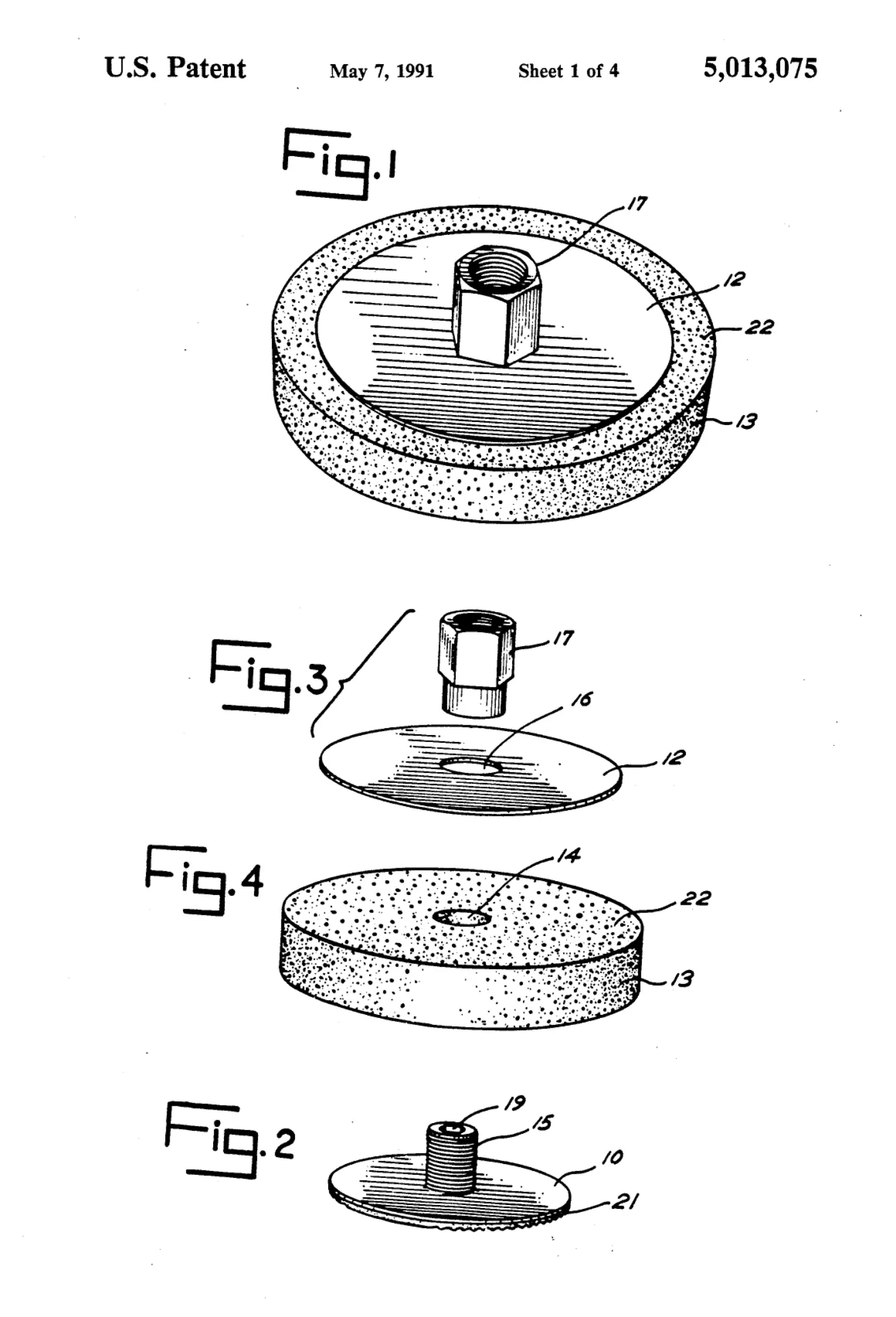
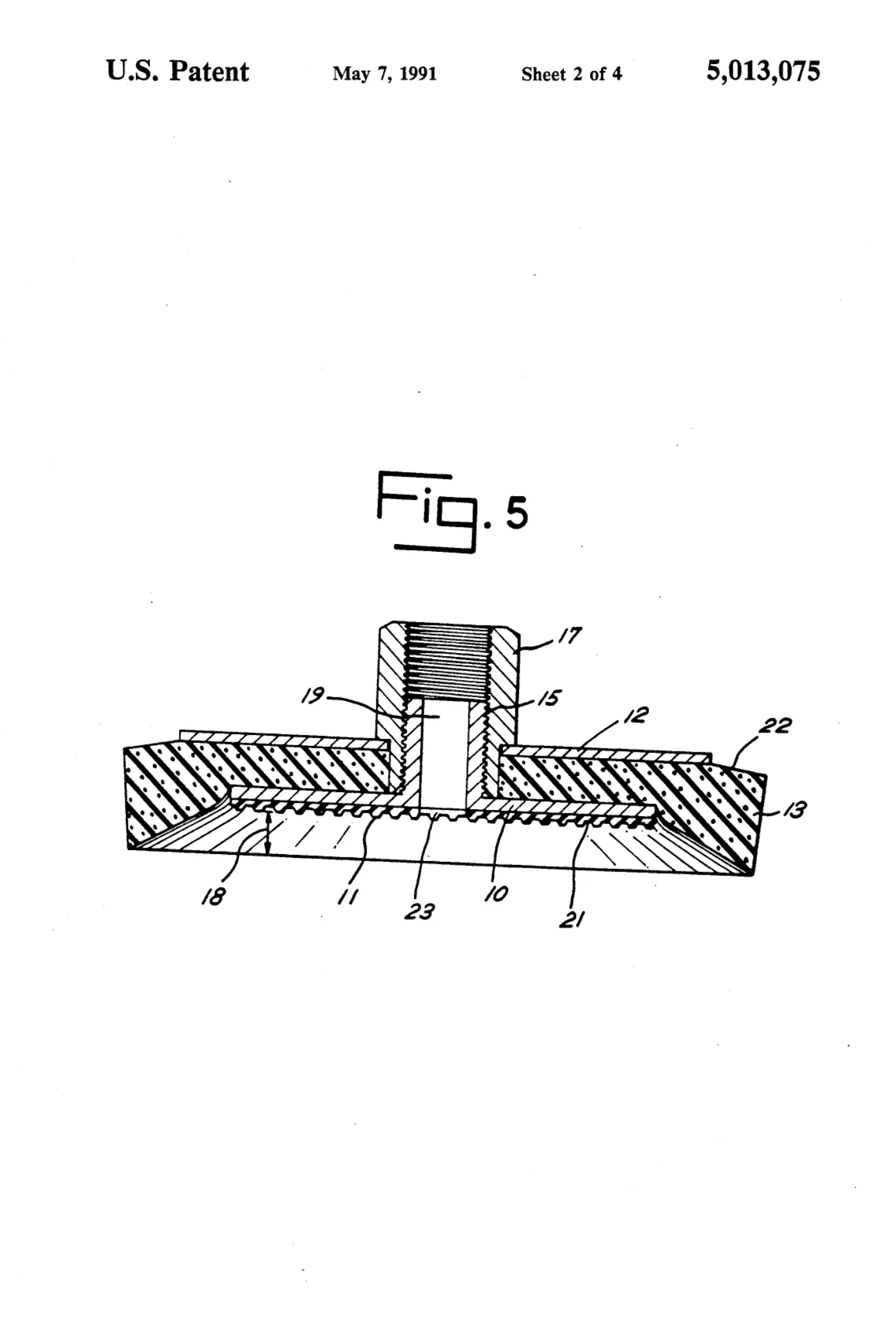
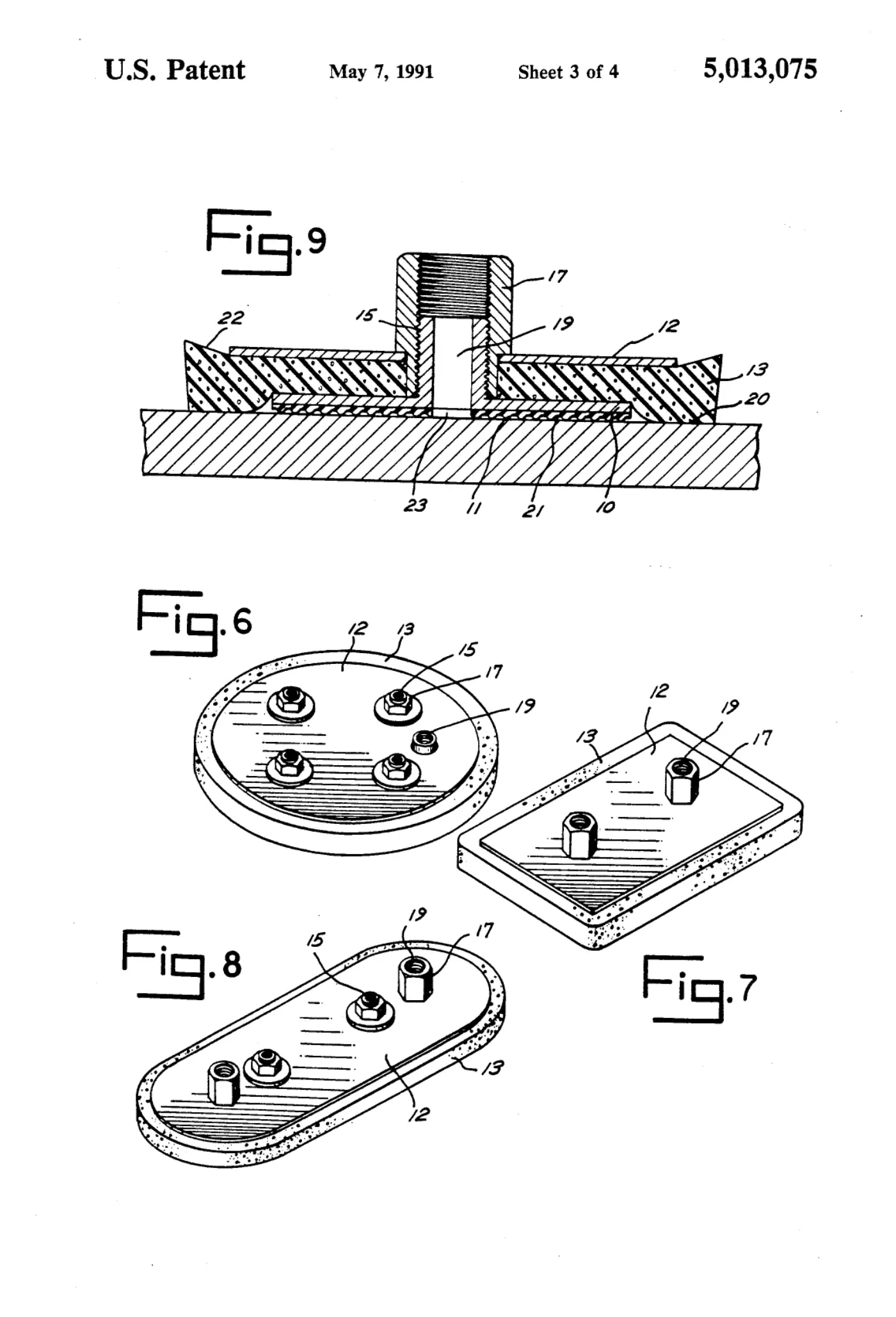
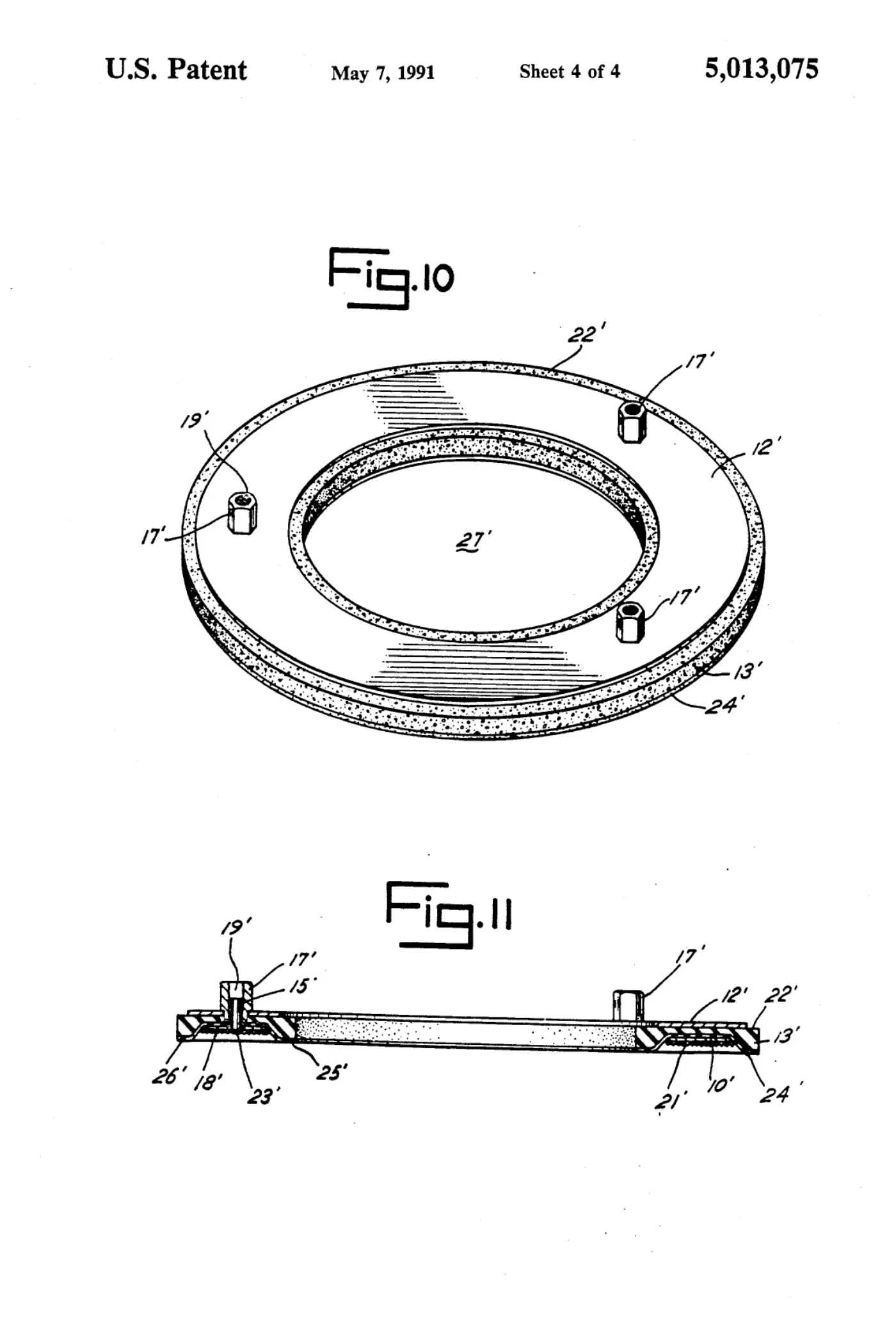
A vacuum cup construction designed to support large items includes a planar outer plate, and a planar, generally coincidentally shaped inner plate which is smaller than the outer plate. A generally flat coincidentally shaped compressible unmolded, non-preferred sealing member, which is larger than the inner plate, is retained between the outer and inner plates by a threaded stud and an associated nut. The tightening of nut on the threaded stud compresses the sealing member between the outer and inner plates. Compression of the sealing member causes the periphery to deform and form a sealing edge. A vacuum passage passes through the outer plate, the sealing member, and the inner plate to permit a vacuum to be drawn when the assembly is placed against the surface of an item or object.
Abstract
A vacuum cup construction designed to support large items includes a planar outer plate, and a planar, generally coincidentally shaped inner plate which is smaller than the outer plate. A generally flat coincidentally shaped compressible unmolded, non-preferred sealing member, which is larger than the inner plate, is retained between the outer and inner plates by a threaded stud and an associated nut. The tightening of nut on the threaded stud compresses the sealing member between the outer and inner plates. Compression of the sealing member causes the periphery to deform and form a sealing edge. A vacuum passage passes through the outer plate, the sealing member, and the inner plate to permit a vacuum to be drawn when the assembly is placed against the surface of an item or object.
1. Drawings
[0001]Sheet 1.
[0002]Sheet 2.
[0003]Sheet 3.
[0004]Sheet 4.
Publication information
Citation
OpenTechnical Publication OT-2026-000003431, “Vacuum cup construction,” published September 15, 2026 at 20:26:36 UTC, https://opentechnical.org/p/OT-2026-000003431.
To cite specific content, add the paragraph or figure numbers.
Terms
This record reproduces a document published elsewhere and is provided for reference and study. Rights in the original remain with its owner. See the publication policy.