OT-2026-000003448
Vacuum resin impregnation process
- Published
- Permanent URL
- https://opentechnical.org/p/OT-2026-000003448
- Classification
- Lifting, Positioning & Manipulation › Vacuum Lifting
- Assignee
- MC DONNELL DOUGLAS CORP
- Original source
- US-4942013-A, the United States Patent and Trademark Office, 17 July 1990
- Document SHA-256
- da6b01153b52d36a2b7cf7fe232167539ef6f5f16b17ad30e347bc415efb784a
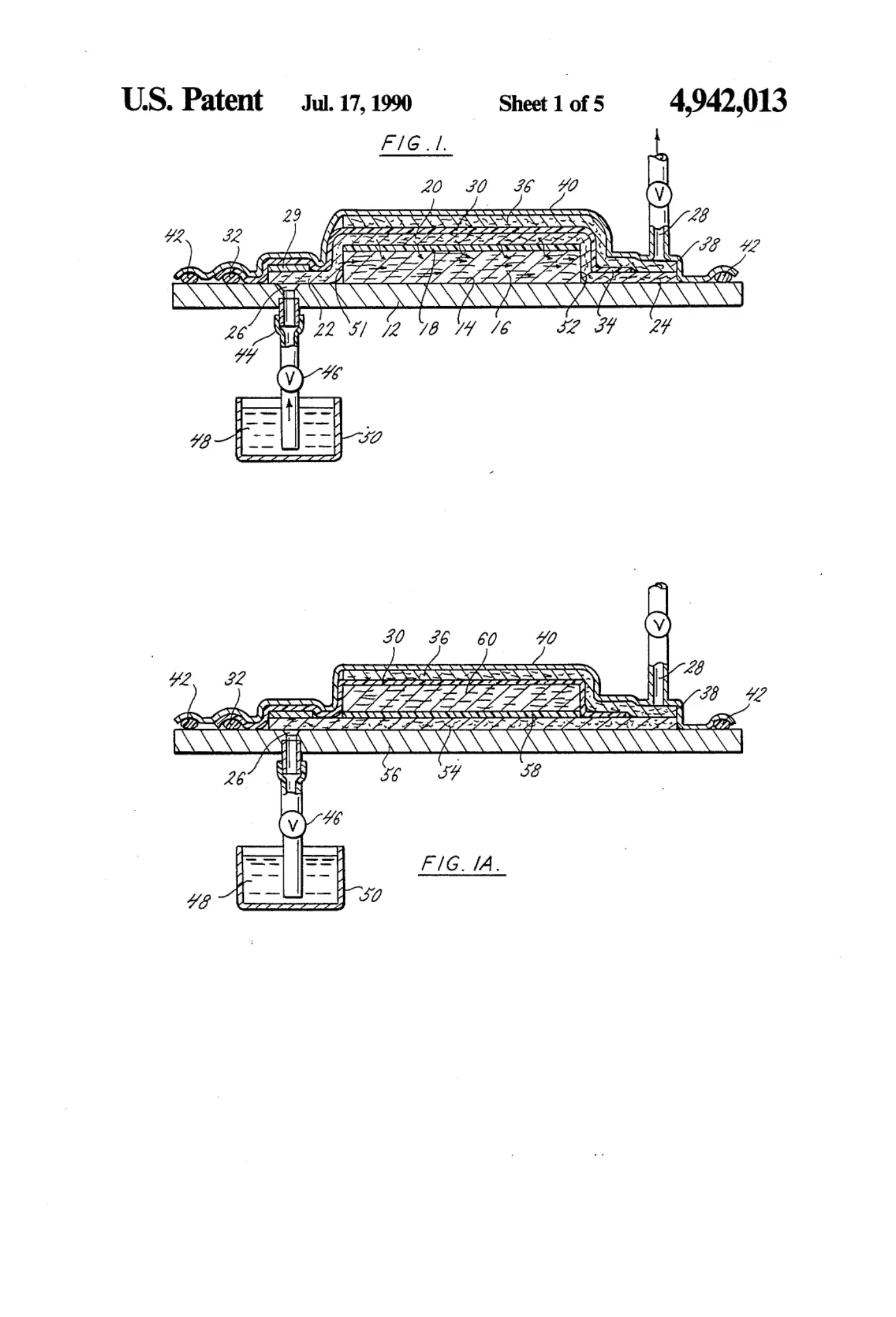
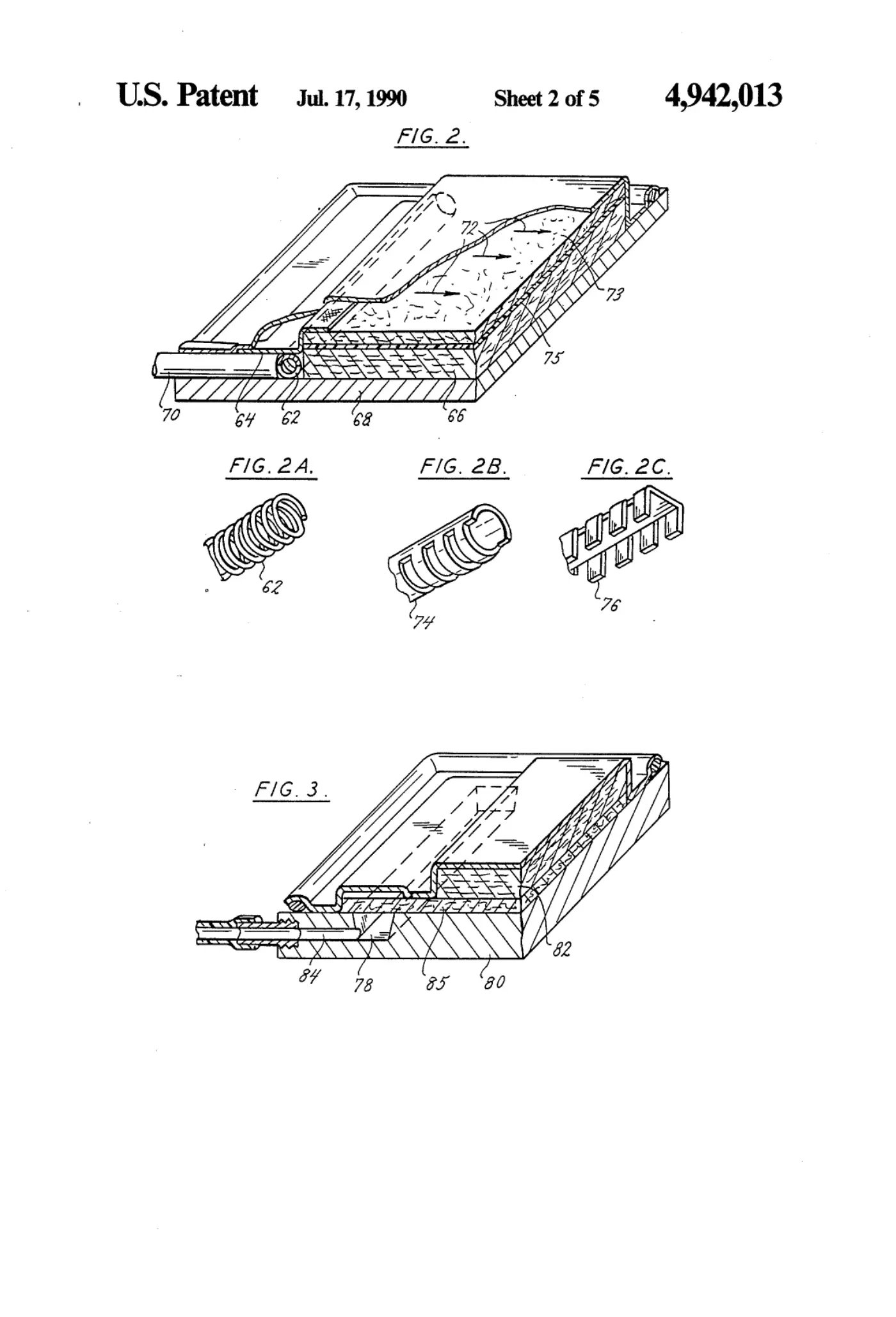
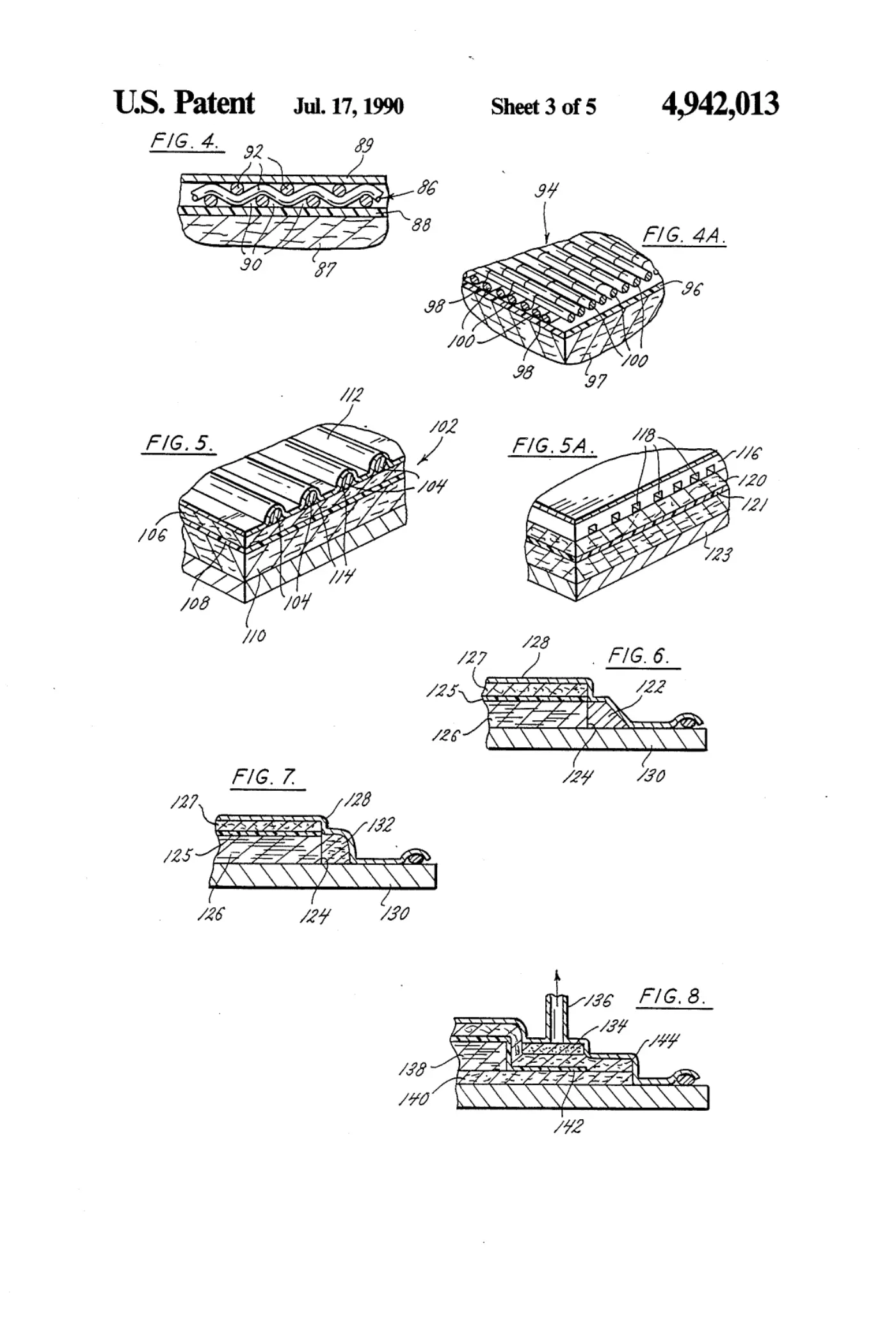
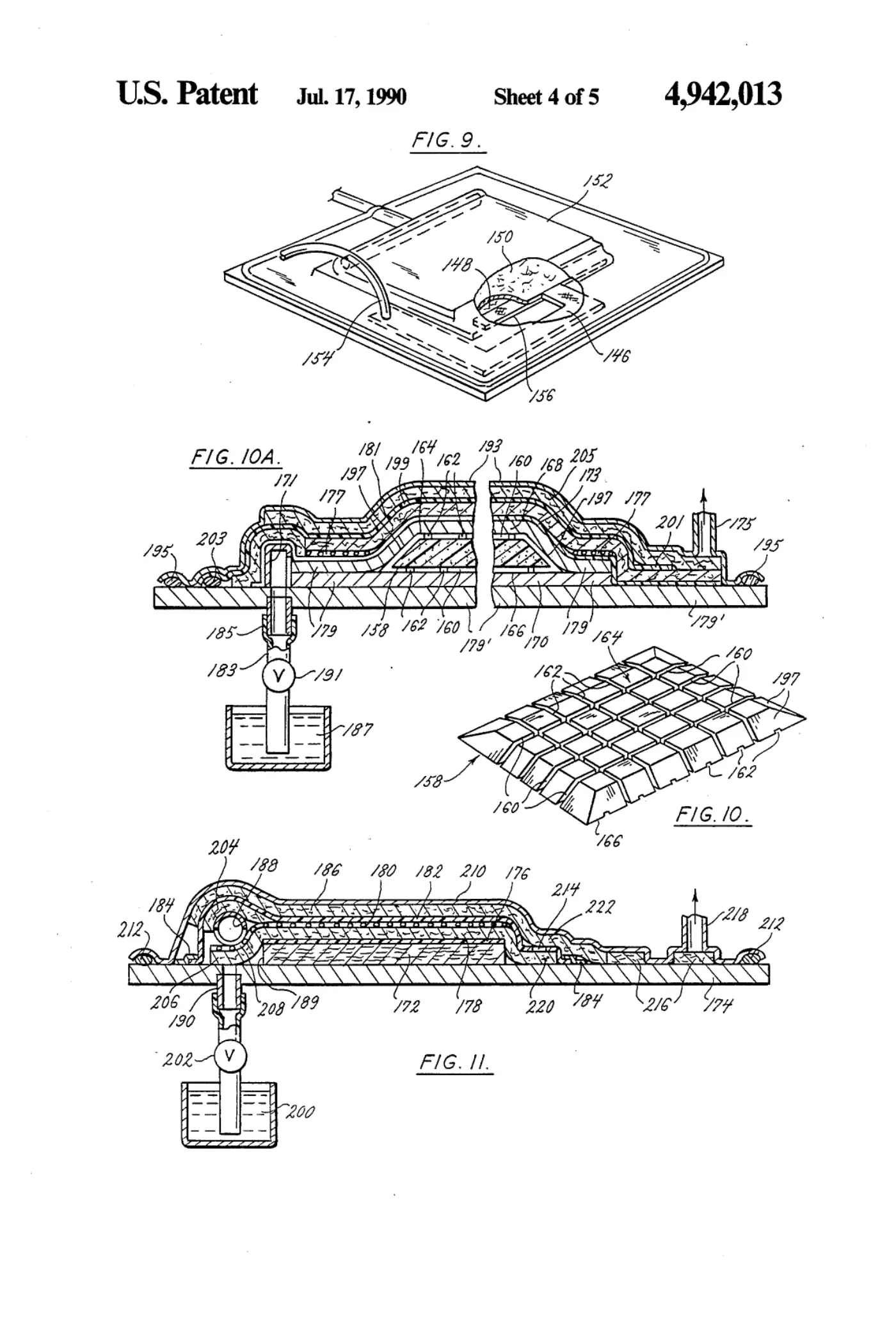
A process and system for vacuum impregnation of a fiber reinforcement, such as carbon cloth, with a resin to produce a resin-fiber composite. Liquid resin enters in arrangement or system comprising a fiber reinforcement layer on a tool or mold and is directed via a system of flow paths to impregnate the fiber reinforcement layer uniformly across the width thereof and along the length of the fiber reinforcement layer. According to one embodiment, a fiber reinforcement layer, e.g., carbon cloth, is placed on a tool. A porous paring film is applied over the fiber reinforcement layer and a bleeder layer, e.g., fiberglass, is applied over the parting film. A non-pourous film is placed over the bleeder layer, a breather cloth, e.g., fiberglass, is then applied over the non-porous film, and a vacuum bag is placed over the entire assembly and sealed to the mold surface. Liquid resin is fed to the assembly within the vacuum bag. Resin spreader means, e.g., a transverse strip of fiberglass cloth, or mechanical means, such as a slotted tube, receives the liquid resin and distributes it initially across the panel adjacent one end of the reinforcement layer after the vacuum has been applied to the assembly. The liquid resin is drawn through the bleeder cloth and through the fiber reinforcement layer from one end to the opposite thereof to completely impregnate same. The resin system is designed so that it will commence to gel when the liquid resin has completely impregnated the fiber reinforcement layer.
Abstract
A process and system for vacuum impregnation of a fiber reinforcement, such as carbon cloth, with a resin to produce a resin-fiber composite. Liquid resin enters in arrangement or system comprising a fiber reinforcement layer on a tool or mold and is directed via a system of flow paths to impregnate the fiber reinforcement layer uniformly across the width thereof and along the length of the fiber reinforcement layer. According to one embodiment, a fiber reinforcement layer, e.g., carbon cloth, is placed on a tool. A porous paring film is applied over the fiber reinforcement layer and a bleeder layer, e.g., fiberglass, is applied over the parting film. A non-pourous film is placed over the bleeder layer, a breather cloth, e.g., fiberglass, is then applied over the non-porous film, and a vacuum bag is placed over the entire assembly and sealed to the mold surface. Liquid resin is fed to the assembly within the vacuum bag. Resin spreader means, e.g., a transverse strip of fiberglass cloth, or mechanical means, such as a slotted tube, receives the liquid resin and distributes it initially across the panel adjacent one end of the reinforcement layer after the vacuum has been applied to the assembly. The liquid resin is drawn through the bleeder cloth and through the fiber reinforcement layer from one end to the opposite thereof to completely impregnate same. The resin system is designed so that it will commence to gel when the liquid resin has completely impregnated the fiber reinforcement layer.
1. Drawings
[0001]Sheet 1.
[0002]Sheet 2.
[0003]Sheet 3.
[0004]Sheet 4.
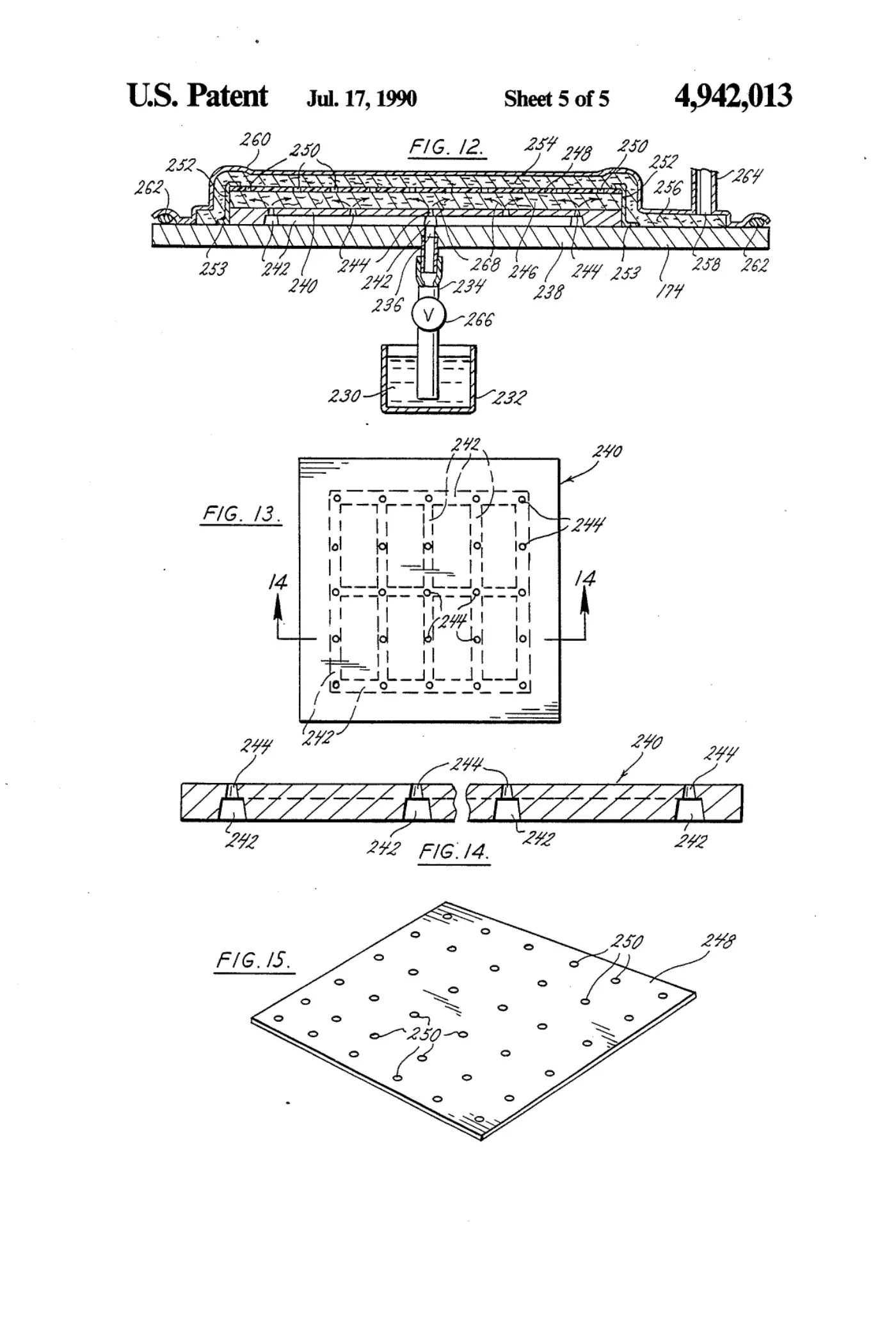
[0005]Sheet 5.
Publication information
Citation
OpenTechnical Publication OT-2026-000003448, “Vacuum resin impregnation process,” published September 15, 2026 at 20:28:51 UTC, https://opentechnical.org/p/OT-2026-000003448.
To cite specific content, add the paragraph or figure numbers.
Terms
This record reproduces a document published elsewhere and is provided for reference and study. Rights in the original remain with its owner. See the publication policy.