OT-2026-000003180
Apparatus and method for automatically handling and holding panels near and at the exact plane of exposure
- Published
- Permanent URL
- https://opentechnical.org/p/OT-2026-000003180
- Classification
- Tools & Tooling › Clamping Tools
- Inventors
- HEITEL ROBERT GLENN, SHEETS RONALD E
- Assignee
- TAMARAC SCIENT CO INC
- Original source
- US-5937993-A, the United States Patent and Trademark Office, 17 August 1999
- Document SHA-256
- 15d1007e1d281ed56c5dc704ac3e2c6f04c212503ff4fccc64885613a47b8a79
The present invention involves both an apparatus and a method for handling and holding panels and other substrates for photolithographic exposures. In one of its aspects, the present invention comprises bi-modal vacuum cup-bellows devices which automatically retract behind (below) the surface of a chuck, and to remain so retracted at all times except when it is desired to draw a panel toward the chuck. The retraction eliminates interference with movements of the panel during snubbing. In another of its aspects, the present invention comprises registration (locator) pin mechanisms that incorporate bearings. The bearings both turn and move axially, and operate to prevent the panel edges from hanging thereon. In another of its aspects, the present invention comprises a hand-off vacuum cup-bellows device that clamps onto each panel as it comes from a robotic loader. Such device incorporates a lubricious cover that prevents rolling of the cup edges and that facilitates sliding of each panel during snubbing. The devices are such as not to prevent vacuum gripping of the rear surface of the panel. In another of its aspects, the present invention comprises a snubber cylinder and bar that applies light pressure along a substantial length of the thin edge of each panel, and that is constructed to reduce the chances that a panel edge will hang up on the bar.
Abstract
The present invention involves both an apparatus and a method for handling and holding panels and other substrates for photolithographic exposures. In one of its aspects, the present invention comprises bi-modal vacuum cup-bellows devices which automatically retract behind (below) the surface of a chuck, and to remain so retracted at all times except when it is desired to draw a panel toward the chuck. The retraction eliminates interference with movements of the panel during snubbing. In another of its aspects, the present invention comprises registration (locator) pin mechanisms that incorporate bearings. The bearings both turn and move axially, and operate to prevent the panel edges from hanging thereon. In another of its aspects, the present invention comprises a hand-off vacuum cup-bellows device that clamps onto each panel as it comes from a robotic loader. Such device incorporates a lubricious cover that prevents rolling of the cup edges and that facilitates sliding of each panel during snubbing. The devices are such as not to prevent vacuum gripping of the rear surface of the panel. In another of its aspects, the present invention comprises a snubber cylinder and bar that applies light pressure along a substantial length of the thin edge of each panel, and that is constructed to reduce the chances that a panel edge will hang up on the bar.
1. Drawings
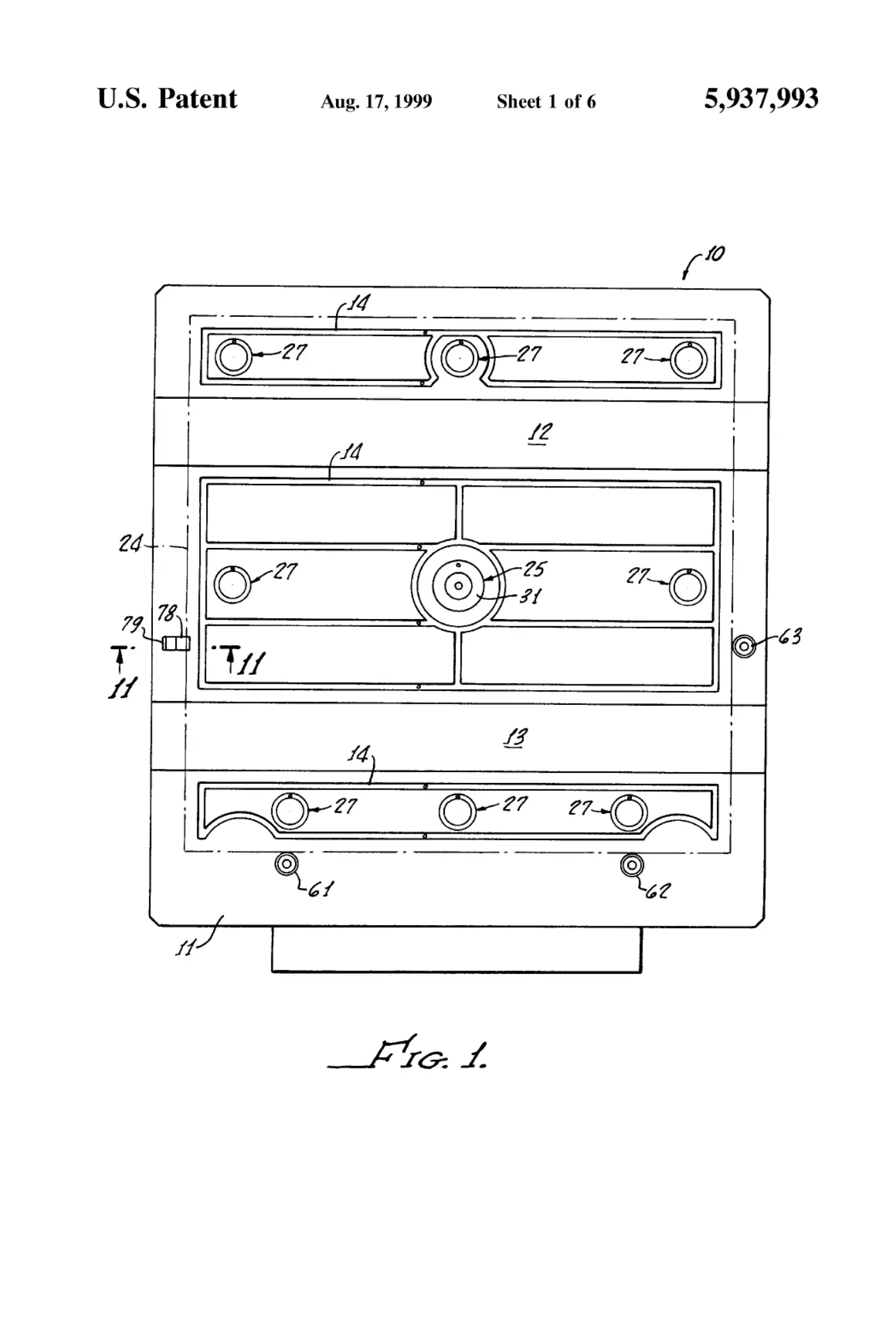
[0001]Sheet 1.
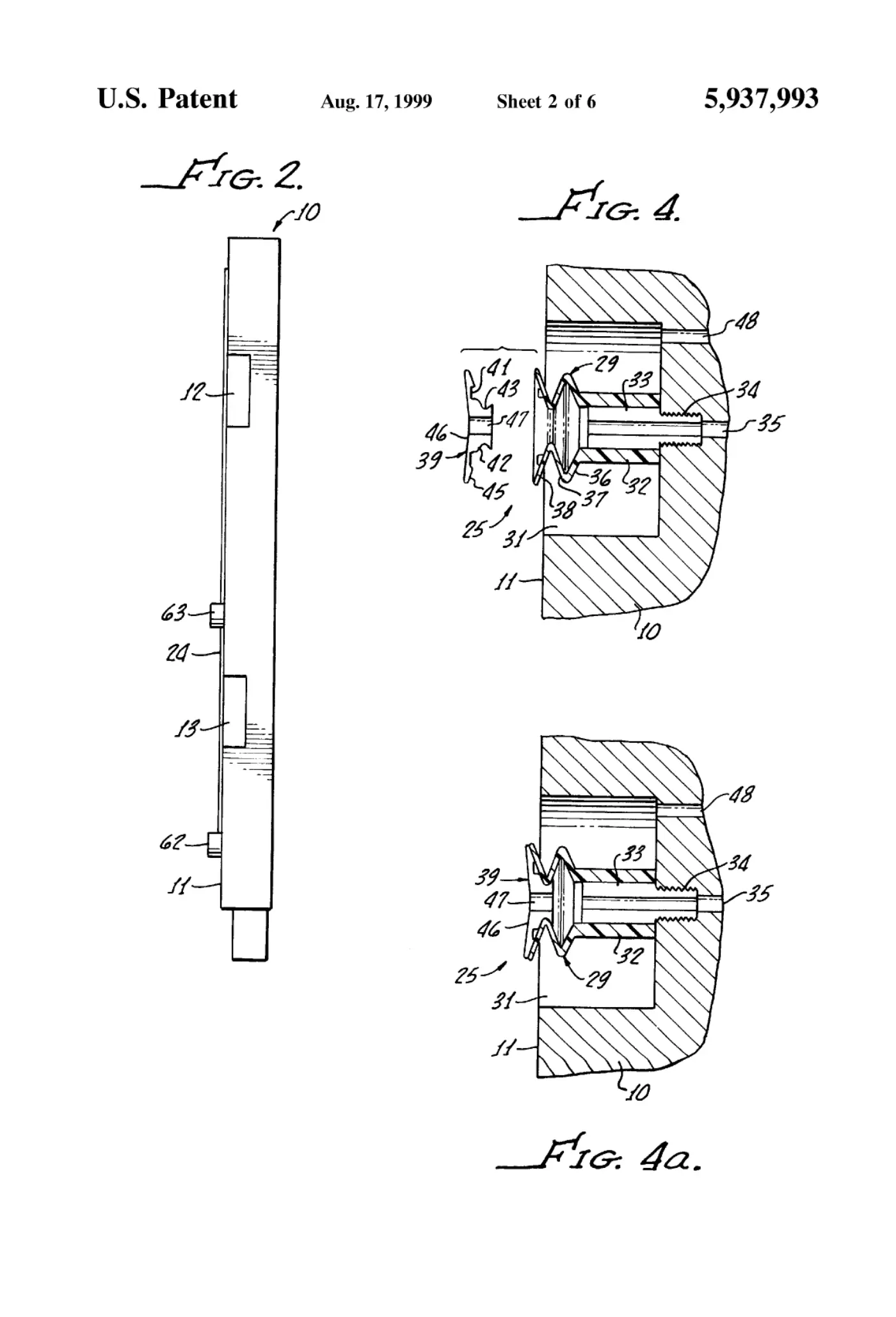
[0002]Sheet 2.
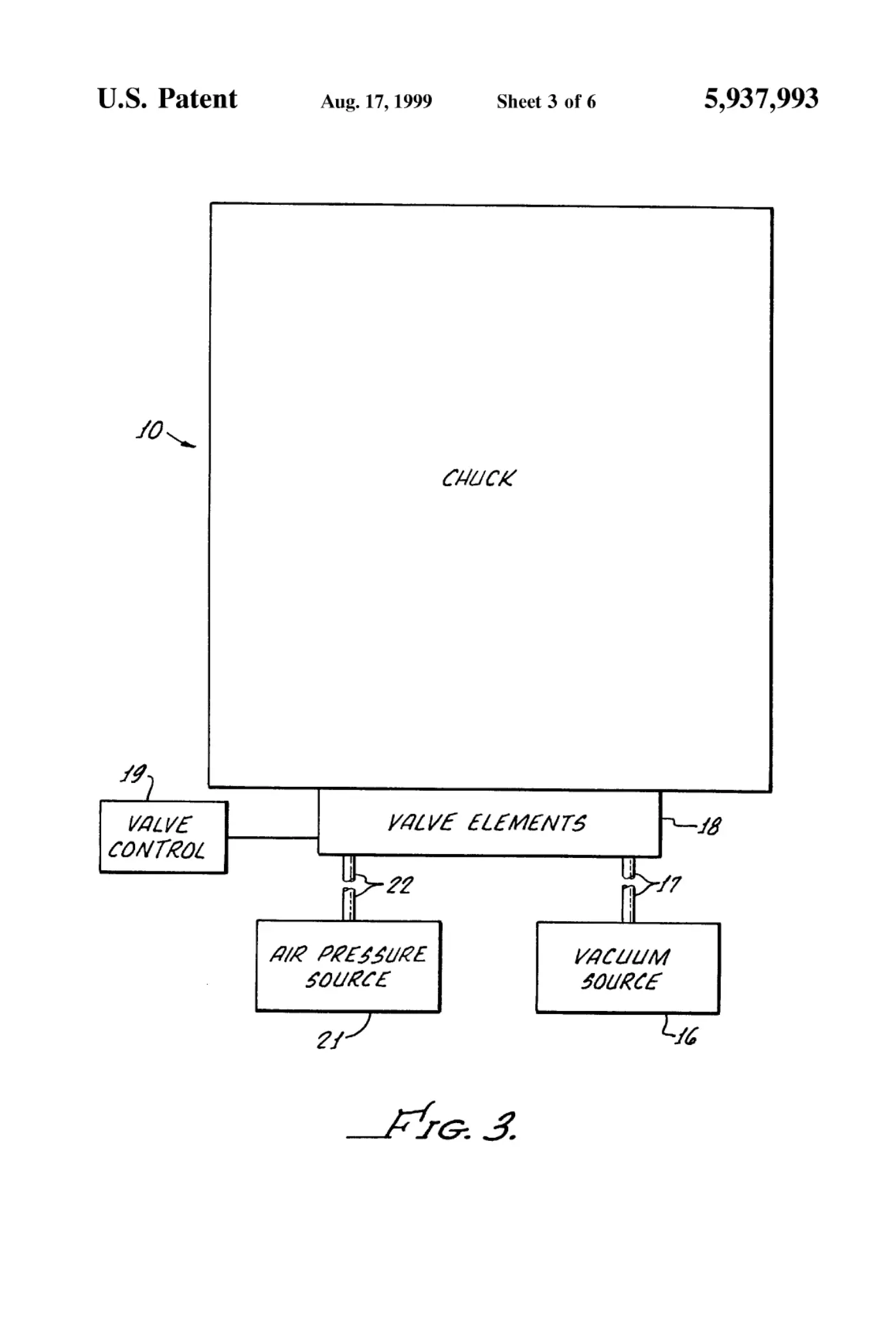
[0003]Sheet 3.
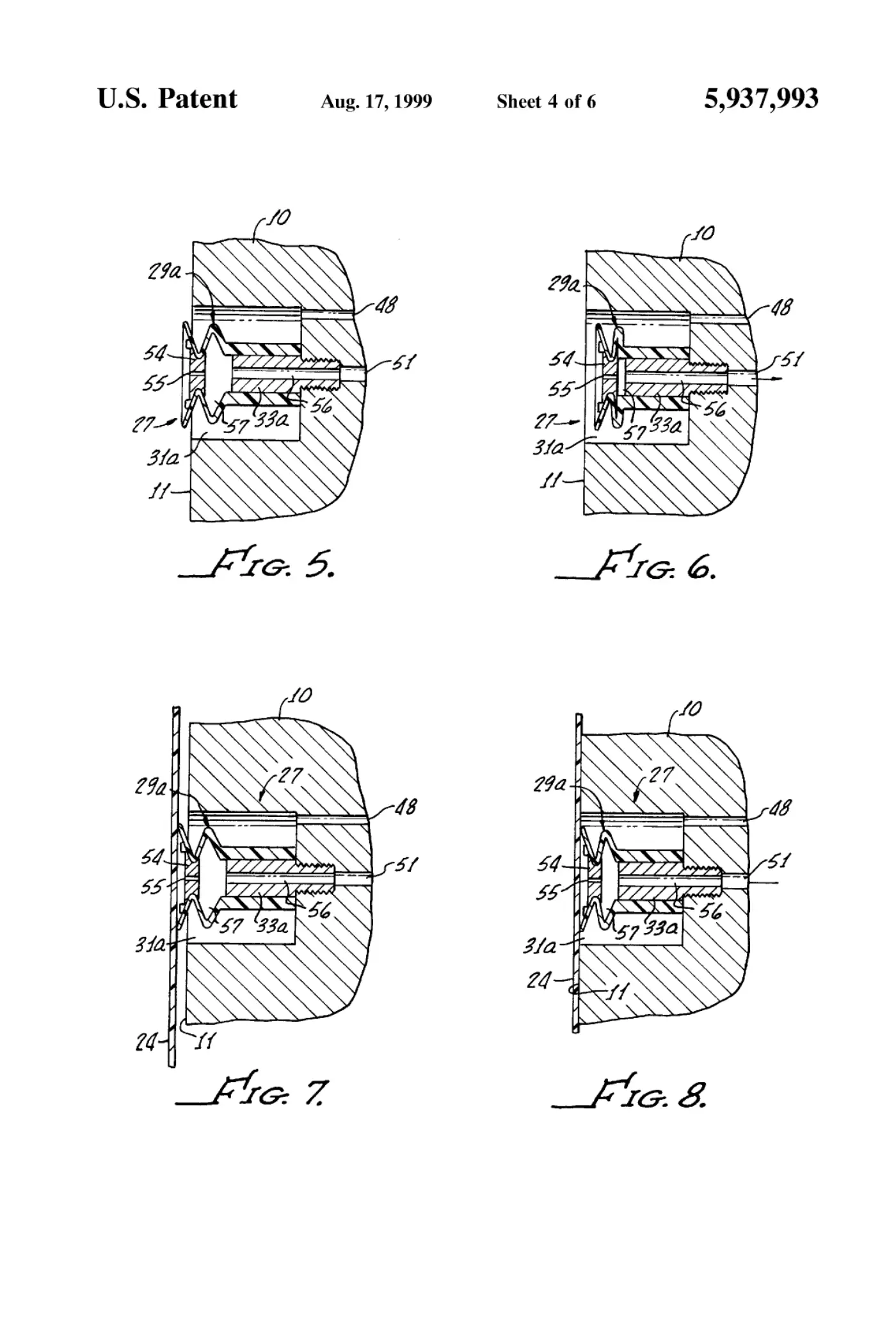
[0004]Sheet 4.
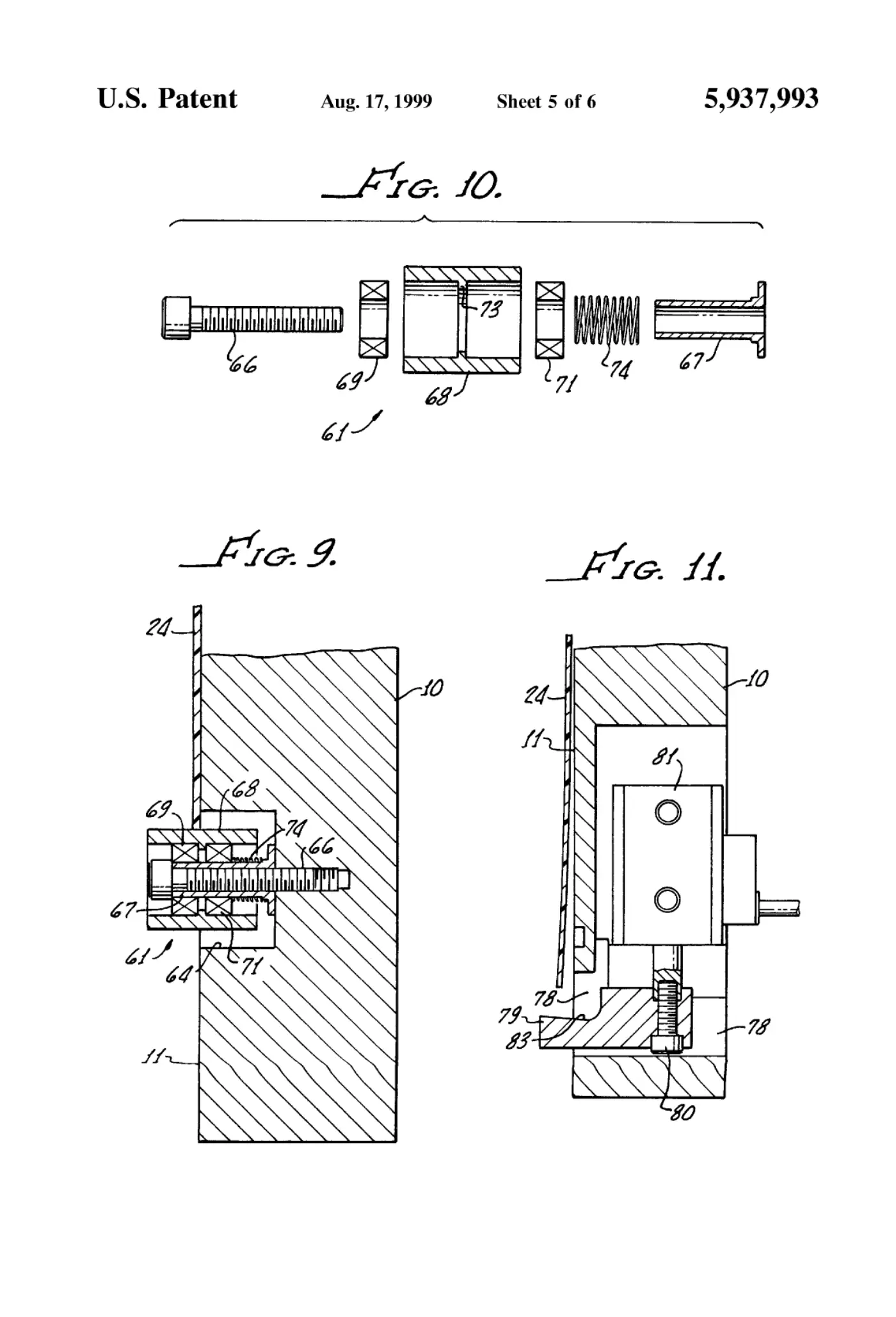
[0005]Sheet 5.
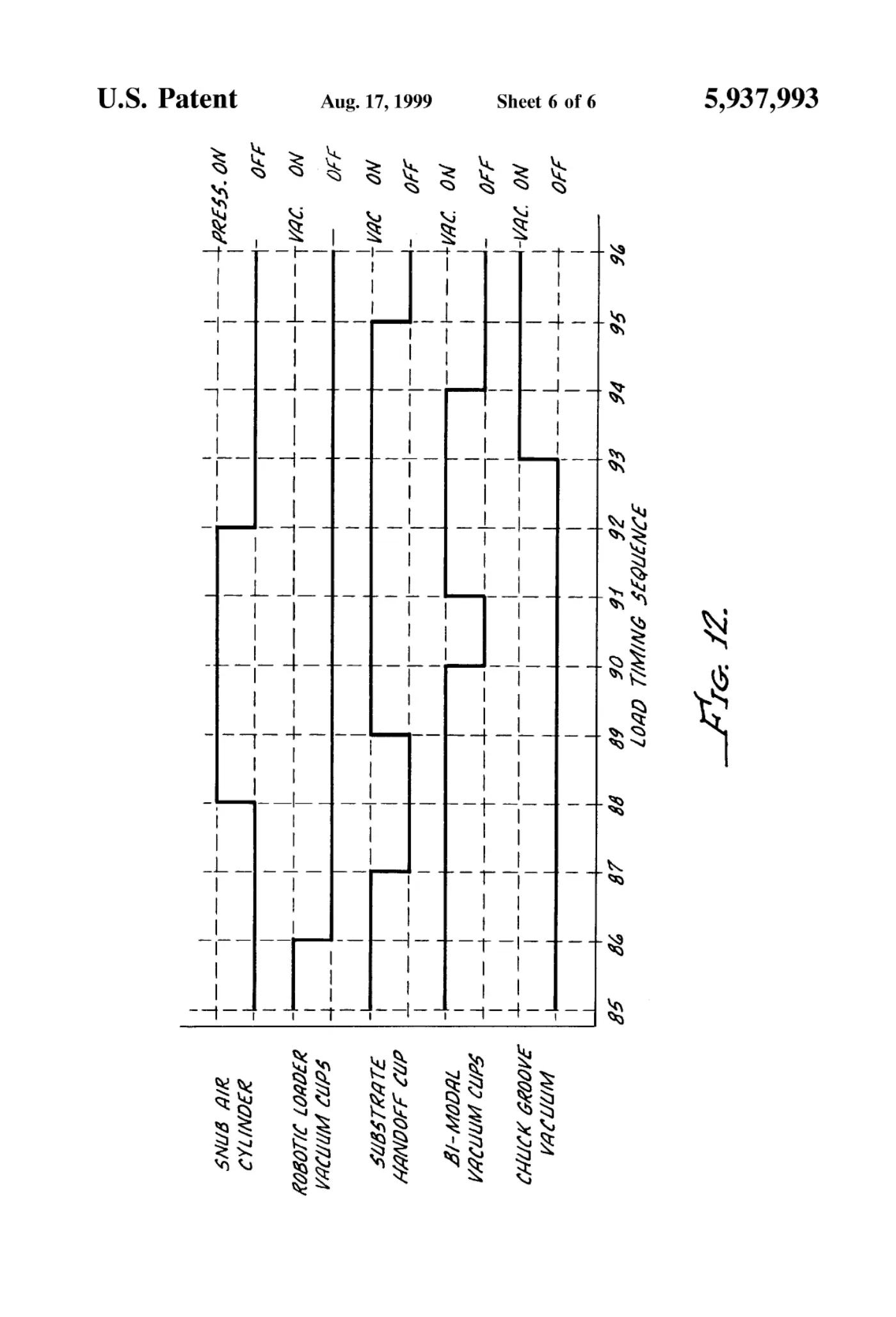
[0006]Sheet 6.
Publication information
Citation
OpenTechnical Publication OT-2026-000003180, “Apparatus and method for automatically handling and holding panels near and at the exact plane of exposure,” published September 15, 2026 at 19:44:54 UTC, https://opentechnical.org/p/OT-2026-000003180.
To cite specific content, add the paragraph or figure numbers.
Terms
This record reproduces a document published elsewhere and is provided for reference and study. Rights in the original remain with its owner. See the publication policy.