OT-2026-000003410
Non-contact conveying device
- Published
- Permanent URL
- https://opentechnical.org/p/OT-2026-000003410
- Classification
- Robotics & Automation › Robot Architectures
- Inventors
- AKASHI HIROSHI
- Assignee
- AKASHI HIROSHI
- Original source
- US-5067762-A, the United States Patent and Trademark Office, 26 November 1991
- Document SHA-256
- dcfcf6d3ebe84e186b8c85ce756667f8359a3f0e9d05903363be8716986abcaa
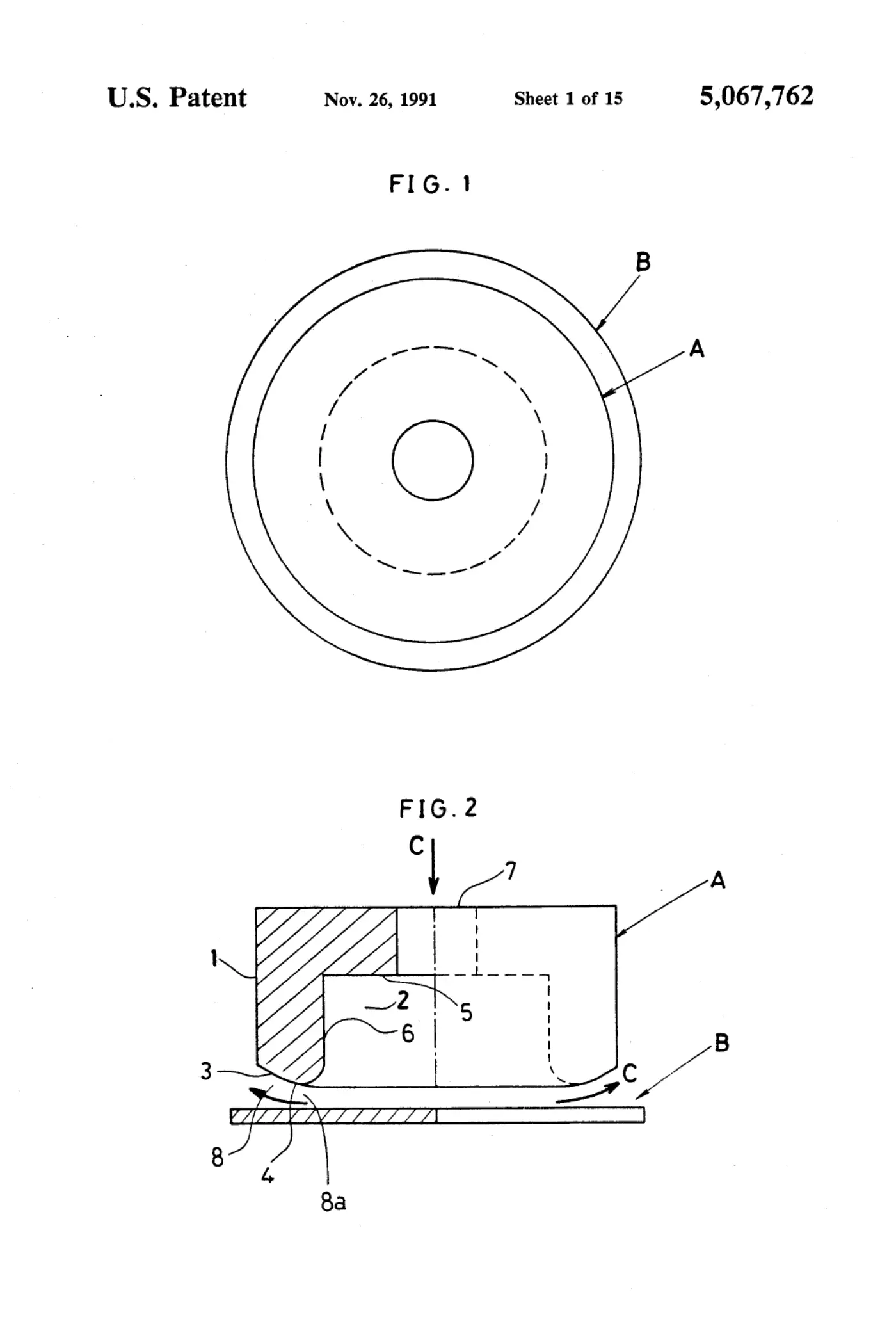
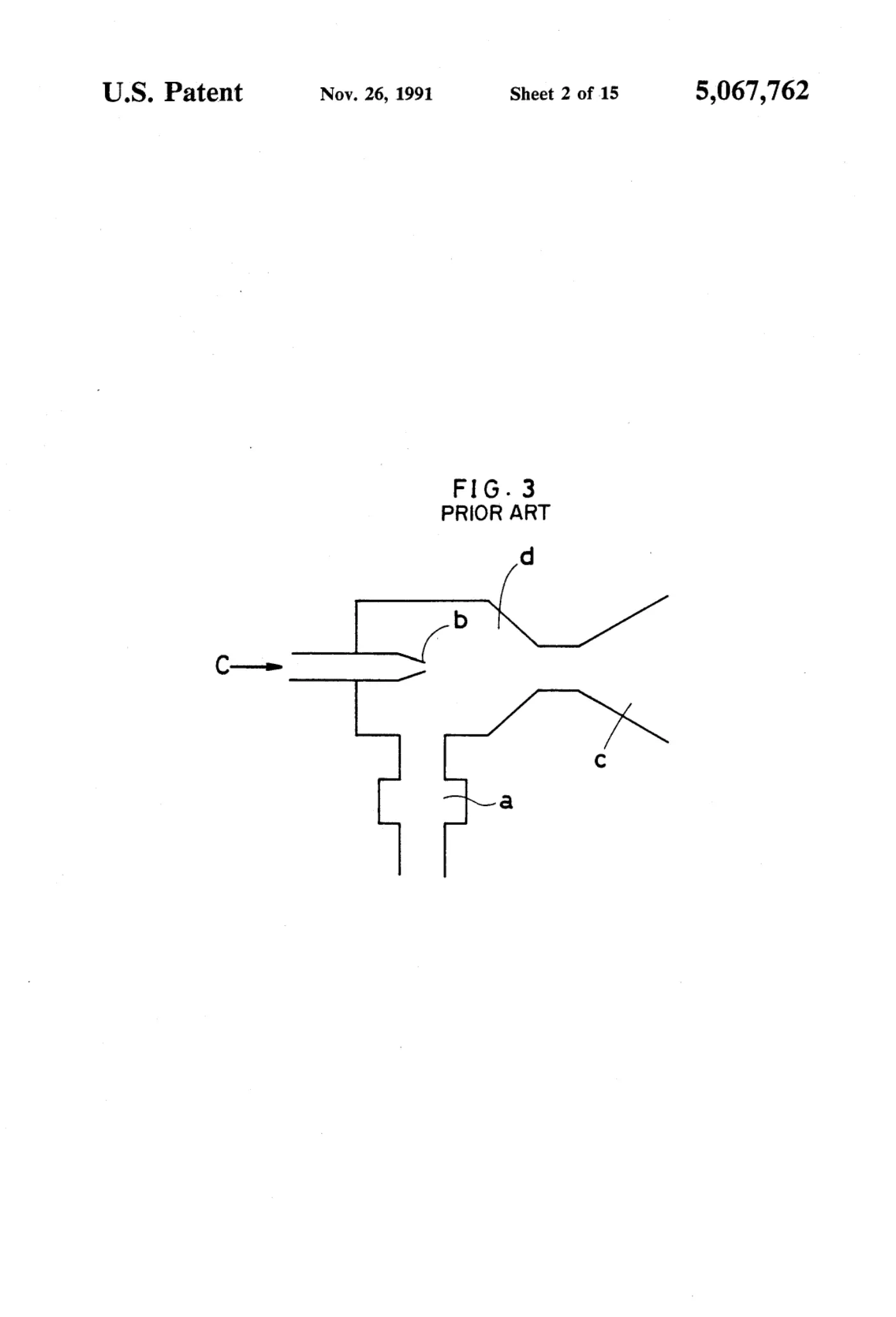
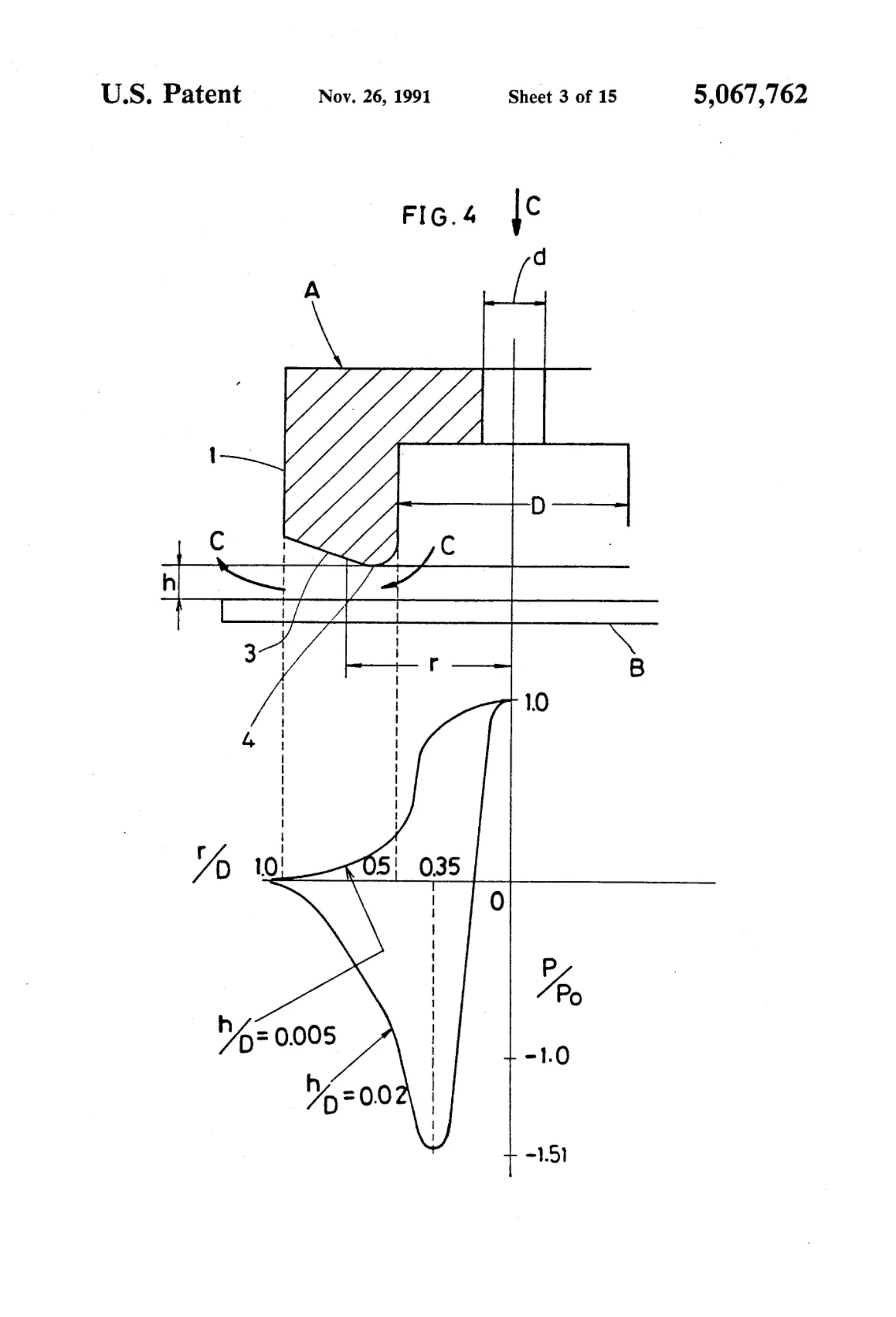
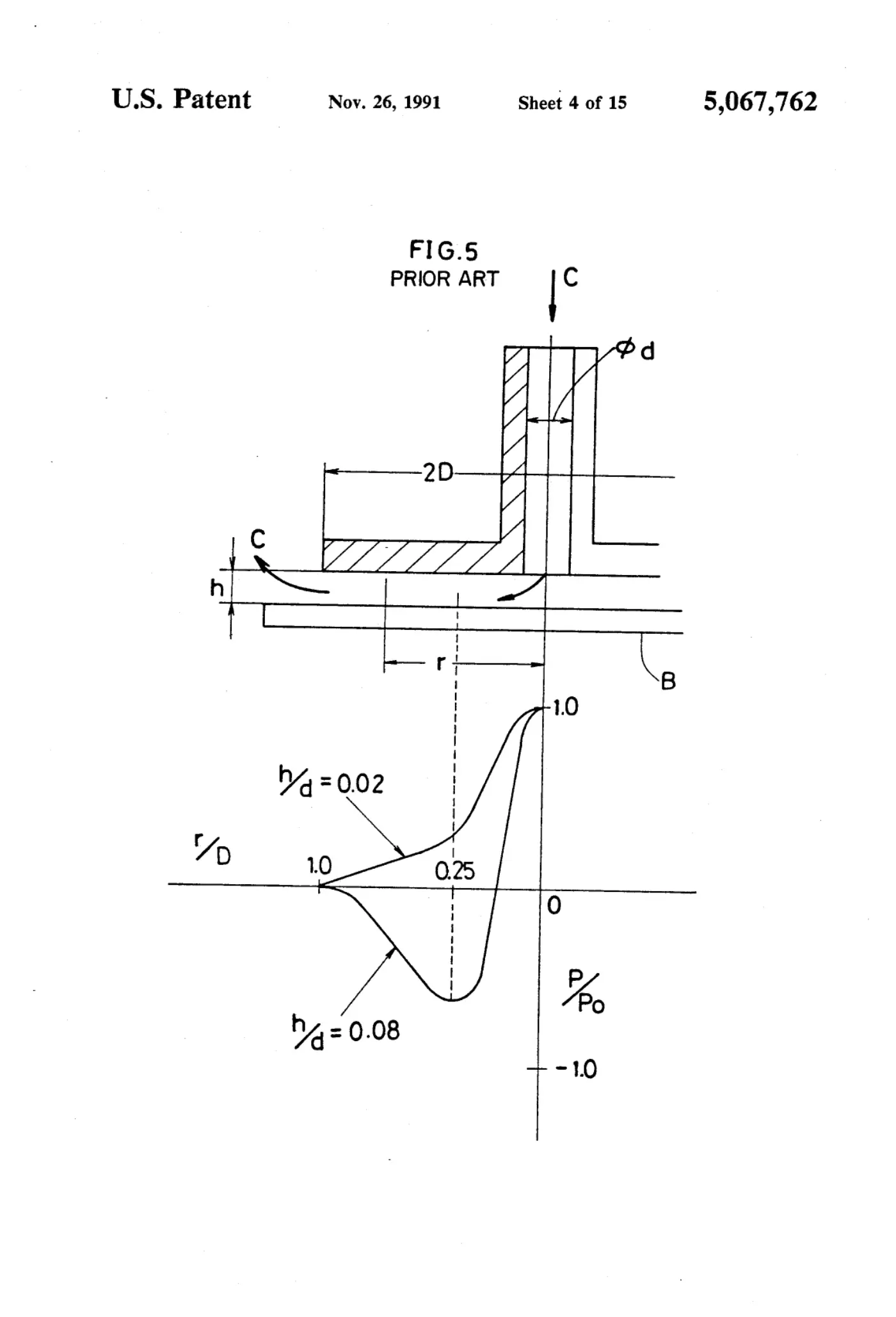
A non-contact conveying device for lifting and/or supporting wafer-like articles without physical contact with the articles. The device has a pickup head with a cuhsion-vacuum room fully opened at its bottom and has an ejector opening located at the center of its upper wall and communicating with the cushion-vacuum room of the pickup head. The ejector opening is coupled to a positive pressure gas supply. The pickup head has an operating surface at the bottom of the side wall which is positioned adjacnet to an article to be lifted. In the case of a wide clearance existing between the operating surface and the article, the non-contact conveying device works as an ejector and the pressure within the cushion-vacuum room is decreased since the cushion-vacuum room acts in the manner of a vacuum room of an ejector and the space formed between the operating surface and the article acts in the manner of a diffuser of an ejector. In the case of a small clearance existing between the cushion-vacuum room and the article, the non-contact conveying device operates like a hovercraft and the pressure with the cushion-vacuum room increases, since the cushion-vacuum room acts in manner of a pressure room of a hovercraft.
Abstract
A non-contact conveying device for lifting and/or supporting wafer-like articles without physical contact with the articles. The device has a pickup head with a cuhsion-vacuum room fully opened at its bottom and has an ejector opening located at the center of its upper wall and communicating with the cushion-vacuum room of the pickup head. The ejector opening is coupled to a positive pressure gas supply. The pickup head has an operating surface at the bottom of the side wall which is positioned adjacnet to an article to be lifted. In the case of a wide clearance existing between the operating surface and the article, the non-contact conveying device works as an ejector and the pressure within the cushion-vacuum room is decreased since the cushion-vacuum room acts in the manner of a vacuum room of an ejector and the space formed between the operating surface and the article acts in the manner of a diffuser of an ejector. In the case of a small clearance existing between the cushion-vacuum room and the article, the non-contact conveying device operates like a hovercraft and the pressure with the cushion-vacuum room increases, since the cushion-vacuum room acts in manner of a pressure room of a hovercraft.
1. Drawings
[0001]Sheet 1.
[0002]Sheet 2.
[0003]Sheet 3.
[0004]Sheet 4.
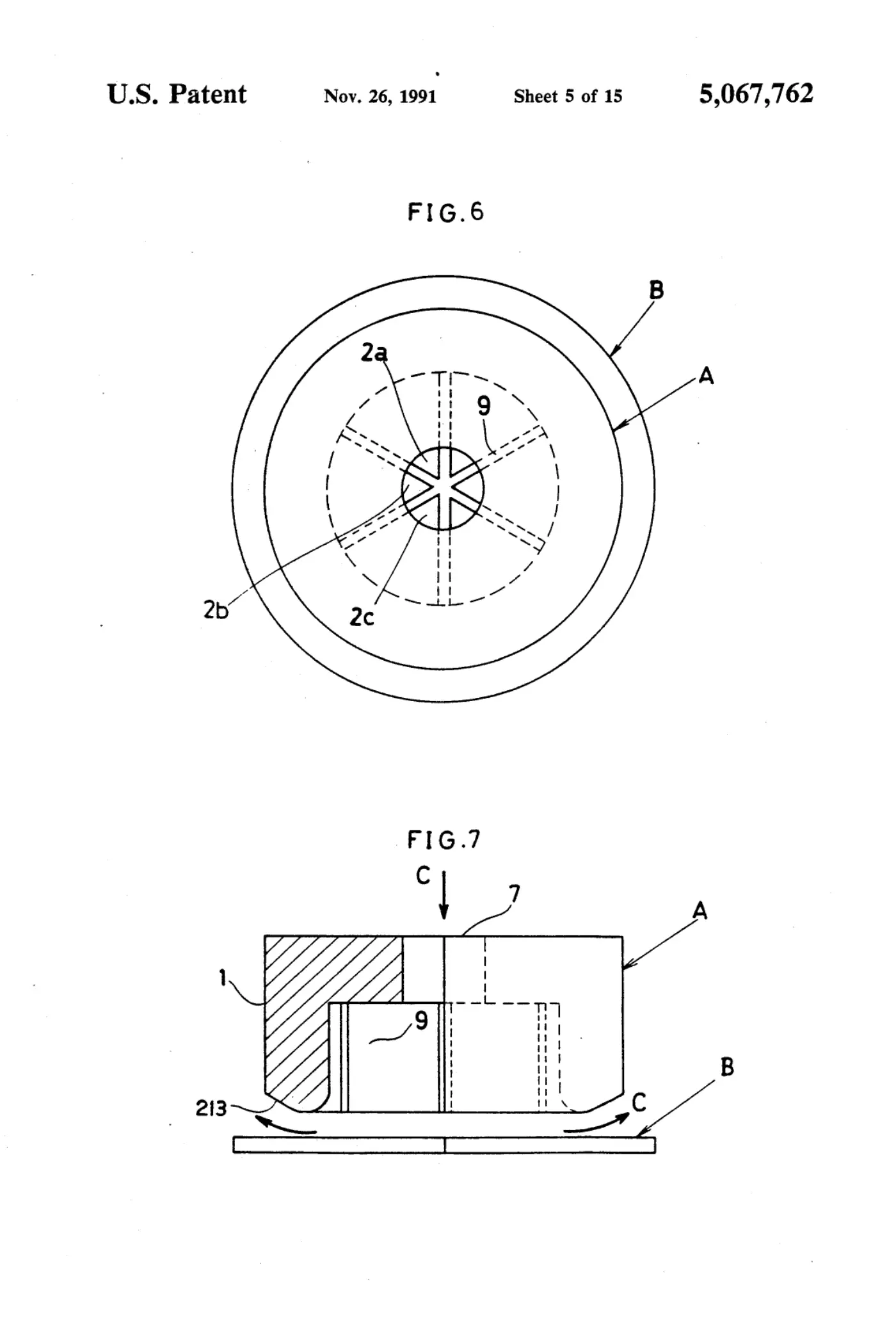
[0005]Sheet 5.
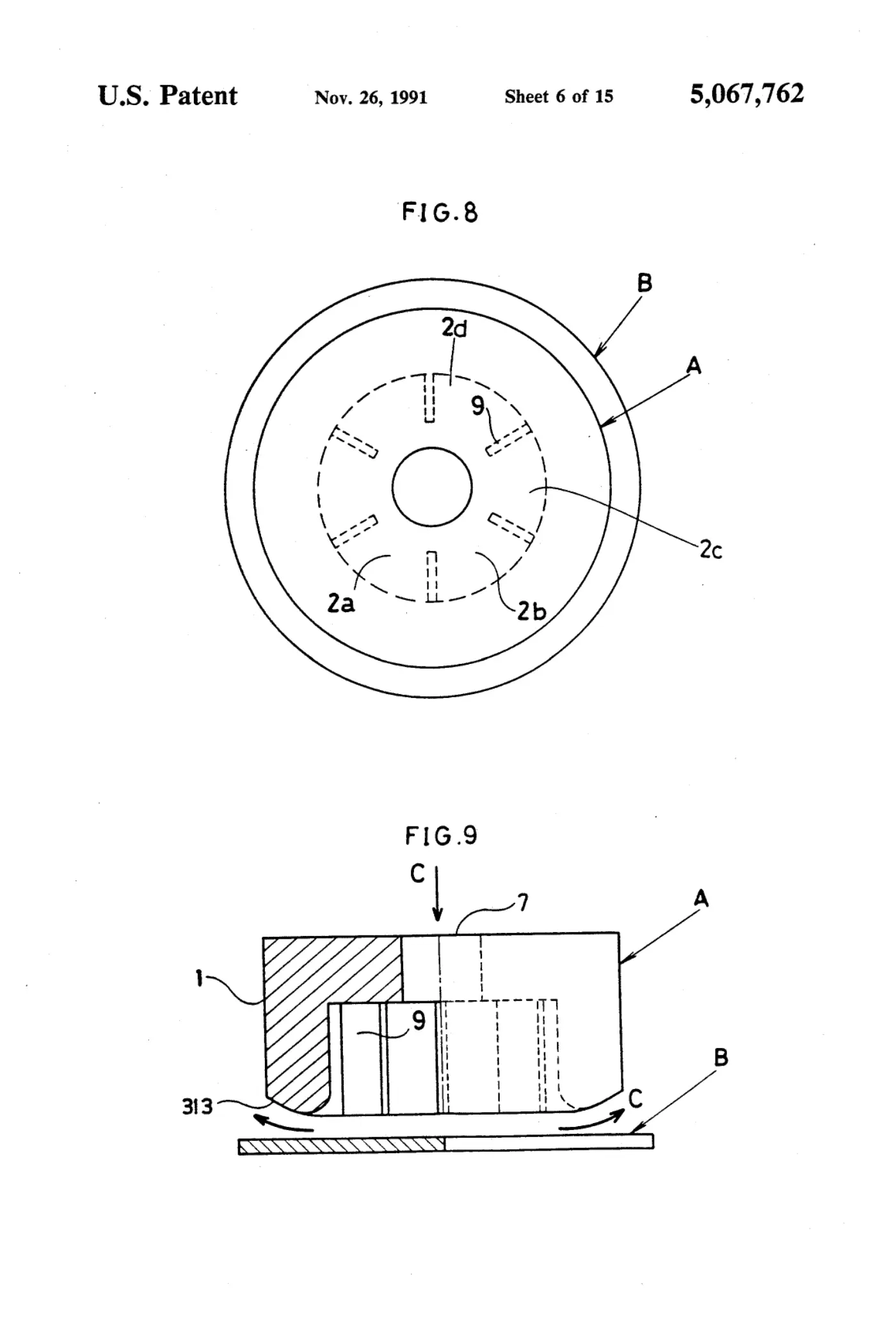
[0006]Sheet 6.
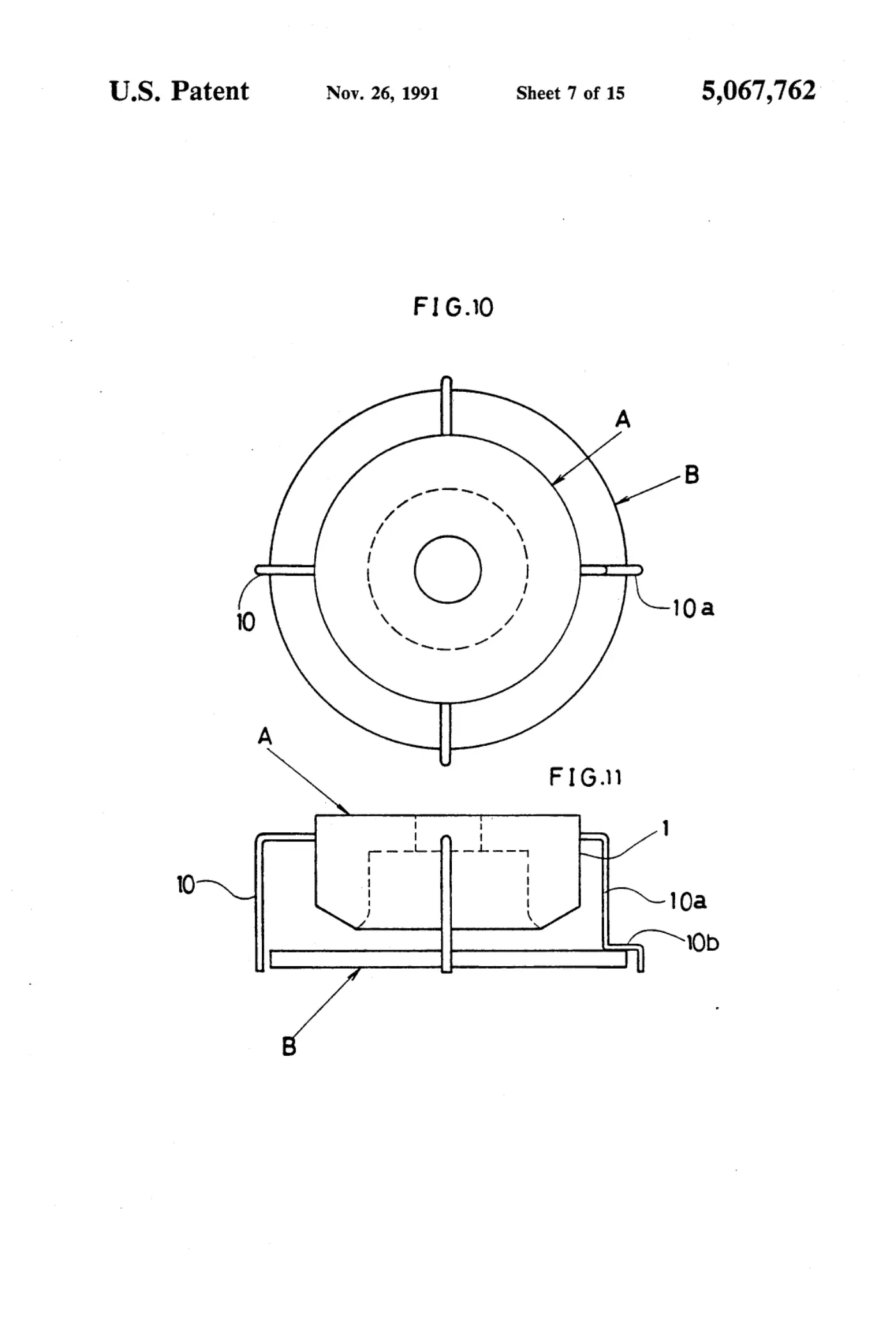
[0007]Sheet 7.
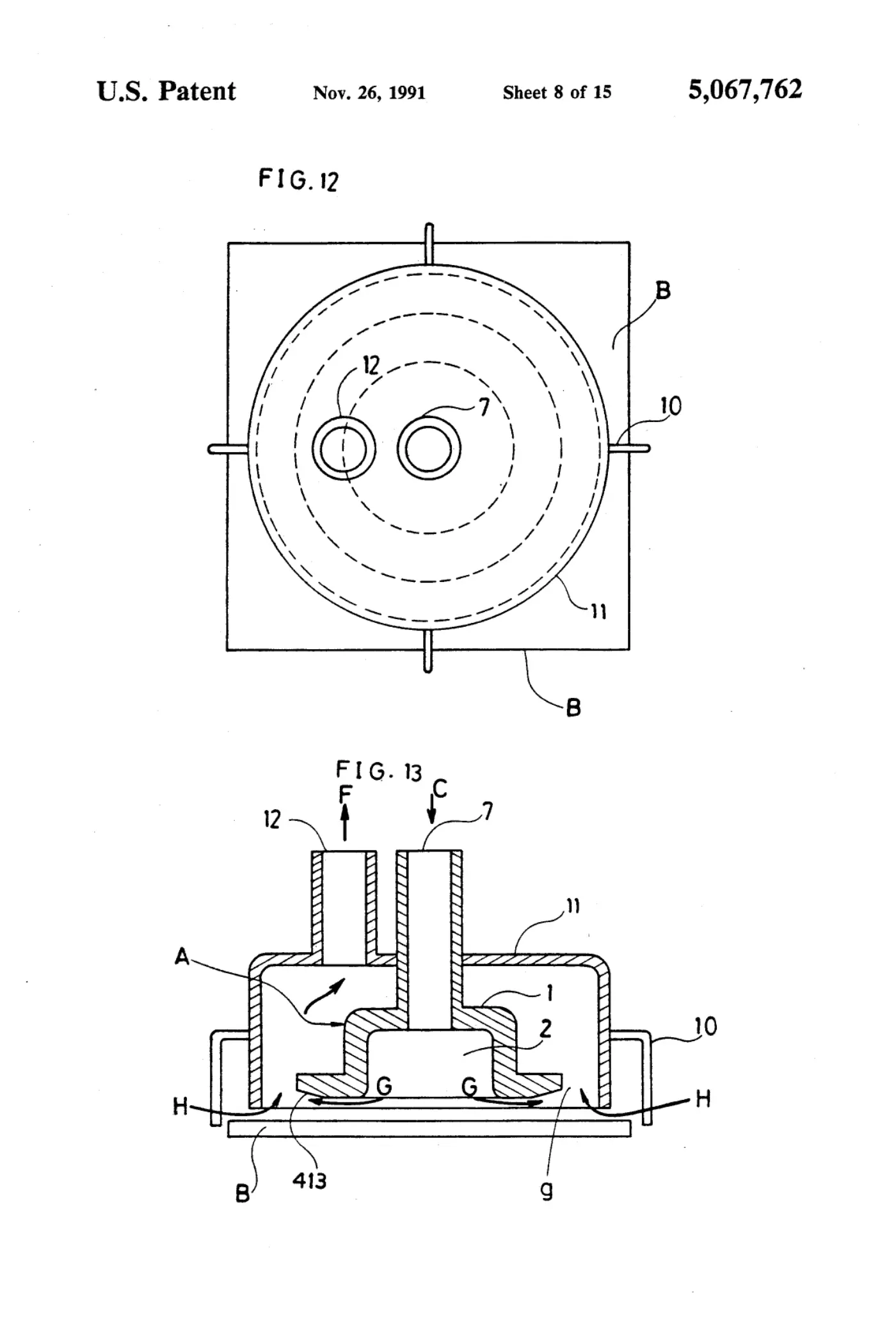
[0008]Sheet 8.
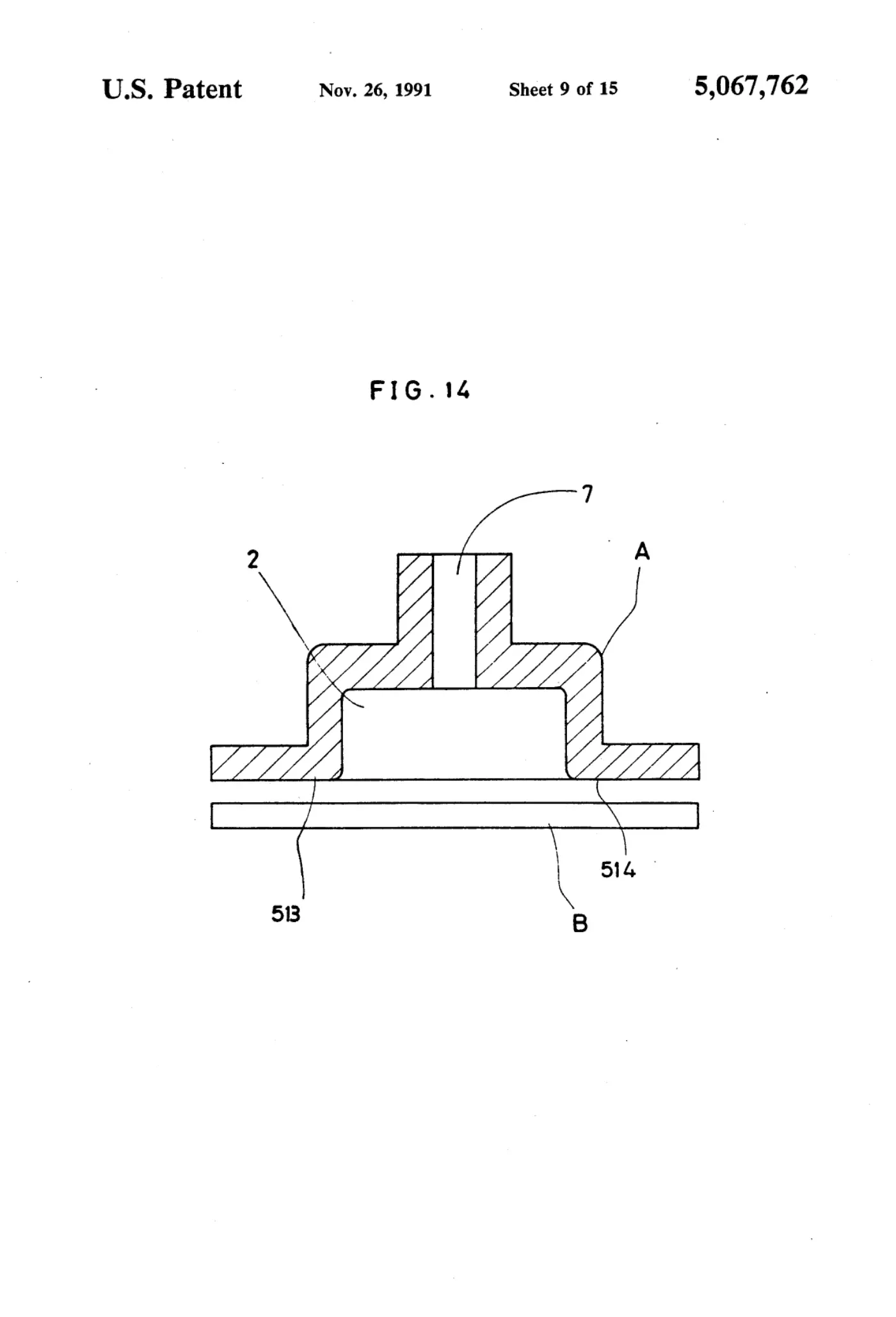
[0009]Sheet 9.
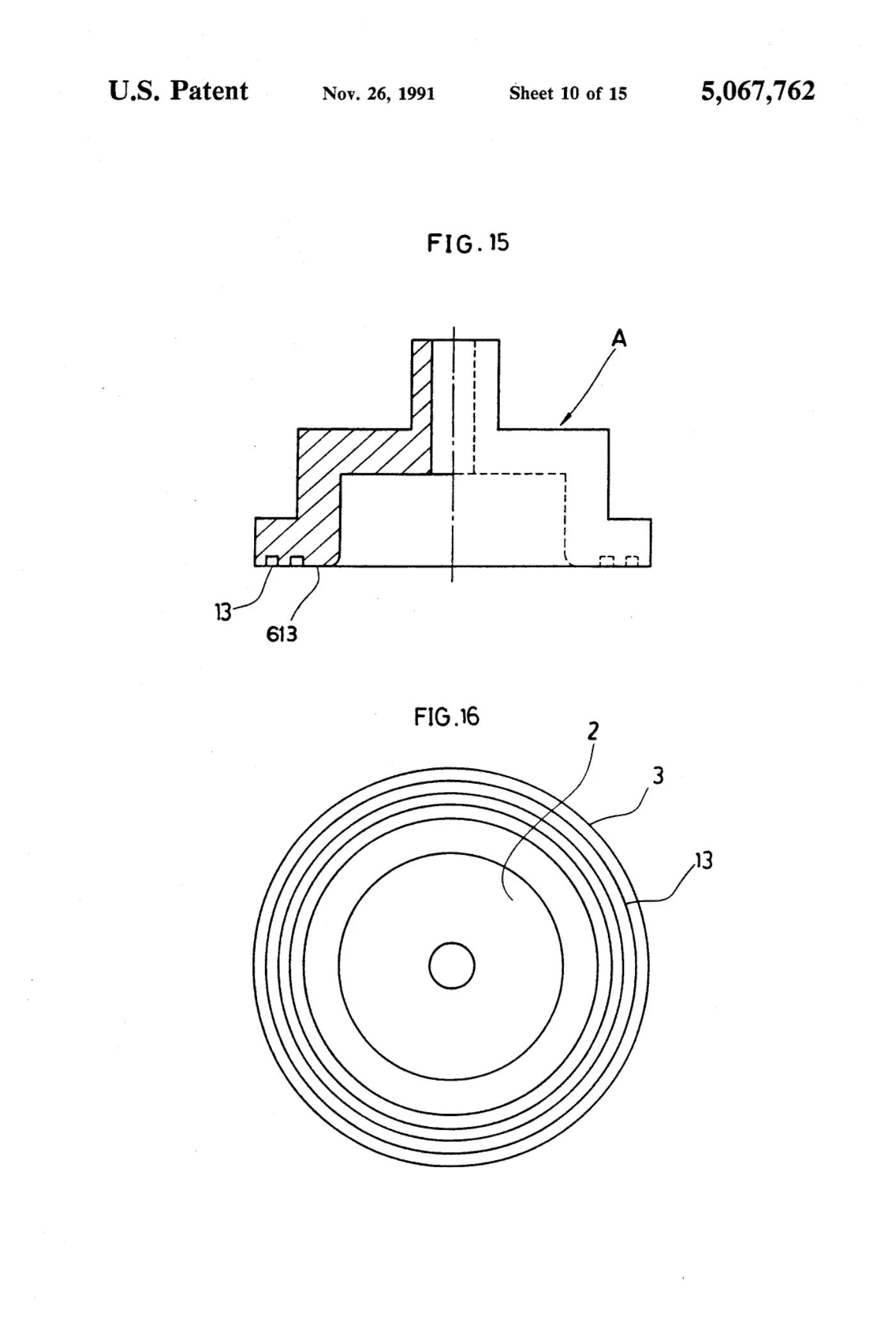
[0010]Sheet 10.
Publication information
Citation
OpenTechnical Publication OT-2026-000003410, “Non-contact conveying device,” published September 15, 2026 at 20:24:10 UTC, https://opentechnical.org/p/OT-2026-000003410.
To cite specific content, add the paragraph or figure numbers.
Terms
This record reproduces a document published elsewhere and is provided for reference and study. Rights in the original remain with its owner. See the publication policy.