OT-2026-000003476
Vacuum cup construction
- Published
- Permanent URL
- https://opentechnical.org/p/OT-2026-000003476
- Classification
- Robotics & Automation › Robot Architectures
- Inventors
- LITTELL EDMUND R
- Assignee
- LITTELL EDMUND R
- Original source
- US-4852926-A, the United States Patent and Trademark Office, 1 August 1989
- Document SHA-256
- fdb8b9ec43bc1320a0598b8d8f65eeeaa4fa088ff9ae45ead3e5f3c30f29a22c
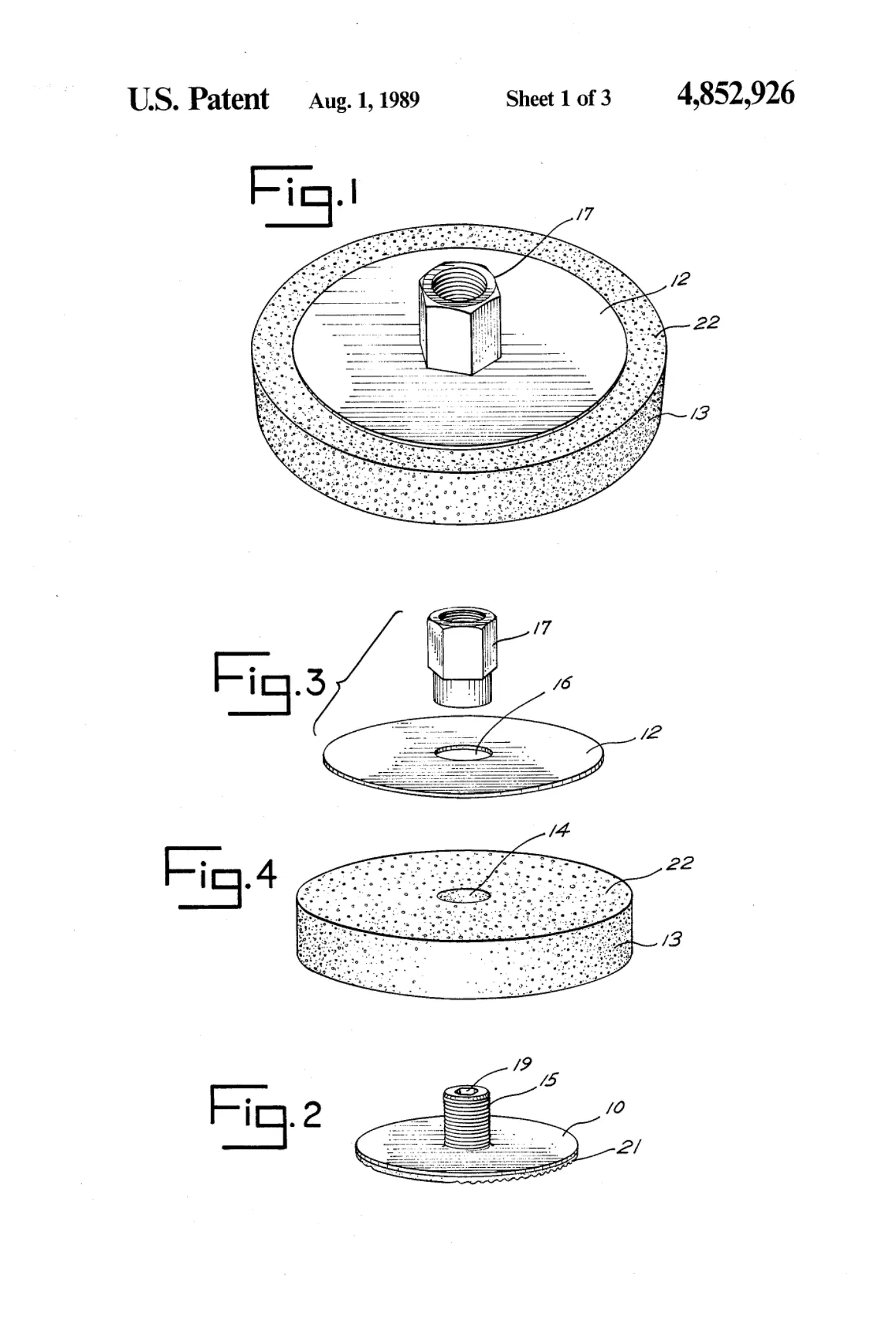
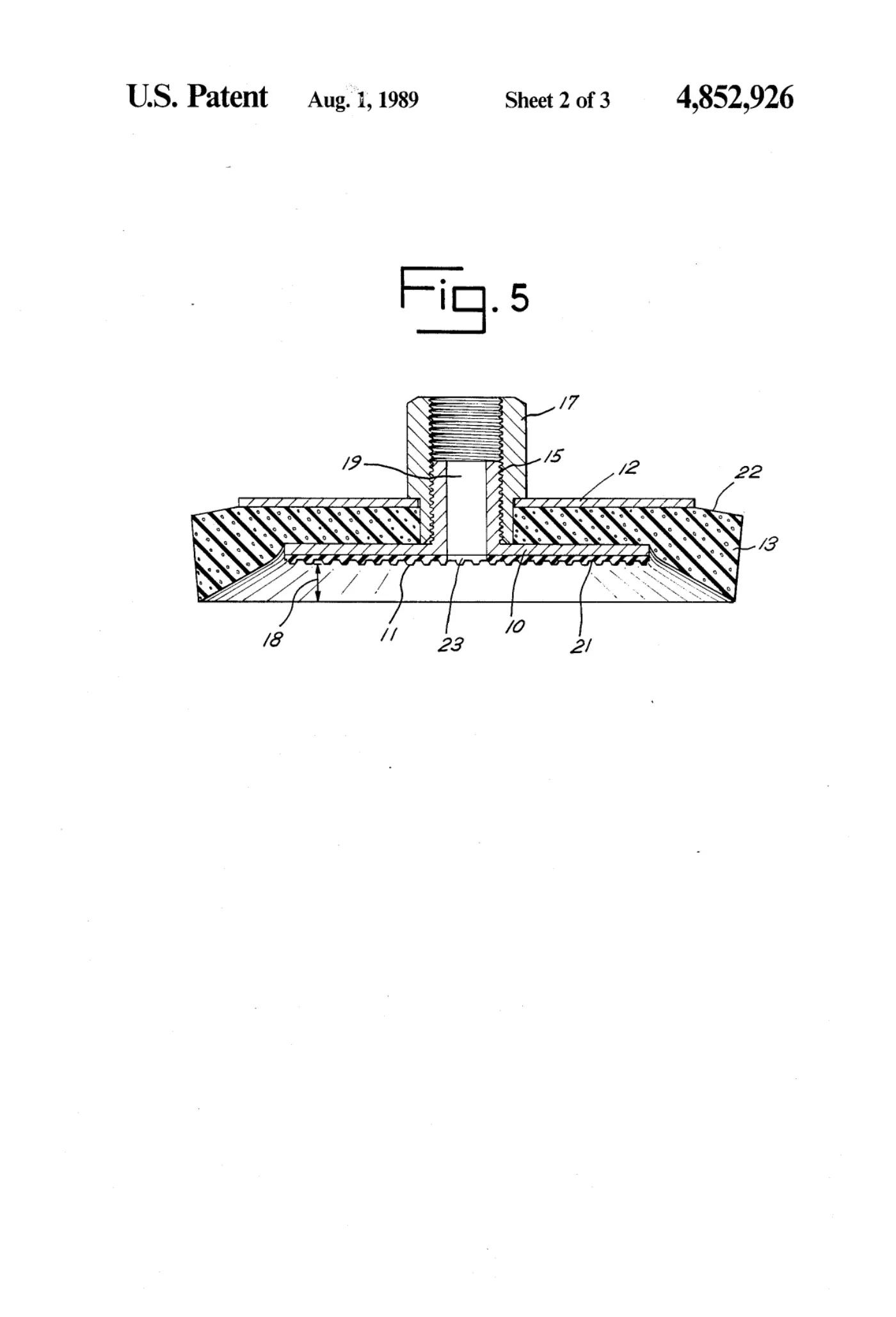
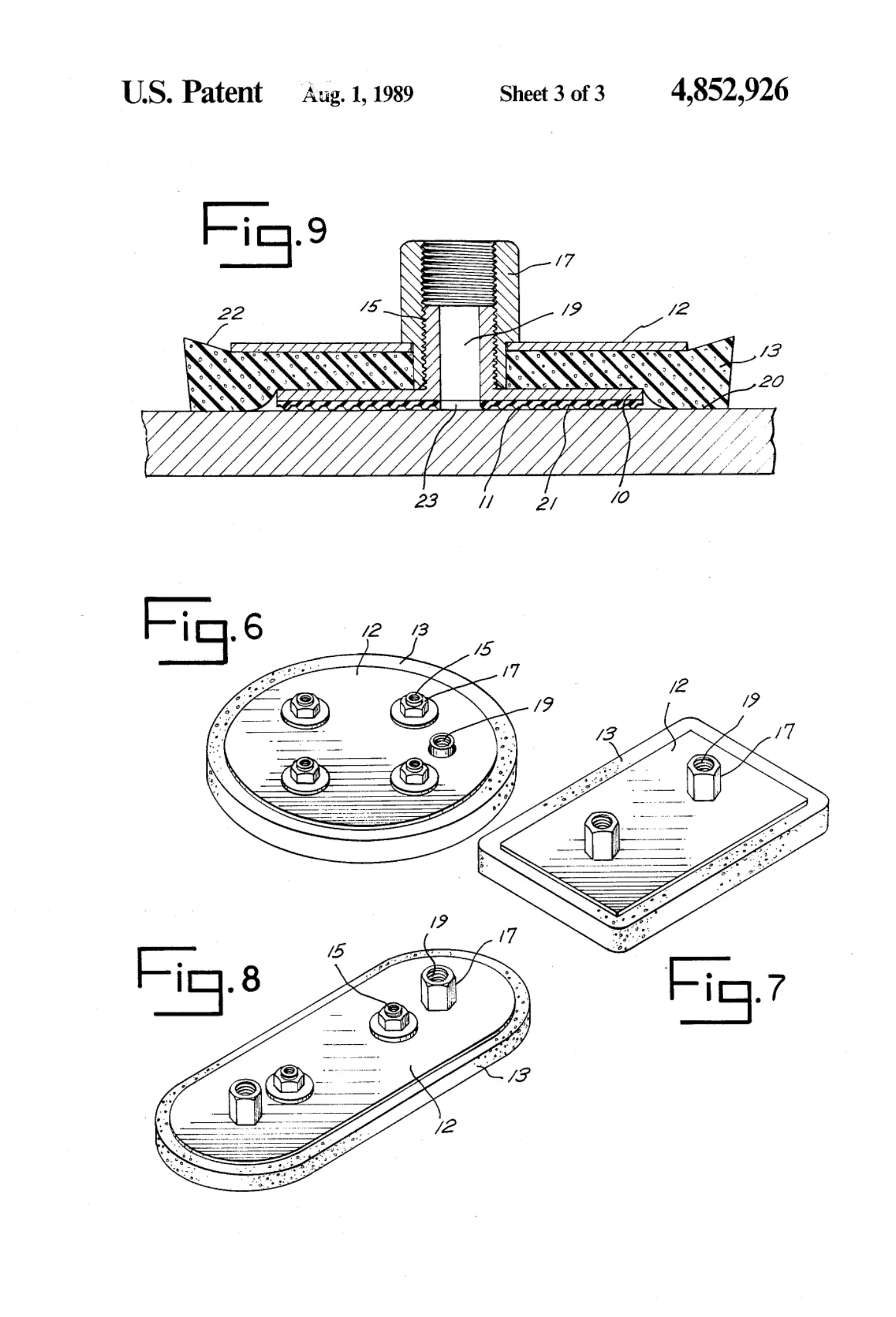
A vacuum cup construction designed to support large items includes a planar outer plate, and a planar, generally coincidentally shaped inner plate which is smaller than the outer plate. A generally flat coincidentally shaped compressible unmolded, non-preformed sealing member, which is larger than the inner plate, is retained between the outer and inner plates by a threaded stud and a threaded nut connecting the outer and inner plates, the tightening of which compresses the sealing member. Compression of the sealing member causes the periphery to deform and form a sealing edge. A vacuum passage passes through the outer plate, the sealing member, and the inner plate to permit a vacuum to be drawn when the assembly is placed against the surface of an item or object.
Abstract
A vacuum cup construction designed to support large items includes a planar outer plate, and a planar, generally coincidentally shaped inner plate which is smaller than the outer plate. A generally flat coincidentally shaped compressible unmolded, non-preformed sealing member, which is larger than the inner plate, is retained between the outer and inner plates by a threaded stud and a threaded nut connecting the outer and inner plates, the tightening of which compresses the sealing member. Compression of the sealing member causes the periphery to deform and form a sealing edge. A vacuum passage passes through the outer plate, the sealing member, and the inner plate to permit a vacuum to be drawn when the assembly is placed against the surface of an item or object.
1. Drawings
[0001]Sheet 1.
[0002]Sheet 2.
[0003]Sheet 3.
Publication information
Citation
OpenTechnical Publication OT-2026-000003476, “Vacuum cup construction,” published September 15, 2026 at 20:32:24 UTC, https://opentechnical.org/p/OT-2026-000003476.
To cite specific content, add the paragraph or figure numbers.
Terms
This record reproduces a document published elsewhere and is provided for reference and study. Rights in the original remain with its owner. See the publication policy.